%20%20--%3E%0A%3Csvg%20version%3D%221.1%22%20id%3D%22Layer_1%22%20xmlns%3D%22http%3A%2F%2Fwww.w3.org%2F2000%2Fsvg%22%20xmlns%3Axlink%3D%22http%3A%2F%2Fwww.w3.org%2F1999%2Fxlink%22%20x%3D%220px%22%20y%3D%220px%22%0A%09%20viewBox%3D%220%200%20684.6%2068.1%22%20style%3D%22enable-background%3Anew%200%200%20684.6%2068.1%3B%22%20xml%3Aspace%3D%22preserve%22%3E%0A%3Cg%3E%0A%09%3Cpath%20d%3D%22M444.1%2C29.3h-17.4v14.5h17.4V29.3z%20M36.4%2C68.1l29.3-50.8V0H50.4L32.9%2C36.8L15.5%2C0H0v68.1h16.7V45.8l12.4%2C22.3H36.4z%0A%09%09%20M49.1%2C68.1h16.6V23.4L49.1%2C52.1V68.1z%20M76.6%2C68.1h45V53.8H93.3V41.6h21V27.1h-21V14.8h28.3V0.1h-45V68.1z%20M175.6%2C68.1h17.3v-68%0A%09%09h-16.5v40.3L150%2C0.1h-17.6v68h16.7V27.7L175.6%2C68.1z%20M235.8%2C14.8h15.4V0.1h-47.4v14.7H219v53.2h16.8V14.8z%20M290.3%2C45.9h-17.1%0A%09%09l7.5-15.6h2L290.3%2C45.9z%20M298.7%2C68.1h18l-32.2-68h-5.7l-32%2C68h18l3.3-7.1h27.1L298.7%2C68.1z%20M325.2%2C68.1h46.2V53.8h-29.6V0.1h-16.7%0A%09%09V68.1z%20M423.7%2C14.8h27.2V0.1H407v68h16.7V14.8z%20M462%2C68.1h46.2V53.8h-29.6V0.1H462V68.1z%20M564.8%2C34.1c0%2C10.7-7.2%2C19.2-18.5%2C19.2%0A%09%09c-11.4%2C0-18.5-8.5-18.5-19.2s7.1-19.2%2C18.5-19.2C557.6%2C14.9%2C564.8%2C23.4%2C564.8%2C34.1%20M580.6%2C34.1c0-19-14.2-34-34.3-34%0A%09%09c-20.2%2C0-34.3%2C15-34.3%2C34c0%2C19%2C14.1%2C34%2C34.3%2C34C566.4%2C68.1%2C580.6%2C53.1%2C580.6%2C34.1%20M604.8%2C20.5c0-4.1%2C3.3-6.2%2C6.7-6.2%0A%09%09c4.4%2C0%2C6.6%2C3%2C6.6%2C6.6h14.7C631.8%2C9.1%2C625.1%2C0.1%2C611%2C0.1c-12%2C0-21.7%2C9.3-21.7%2C20.6c0%2C10.9%2C5.9%2C15.9%2C16.7%2C19.8%0A%09%09c5.2%2C1.8%2C11.5%2C3.2%2C11.5%2C8c0%2C3.3-2.4%2C5.5-6.4%2C5.5c-3.6%2C0-6.6-3-6.6-6.7h-15.2c0%2C11.5%2C7.9%2C20.8%2C21.8%2C20.8c12%2C0%2C21.6-9.3%2C21.6-20.6%0A%09%09c0-10-5.3-16.4-16.7-19.8C610.6%2C26.1%2C604.8%2C25.3%2C604.8%2C20.5%20M670%2C20.9h14.7C683.8%2C9.1%2C677.1%2C0.1%2C663%2C0.1c-12%2C0-21.7%2C9.3-21.7%2C20.6%0A%09%09c0%2C10.9%2C5.9%2C15.9%2C16.7%2C19.8c5.2%2C1.8%2C11.5%2C3.2%2C11.5%2C8c0%2C3.3-2.4%2C5.5-6.4%2C5.5c-3.6%2C0-6.6-3-6.6-6.7h-15.2c0%2C11.5%2C7.9%2C20.8%2C21.8%2C20.8%0A%09%09c12%2C0%2C21.6-9.3%2C21.6-20.6c0-10-5.3-16.4-16.7-19.8c-5.4-1.6-11.3-2.4-11.3-7.2c0-4.1%2C3.3-6.2%2C6.7-6.2C667.7%2C14.4%2C670%2C17.3%2C670%2C20.9%0A%09%09%22%2F%3E%0A%3C%2Fg%3E%0A%3C%2Fsvg%3E%0A)

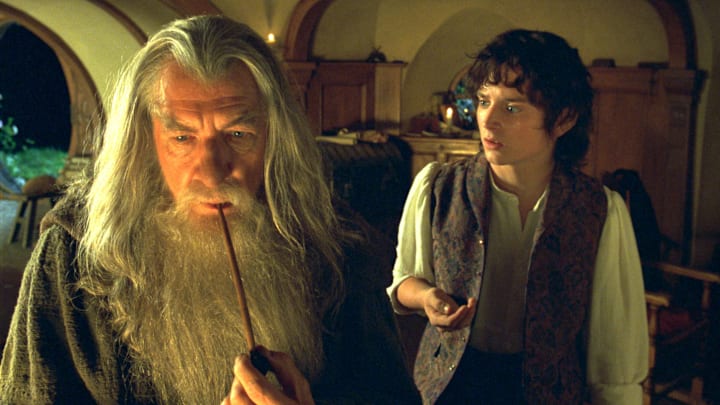
In popular imagination, few modern wizards are more prominent than Gandalf and Dumbledore. The former is a mainstay in J. R. R. Tolkien’s The Lord of the Rings, and is a powerful wizard who sets some of the story's key events in motion. The latter was created by J. K. Rowling for her Harry Potter series, and presides over Hogwarts while leading the fight against the Dark Lord, Voldemort.
Both wizards are highly moral and wise, and prone to waxing poetic about philosophical topics and giving motivational, if metaphor-laden, speeches that inspire characters to take bold action. But can you identify which one of them said what? Try your hand with this quiz below.
The History of the Wizard Archetype

Dumbledore and Gandalf are simply the most famous recent iterations of an archetype that has its roots in prehistory and is connected to shamans or medicine men or women who, traditionally, work in the spirit realms to protect their communities.
The term “wizard” is rooted in the Middle English term “wys,” which means “wise.” Around the fifteenth century, modern perceptions of wizards began to take shape thanks to figures like Johann Georg Faust, an alchemist, magician, and astronomer who inspired Christopher Marlowe's play Doctor Faustus, and Dr. John Dee, a mathematician, astronomer, and occultist whose work explored the intersection of science, philosophy, and magic.
Beyond Europe, figures who worked at this intersection existed long before the fifteenth century, and include Abe no Seimei, a Japanese wise man often called the “Merlin of Japan.” A scholar of Onmyodo, a system that merged science, astronomy, magic, and divination, he lived from 921-1005 CE.
Of course, one of the first early fictional wizards—and a clear precursor to Dumbledore and Gandalf—is Merlin the Great. This iconic magician has his roots in Welsh history, and specifically in the 6th-century North Brythonic poet Myrddin Wyllt, a legendary poet and seer who appears in many Welsh poems. These tales often describe how he fled society to go live in the woods, where he began to practice the art of prophecy.
Wyllt and other legendary wizards of the time helped inspire the wizard named Merlin that Geoffrey of Monmouth described in his first book, The Prophecies of Merlin. Monmouth's Merlin soon took on a life of its own, and his association with King Arthur was cemented in Sir Thomas Malory’s Le Morte d’Arthur, which was published in the year 1485. By the 1800s, Merlin was sometimes being depicted as an old man with long hair and a hat—helping to shape the image of Gandalf and Dumbledore that we know today.
The History of Gandalf and Dumbledore

J. R. R. Tolkien’s Gandalf is a powerful wizard whose spirit, according to Tolkien’s cosmology, has existed since the beginning of time.
The real-life inspiration for the character is slightly blurrier. According to Tolkien biographer Humphrey Carpenter, Tolkien had a postcard that featured a painting by Josef Madlener called Der Berggeist, which means “the mountain spirit.” The image depicts a cloaked man in a hat feeding a deer, and Tolkien reportedly labeled it “the origin of Gandalf," though these claims have been questioned. Tolkien was also inspired by the Norse god Odin, and once wrote in a letter that he envisioned Gandalf as an “Odinic wanderer.”
Dumbledore, meanwhile, has plenty of similarities to Merlin—and Gandalf. However, J. K. Rowling has never said that the character is inspired by either wizard. Instead, Rowling has said that Dumbledore is loosely based on her former headteacher Alfred Dunn, who presided over her primary school.
There are also some major differences between Gandalf and Dumbledore, including the fact that Gandalf is an eternal spirit while Dumbledore is a mortal human. Still, the parallels between Gandalf and Dumbledore are easy to see. Both act as mentors to younger heroes, and both are long-bearded, robed, and incredibly powerful wizards with more than a few words of wisdom for the young heroes they coach in the art of saving the world—and those of us who love to read all about it.