%20%20--%3E%0A%3Csvg%20version%3D%221.1%22%20id%3D%22Layer_1%22%20xmlns%3D%22http%3A%2F%2Fwww.w3.org%2F2000%2Fsvg%22%20xmlns%3Axlink%3D%22http%3A%2F%2Fwww.w3.org%2F1999%2Fxlink%22%20x%3D%220px%22%20y%3D%220px%22%0A%09%20viewBox%3D%220%200%20684.6%2068.1%22%20style%3D%22enable-background%3Anew%200%200%20684.6%2068.1%3B%22%20xml%3Aspace%3D%22preserve%22%3E%0A%3Cg%3E%0A%09%3Cpath%20d%3D%22M444.1%2C29.3h-17.4v14.5h17.4V29.3z%20M36.4%2C68.1l29.3-50.8V0H50.4L32.9%2C36.8L15.5%2C0H0v68.1h16.7V45.8l12.4%2C22.3H36.4z%0A%09%09%20M49.1%2C68.1h16.6V23.4L49.1%2C52.1V68.1z%20M76.6%2C68.1h45V53.8H93.3V41.6h21V27.1h-21V14.8h28.3V0.1h-45V68.1z%20M175.6%2C68.1h17.3v-68%0A%09%09h-16.5v40.3L150%2C0.1h-17.6v68h16.7V27.7L175.6%2C68.1z%20M235.8%2C14.8h15.4V0.1h-47.4v14.7H219v53.2h16.8V14.8z%20M290.3%2C45.9h-17.1%0A%09%09l7.5-15.6h2L290.3%2C45.9z%20M298.7%2C68.1h18l-32.2-68h-5.7l-32%2C68h18l3.3-7.1h27.1L298.7%2C68.1z%20M325.2%2C68.1h46.2V53.8h-29.6V0.1h-16.7%0A%09%09V68.1z%20M423.7%2C14.8h27.2V0.1H407v68h16.7V14.8z%20M462%2C68.1h46.2V53.8h-29.6V0.1H462V68.1z%20M564.8%2C34.1c0%2C10.7-7.2%2C19.2-18.5%2C19.2%0A%09%09c-11.4%2C0-18.5-8.5-18.5-19.2s7.1-19.2%2C18.5-19.2C557.6%2C14.9%2C564.8%2C23.4%2C564.8%2C34.1%20M580.6%2C34.1c0-19-14.2-34-34.3-34%0A%09%09c-20.2%2C0-34.3%2C15-34.3%2C34c0%2C19%2C14.1%2C34%2C34.3%2C34C566.4%2C68.1%2C580.6%2C53.1%2C580.6%2C34.1%20M604.8%2C20.5c0-4.1%2C3.3-6.2%2C6.7-6.2%0A%09%09c4.4%2C0%2C6.6%2C3%2C6.6%2C6.6h14.7C631.8%2C9.1%2C625.1%2C0.1%2C611%2C0.1c-12%2C0-21.7%2C9.3-21.7%2C20.6c0%2C10.9%2C5.9%2C15.9%2C16.7%2C19.8%0A%09%09c5.2%2C1.8%2C11.5%2C3.2%2C11.5%2C8c0%2C3.3-2.4%2C5.5-6.4%2C5.5c-3.6%2C0-6.6-3-6.6-6.7h-15.2c0%2C11.5%2C7.9%2C20.8%2C21.8%2C20.8c12%2C0%2C21.6-9.3%2C21.6-20.6%0A%09%09c0-10-5.3-16.4-16.7-19.8C610.6%2C26.1%2C604.8%2C25.3%2C604.8%2C20.5%20M670%2C20.9h14.7C683.8%2C9.1%2C677.1%2C0.1%2C663%2C0.1c-12%2C0-21.7%2C9.3-21.7%2C20.6%0A%09%09c0%2C10.9%2C5.9%2C15.9%2C16.7%2C19.8c5.2%2C1.8%2C11.5%2C3.2%2C11.5%2C8c0%2C3.3-2.4%2C5.5-6.4%2C5.5c-3.6%2C0-6.6-3-6.6-6.7h-15.2c0%2C11.5%2C7.9%2C20.8%2C21.8%2C20.8%0A%09%09c12%2C0%2C21.6-9.3%2C21.6-20.6c0-10-5.3-16.4-16.7-19.8c-5.4-1.6-11.3-2.4-11.3-7.2c0-4.1%2C3.3-6.2%2C6.7-6.2C667.7%2C14.4%2C670%2C17.3%2C670%2C20.9%0A%09%09%22%2F%3E%0A%3C%2Fg%3E%0A%3C%2Fsvg%3E%0A)

Let me start this off by saying that I’ve stayed in a lot of hotels and motels that definitely don’t smell so good. I’ve spent my fair share of nights in rooms perfumed by a mix of dusty air conditioning, exhaust from whatever highway is nearby, and maybe chlorine from a nearby pool.
Yet perhaps having had the experience of staying in musty, pungent hotels has made occasionally going to hotels that do smell very good all the more striking. A high-quality hotel is not just a visual experience, after all. It’s a sensory journey where everything from the bedding to the size of the hallways is intentional and designed for guests’ satisfaction.
In the realm of luxury hotels, exquisite scents are both art forms and savvy business strategies. Yet you might be wondering—why do (again, I’ll add the qualifier nice here) hotels often smell so good?
How Smell Affects Emotion

Smell has a surprisingly powerful effect on perception, emotion, and cognition. “The part of the brain where the conscious perception of scent takes place is the same part of the brain where the processing of emotions, memories, and associations take place: the limbic system,” neuroscientist Rachel Herz told Bazaar.
All this explains why you might feel a sense of peace wash over you if you walk into a room and it smells of, say, ocean spray or pine trees. Those aromas likely evoke fond memories of summertime, childhood, or happy times in nature.
Smells that connect us to memories have been shown to have powerful health benefits, including lower inflammation, improved mood, and deeper breathing. Because of all this, well-chosen scents that trigger positive feelings in people are smart marketing tools for hotels, and the data backs this up.
According to 2019 report from Ambius called Business Impact of Scenting, businesses that used scents in their physical locations saw a 38% difference in customers’ emotional investment. The report also found that 91% of hotel guests said that a great smell positively impacted their stay.
This is why a hotel’s decision to fill its lobbies and halls with comforting and familiar scents is highly strategic. These smells can help customers feel relaxed immediately upon entering the hotel, which might make them more inclined to purchase a room or to come back again.
A well-chosen scent can also immediately lead customers to associate hotels with a positive feeling, thus leading them to rank the hotel more highly in their minds and possibly in online reviews.
Signature Perfume Blends

The majority of today’s five-star hotels have signature scents designed to cultivate specific emotions and energies in the people who stay in them. Businesses and stores have been using scents for a long time, but the signature fragrance trend in hotels seems to have been picking up steam in recent years.
Today, luxury hotels typically hire custom fragrance companies like Air Aroma to work together with them on developing a custom scent. These scents are based on the brand and the aesthetics and emotions the hotels specifically wish to elevate. Bringing a custom fragrance to life can often take six months to a year, and can be an intricate process.
For example, according to El País, the Mandarin Oriental Ritz Madrid sent a six-page briefing to a perfumer filled with details about its architecture, guests, landscaping, and history, and requested that guests be greeted with “a unique, clear yet subtle aroma that accompanies them throughout their stay” upon entering the hotel. What emerged from all this was a blend of freesia, lemon, and mandarin notes on a base of amber, cashmere, patchouli, and musk.
Meanwhile, every Edition hotel in the world uses the same scent. Called Black Tea, it was reportedly designed to be difficult to replicate and blends black tea, Sicilian bergamot, cedar, and musk to create a highly recognizable, one-of-a-kind fragrance. Las Vegas’s Caesars Palace, on the other hand, uses an intricate blend of citrus, fresh lemon, and mandarin orange that also has notes of evocative jasmine, lily-of-the-valley, and cyclamen as well as hints of cedar, amber, and musk.
In general, perfumers recommend that hotels avoid smells that lean heavily masculine or feminine, and instead suggest scents that subtly evoke bygone memories. Fragrances that include citrus, cedar, vanilla, jasmine, coconut, patchouli, and lavender are all popular choices, as each tends to come with its own slate of positive associations.
How Do Hotels Smell So Good?

High-quality hotels know that smell is important. That’s why many hotels actually send fragrances floating through the air by using HVAC scent diffusers, which are little devices that attach to air conditioning and heating units. These handy contraptions send small amounts of fragrant oils floating around rooms, lobbies, and hallways, and make sure that the scent is subtle and not overpowering.
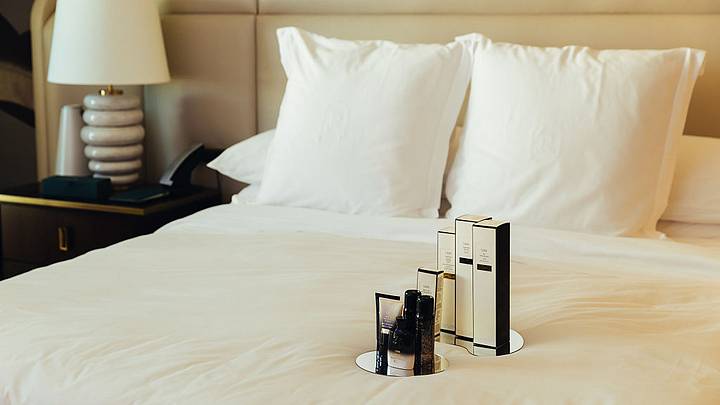
Some hotels also make toiletries infused with their signature scents, and many sell specially scented products that guests can take home with them after the stay. High-end hotels often use aromatherapy devices like ultrasonic diffusers and room sprays, and will often lightly scent even their sheets and towels.
Some hotels use different scents for different locations, such as brighter, citrus-infused scents for the gym, more sumptuous and spicier scents for the lobbies, and calmer, lavender-infused fragrances for the bedrooms.
Simultaneously, hotels often use odor-neutralizing tools and chemicals to wipe away any undesirable scents, and carefully clean carpets and quickly remove trash to make sure only pleasant aromas shine through.
Smell has been associated with luxury for a very long time, and today it certainly is a key part of luxury hotel experiences. But fortunately, you don’t need to book a stay at the Ritz-Carlton to enjoy a lovely scent that whisks you off to the beach you loved when you were a child. A simple candle and clean sheets at home just might do the trick.
And if you ever need to book a stay at a hotel without a signature scent, now that you know just how much smell can influence your state of mind, you could always add a diffuser to your packing list.