%20%20--%3E%0A%3Csvg%20version%3D%221.1%22%20id%3D%22Layer_1%22%20xmlns%3D%22http%3A%2F%2Fwww.w3.org%2F2000%2Fsvg%22%20xmlns%3Axlink%3D%22http%3A%2F%2Fwww.w3.org%2F1999%2Fxlink%22%20x%3D%220px%22%20y%3D%220px%22%0A%09%20viewBox%3D%220%200%20684.6%2068.1%22%20style%3D%22enable-background%3Anew%200%200%20684.6%2068.1%3B%22%20xml%3Aspace%3D%22preserve%22%3E%0A%3Cg%3E%0A%09%3Cpath%20d%3D%22M444.1%2C29.3h-17.4v14.5h17.4V29.3z%20M36.4%2C68.1l29.3-50.8V0H50.4L32.9%2C36.8L15.5%2C0H0v68.1h16.7V45.8l12.4%2C22.3H36.4z%0A%09%09%20M49.1%2C68.1h16.6V23.4L49.1%2C52.1V68.1z%20M76.6%2C68.1h45V53.8H93.3V41.6h21V27.1h-21V14.8h28.3V0.1h-45V68.1z%20M175.6%2C68.1h17.3v-68%0A%09%09h-16.5v40.3L150%2C0.1h-17.6v68h16.7V27.7L175.6%2C68.1z%20M235.8%2C14.8h15.4V0.1h-47.4v14.7H219v53.2h16.8V14.8z%20M290.3%2C45.9h-17.1%0A%09%09l7.5-15.6h2L290.3%2C45.9z%20M298.7%2C68.1h18l-32.2-68h-5.7l-32%2C68h18l3.3-7.1h27.1L298.7%2C68.1z%20M325.2%2C68.1h46.2V53.8h-29.6V0.1h-16.7%0A%09%09V68.1z%20M423.7%2C14.8h27.2V0.1H407v68h16.7V14.8z%20M462%2C68.1h46.2V53.8h-29.6V0.1H462V68.1z%20M564.8%2C34.1c0%2C10.7-7.2%2C19.2-18.5%2C19.2%0A%09%09c-11.4%2C0-18.5-8.5-18.5-19.2s7.1-19.2%2C18.5-19.2C557.6%2C14.9%2C564.8%2C23.4%2C564.8%2C34.1%20M580.6%2C34.1c0-19-14.2-34-34.3-34%0A%09%09c-20.2%2C0-34.3%2C15-34.3%2C34c0%2C19%2C14.1%2C34%2C34.3%2C34C566.4%2C68.1%2C580.6%2C53.1%2C580.6%2C34.1%20M604.8%2C20.5c0-4.1%2C3.3-6.2%2C6.7-6.2%0A%09%09c4.4%2C0%2C6.6%2C3%2C6.6%2C6.6h14.7C631.8%2C9.1%2C625.1%2C0.1%2C611%2C0.1c-12%2C0-21.7%2C9.3-21.7%2C20.6c0%2C10.9%2C5.9%2C15.9%2C16.7%2C19.8%0A%09%09c5.2%2C1.8%2C11.5%2C3.2%2C11.5%2C8c0%2C3.3-2.4%2C5.5-6.4%2C5.5c-3.6%2C0-6.6-3-6.6-6.7h-15.2c0%2C11.5%2C7.9%2C20.8%2C21.8%2C20.8c12%2C0%2C21.6-9.3%2C21.6-20.6%0A%09%09c0-10-5.3-16.4-16.7-19.8C610.6%2C26.1%2C604.8%2C25.3%2C604.8%2C20.5%20M670%2C20.9h14.7C683.8%2C9.1%2C677.1%2C0.1%2C663%2C0.1c-12%2C0-21.7%2C9.3-21.7%2C20.6%0A%09%09c0%2C10.9%2C5.9%2C15.9%2C16.7%2C19.8c5.2%2C1.8%2C11.5%2C3.2%2C11.5%2C8c0%2C3.3-2.4%2C5.5-6.4%2C5.5c-3.6%2C0-6.6-3-6.6-6.7h-15.2c0%2C11.5%2C7.9%2C20.8%2C21.8%2C20.8%0A%09%09c12%2C0%2C21.6-9.3%2C21.6-20.6c0-10-5.3-16.4-16.7-19.8c-5.4-1.6-11.3-2.4-11.3-7.2c0-4.1%2C3.3-6.2%2C6.7-6.2C667.7%2C14.4%2C670%2C17.3%2C670%2C20.9%0A%09%09%22%2F%3E%0A%3C%2Fg%3E%0A%3C%2Fsvg%3E%0A)

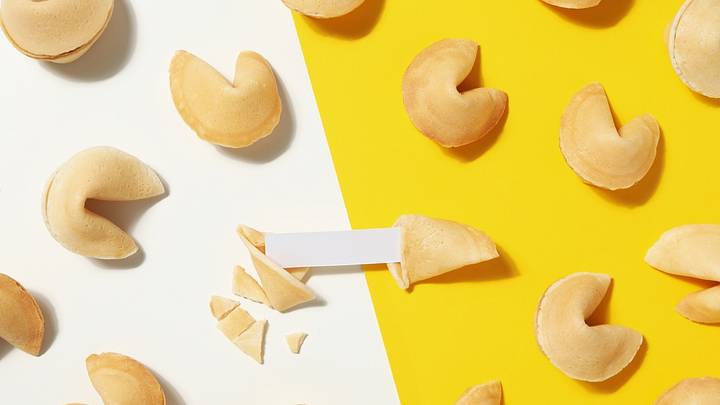
At Chinese restaurants in the United States, it’s common to be served a vanilla-flavored sweet known as a fortune cookie after your main meal. These fortune cookies are golden-coloured biscuits baked into folded shapes, and within them are small pieces of paper containing messages related to the eater’s future prospects or general words of advice.
The fortune is placed inside the cookie midway through the baking process. When they are being baked by hand, the cookie dough is rolled out and the fortune is then enveloped in the mixture before being placed in the oven. When machine-made, a device places the fortune inside the cookie instead. Here is a look at the history of why these sweets came to be served at Chinese restaurants.
Where Did Fortune Cookies Come From?

The origins of fortune cookies have been the subject of much debate. They are sometimes thought to have begun in Japan, which has a history going back hundreds of years of making sweets foretelling the future. Originally, these were mostly aimed at the wealthy, were not accessible to many others, and the messages in question were sometimes used as a form of social currency.
However, China has its own tradition of concealing messages within edible sweets in the form of the moon cake. This is said to date back to the 14th century, when soldiers would send messages hidden within these cakes as a way to communicate covertly during times of war.
But the fortune cookie in a modern sense is most closely connected to the Japanese tradition, which began to make its way to America in the 19th century following Japanese immigration to cities like San Francisco, where the fortune cookie as we know it today is sometimes considered to have been invented.
How Fortune Cookies Became Institutions

The gradual integration of fortune cookies into Chinese restaurants in the U.S. partly stems from changes that took place there during the period of the Second World War. During this time, Chinese cuisine became more popular in general, leading to an increase in consumers attending their restaurants. Meanwhile, Japanese outlets, which had been producing cookies, fell into decline when many Japanese Americans were imprisoned in internment camps during the later years of the war.
One of the consequences of this was that Chinese businessmen stepped in as suppliers of these cookies. Many were sold to Chinese restaurants, which began to take over from Japanese restaurants as the places where these sweets were most frequently available. That connection has endured to this day, and the fortune cookie is now closely intertwined with the experience of eating at a Chinese restaurant.
Today, fortune cookies are so widespread in the U.S. that they have a day devoted to them: National Fortune Cookie Day is now celebrated on July 20 each year. And their enduring popularity suggests they will continue to be celebrated and eaten at restaurants for many years to come in the future.