%20%20--%3E%0A%3Csvg%20version%3D%221.1%22%20id%3D%22Layer_1%22%20xmlns%3D%22http%3A%2F%2Fwww.w3.org%2F2000%2Fsvg%22%20xmlns%3Axlink%3D%22http%3A%2F%2Fwww.w3.org%2F1999%2Fxlink%22%20x%3D%220px%22%20y%3D%220px%22%0A%09%20viewBox%3D%220%200%20684.6%2068.1%22%20style%3D%22enable-background%3Anew%200%200%20684.6%2068.1%3B%22%20xml%3Aspace%3D%22preserve%22%3E%0A%3Cg%3E%0A%09%3Cpath%20d%3D%22M444.1%2C29.3h-17.4v14.5h17.4V29.3z%20M36.4%2C68.1l29.3-50.8V0H50.4L32.9%2C36.8L15.5%2C0H0v68.1h16.7V45.8l12.4%2C22.3H36.4z%0A%09%09%20M49.1%2C68.1h16.6V23.4L49.1%2C52.1V68.1z%20M76.6%2C68.1h45V53.8H93.3V41.6h21V27.1h-21V14.8h28.3V0.1h-45V68.1z%20M175.6%2C68.1h17.3v-68%0A%09%09h-16.5v40.3L150%2C0.1h-17.6v68h16.7V27.7L175.6%2C68.1z%20M235.8%2C14.8h15.4V0.1h-47.4v14.7H219v53.2h16.8V14.8z%20M290.3%2C45.9h-17.1%0A%09%09l7.5-15.6h2L290.3%2C45.9z%20M298.7%2C68.1h18l-32.2-68h-5.7l-32%2C68h18l3.3-7.1h27.1L298.7%2C68.1z%20M325.2%2C68.1h46.2V53.8h-29.6V0.1h-16.7%0A%09%09V68.1z%20M423.7%2C14.8h27.2V0.1H407v68h16.7V14.8z%20M462%2C68.1h46.2V53.8h-29.6V0.1H462V68.1z%20M564.8%2C34.1c0%2C10.7-7.2%2C19.2-18.5%2C19.2%0A%09%09c-11.4%2C0-18.5-8.5-18.5-19.2s7.1-19.2%2C18.5-19.2C557.6%2C14.9%2C564.8%2C23.4%2C564.8%2C34.1%20M580.6%2C34.1c0-19-14.2-34-34.3-34%0A%09%09c-20.2%2C0-34.3%2C15-34.3%2C34c0%2C19%2C14.1%2C34%2C34.3%2C34C566.4%2C68.1%2C580.6%2C53.1%2C580.6%2C34.1%20M604.8%2C20.5c0-4.1%2C3.3-6.2%2C6.7-6.2%0A%09%09c4.4%2C0%2C6.6%2C3%2C6.6%2C6.6h14.7C631.8%2C9.1%2C625.1%2C0.1%2C611%2C0.1c-12%2C0-21.7%2C9.3-21.7%2C20.6c0%2C10.9%2C5.9%2C15.9%2C16.7%2C19.8%0A%09%09c5.2%2C1.8%2C11.5%2C3.2%2C11.5%2C8c0%2C3.3-2.4%2C5.5-6.4%2C5.5c-3.6%2C0-6.6-3-6.6-6.7h-15.2c0%2C11.5%2C7.9%2C20.8%2C21.8%2C20.8c12%2C0%2C21.6-9.3%2C21.6-20.6%0A%09%09c0-10-5.3-16.4-16.7-19.8C610.6%2C26.1%2C604.8%2C25.3%2C604.8%2C20.5%20M670%2C20.9h14.7C683.8%2C9.1%2C677.1%2C0.1%2C663%2C0.1c-12%2C0-21.7%2C9.3-21.7%2C20.6%0A%09%09c0%2C10.9%2C5.9%2C15.9%2C16.7%2C19.8c5.2%2C1.8%2C11.5%2C3.2%2C11.5%2C8c0%2C3.3-2.4%2C5.5-6.4%2C5.5c-3.6%2C0-6.6-3-6.6-6.7h-15.2c0%2C11.5%2C7.9%2C20.8%2C21.8%2C20.8%0A%09%09c12%2C0%2C21.6-9.3%2C21.6-20.6c0-10-5.3-16.4-16.7-19.8c-5.4-1.6-11.3-2.4-11.3-7.2c0-4.1%2C3.3-6.2%2C6.7-6.2C667.7%2C14.4%2C670%2C17.3%2C670%2C20.9%0A%09%09%22%2F%3E%0A%3C%2Fg%3E%0A%3C%2Fsvg%3E%0A)

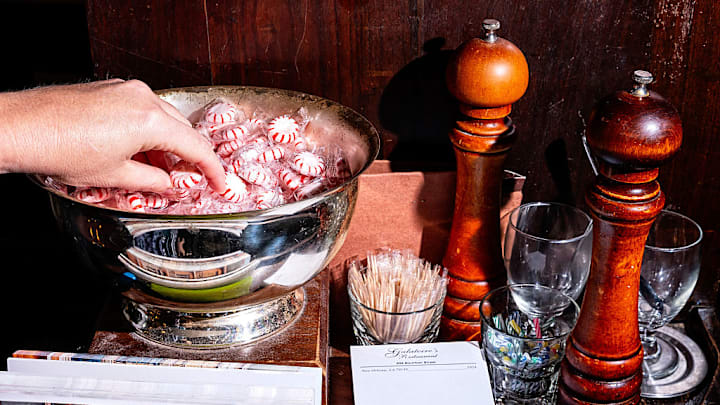
It’s a tradition that spans many different nations and cuisines, albeit one that seems to be becoming slightly less popular than it once was. Still, many restaurants continue to give out candies to customers right after meals conclude, often leaving them right alongside the check.
But how did this practice start? Is it a simple thank you, or a subtle form of psychological manipulation? Read on, and you may never look at the candy sitting on your napkin the same way again.
Why Restaurants Leave Candies At the End of the Meal

Unfortunately, it is not known where or when the tradition of giving out small palate cleansers at the end of meals originated—that truth is lost to time. Health might have something to do with it, though. We do know that Indian restaurants often give out fennel seeds at the end of meals due to the fact that these are traditional digestive aids that can help with bloating and gas.
Similarly, mint, ginger, and cinnamon have long been used in traditional medical systems to help with digestion. It’s possible that early dining establishments gave out herbal goodies at the end of meals to help with digestion, and this practice may have turned into a tradition of offering candy to diners to improve their post-meal experiences.
These may have informed the tradition of giving out candies after meals, along with European tradition of giving out digestifs, or alcoholic drinks, at the end of dinners to help with digestion. The practice of leaving candies out post-dinner became mainstream in the United States around the mid-20th century.
It’s About Money—and More

While we don’t know the exact origins of this practice, we do know that there are some clear reasons why restaurants have continued to offer up little free treats to diners over the years.
Firstly, giving candy out right after meals has been shown to increase tipping for waitstaff. One 2002 study from the Journal of Applied Social Psychology found that customers who received chocolate with their check tipped more on average than those who did not. It also found that tips varied based on the type of candy and the way it was offered.
Ultimately, the study concluded that when people receive a candy, this likely triggers the psychological principle of reciprocity—or giving something back when we receive something for free. In restaurants, this can spur the giving of more sizeable tips. This operates under the same logic that spurs grocery stores and shops to give out free samples: receiving a gift naturally makes us more likely to want to give something back.
There are a number of reasons that candies given out at the end of meals can lift customers’ moods, thereby inspiring them to tip better. These little treats can improve breath and can serve as symbolic indications that meals are over. They can also offer dopamine spikes thanks to the joy of receiving something free—not to mention a little sugar and sweetness. Additionally, they can satisfy the parts of our brains that crave dessert after meals, leaving us feeling fully satisfied and more likely to return to the restaurant, or leave a large tip or a positive review.
Are Fewer Restaurants Giving Out Candies These Days?

In the end, giving out candies at the end of meals is a win-win that improves customer satisfaction and often results in larger tips for waitstaff. Unfortunately, you’re not imagining that this practice has indeed become less common over the years. The practice of giving out candies after meals has decreased for a number of reasons, ranging from concerns about allergies and hygiene to budget costs.
Still, many establishments still offer bowls of circular candies waiting to be enjoyed when the meal is over—and now, you can tell all your dinner guests exactly why that is.