%20%20--%3E%0A%3Csvg%20version%3D%221.1%22%20id%3D%22Layer_1%22%20xmlns%3D%22http%3A%2F%2Fwww.w3.org%2F2000%2Fsvg%22%20xmlns%3Axlink%3D%22http%3A%2F%2Fwww.w3.org%2F1999%2Fxlink%22%20x%3D%220px%22%20y%3D%220px%22%0A%09%20viewBox%3D%220%200%20684.6%2068.1%22%20style%3D%22enable-background%3Anew%200%200%20684.6%2068.1%3B%22%20xml%3Aspace%3D%22preserve%22%3E%0A%3Cg%3E%0A%09%3Cpath%20d%3D%22M444.1%2C29.3h-17.4v14.5h17.4V29.3z%20M36.4%2C68.1l29.3-50.8V0H50.4L32.9%2C36.8L15.5%2C0H0v68.1h16.7V45.8l12.4%2C22.3H36.4z%0A%09%09%20M49.1%2C68.1h16.6V23.4L49.1%2C52.1V68.1z%20M76.6%2C68.1h45V53.8H93.3V41.6h21V27.1h-21V14.8h28.3V0.1h-45V68.1z%20M175.6%2C68.1h17.3v-68%0A%09%09h-16.5v40.3L150%2C0.1h-17.6v68h16.7V27.7L175.6%2C68.1z%20M235.8%2C14.8h15.4V0.1h-47.4v14.7H219v53.2h16.8V14.8z%20M290.3%2C45.9h-17.1%0A%09%09l7.5-15.6h2L290.3%2C45.9z%20M298.7%2C68.1h18l-32.2-68h-5.7l-32%2C68h18l3.3-7.1h27.1L298.7%2C68.1z%20M325.2%2C68.1h46.2V53.8h-29.6V0.1h-16.7%0A%09%09V68.1z%20M423.7%2C14.8h27.2V0.1H407v68h16.7V14.8z%20M462%2C68.1h46.2V53.8h-29.6V0.1H462V68.1z%20M564.8%2C34.1c0%2C10.7-7.2%2C19.2-18.5%2C19.2%0A%09%09c-11.4%2C0-18.5-8.5-18.5-19.2s7.1-19.2%2C18.5-19.2C557.6%2C14.9%2C564.8%2C23.4%2C564.8%2C34.1%20M580.6%2C34.1c0-19-14.2-34-34.3-34%0A%09%09c-20.2%2C0-34.3%2C15-34.3%2C34c0%2C19%2C14.1%2C34%2C34.3%2C34C566.4%2C68.1%2C580.6%2C53.1%2C580.6%2C34.1%20M604.8%2C20.5c0-4.1%2C3.3-6.2%2C6.7-6.2%0A%09%09c4.4%2C0%2C6.6%2C3%2C6.6%2C6.6h14.7C631.8%2C9.1%2C625.1%2C0.1%2C611%2C0.1c-12%2C0-21.7%2C9.3-21.7%2C20.6c0%2C10.9%2C5.9%2C15.9%2C16.7%2C19.8%0A%09%09c5.2%2C1.8%2C11.5%2C3.2%2C11.5%2C8c0%2C3.3-2.4%2C5.5-6.4%2C5.5c-3.6%2C0-6.6-3-6.6-6.7h-15.2c0%2C11.5%2C7.9%2C20.8%2C21.8%2C20.8c12%2C0%2C21.6-9.3%2C21.6-20.6%0A%09%09c0-10-5.3-16.4-16.7-19.8C610.6%2C26.1%2C604.8%2C25.3%2C604.8%2C20.5%20M670%2C20.9h14.7C683.8%2C9.1%2C677.1%2C0.1%2C663%2C0.1c-12%2C0-21.7%2C9.3-21.7%2C20.6%0A%09%09c0%2C10.9%2C5.9%2C15.9%2C16.7%2C19.8c5.2%2C1.8%2C11.5%2C3.2%2C11.5%2C8c0%2C3.3-2.4%2C5.5-6.4%2C5.5c-3.6%2C0-6.6-3-6.6-6.7h-15.2c0%2C11.5%2C7.9%2C20.8%2C21.8%2C20.8%0A%09%09c12%2C0%2C21.6-9.3%2C21.6-20.6c0-10-5.3-16.4-16.7-19.8c-5.4-1.6-11.3-2.4-11.3-7.2c0-4.1%2C3.3-6.2%2C6.7-6.2C667.7%2C14.4%2C670%2C17.3%2C670%2C20.9%0A%09%09%22%2F%3E%0A%3C%2Fg%3E%0A%3C%2Fsvg%3E%0A)

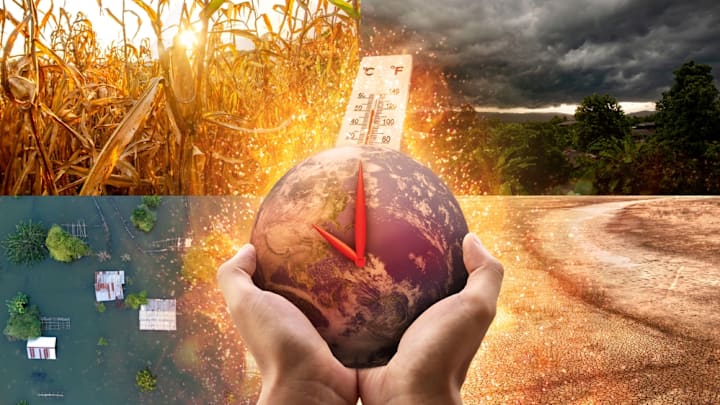
Climate change is a topic that’s rife with misinformation and controversy. However, the research is fairly clear: our planet is warming quickly, and there will be catastrophic consequences if changes aren’t made. In fact, some of those consequences are already visible in the form of increasing natural disasters, melting glaciers, and rising sea levels.
Still, the effects of climate change on our planet so far aren’t yet totally irreversible. Experts agree that it is still possible to lessen some of the worst consequences—but only if huge changes are made. Read on to learn more about the history and consequences of climate change, as well as how it might be averted.
- By the 1980s, there was significant evidence of global warming
- The Earth is currently warming at an unprecedented rate
- Humans are the main drivers of climate change today
- Billions of people live in places vulnerable to climate change
- Most people believe climate change is real
- It is possible to stabilize human-caused climate change—but only with massive changes
By the 1980s, there was significant evidence of global warming

xIn 1824, a French physicist named Joseph Fourier first conceptualized the “greenhouse effect,” or the idea that our planet's atmosphere contributes to its warmth. Scientists connected the release of carbon dioxide and other gases to rising temperatures in the mid-19th century, and in 1938, an steam engineer and amateur meteorologist named Guy Callender discovered that global temperatures were, in fact, rising.
1954 saw the creation of the first practical solar-powered cells, though solar power had been studied long before that. By 1958, scientists were increasingly gathering evidence that fossil fuels were causing the Earth to heat up. Research has shown that by the late 1970s, the oil company Exxon was aware that its fossil fuels could cause climate change that could have “dramatic environmental effects.” In 1988, the Intergovernmental Panel on Climate Change (IPCC) was formed to address the Earth's rising temperatures.
Yet early movements meant to address climate change widely failed to make significant changes, due to a blend of poor messaging, the challenge inherent in making immediate changes designed with the future in mind, and disinformation planted by fossil fuel companies, among other issues that still plague climate action advocates today.
The Earth is currently warming at an unprecedented rate
Our planet’s average surface temperature has risen around 1°C since the end of the 19th century, per the Center for Climate and Energy Solutions. Between 2015 and 2025, the world heated up around 0.35°C per decade—a massive rise from the average 0.02°C Celsius the world heated per decade between 1970 and 2015.
Some current projections have found that the world’s average temperature is on track to exceed preindustrial levels by 4°C by the end of the century. “That all means the end of agriculture in the UK and across Europe, drought and monsoon failure in Asia and Africa, lethal heat and humidity,” said Bill Hare, the CEO of Climate Analytics.
Humans are the main drivers of climate change today

Research has unequivocally concluded that human activities are causing the planet to warm, with at least 97% of scientists reportedly agreeing on this consensus, though the actual number may be higher.
The main cause of modern climate change is greenhouse gases, which include carbon dioxide, methane, and nitrous oxide. Per the NRDC, these gases now exist in our atmosphere at higher quantities than they have in 800,000 years. The number one factor that leads to the release of these gases is the burning of fossil fuels for transportation, electricity, industry, and agriculture.
Billions of people live in places vulnerable to climate change

Climate change quite literally refers to rising temperatures. But a hotter Earth also means a rise in wildfires, floods, cyclones, droughts, and other weather-related disasters that can cost billions of dollars and can lead to mass migrations, extreme poverty, mass trauma, and war, among other consequences.
According to a 2023 IPCC report, some 3.3 to 3.6 billion people “live in contexts that are highly vulnerable to climate change.” Meanwhile, a 2024 report from the World Bank, 1.4 billion people are currently facing “life-changing risks through exposure to at least one critical climate hazard.” These include people who are vulnerable to heat waves, rising water levels, and similar issues. Overall, climate disasters also often tend to disproportionately affect poor people and people of color.
Most people believe climate change is real
There is indeed a small, but noisy, group of people who believe climate change is not real. However, in reality, the majority of people believe in climate change and would like to see actions taken to fix it. A paper published by Science Advances that surveyed 59,000 people across the world found that 86% believed in climate change.
It is possible to stabilize human-caused climate change—but only with massive changes

Despite the path our planet is currently on, experts agree that it is possible to avoid the worst projected effects of climate change. This would primarily require replacing energy sources like coal, oil, and gas with renewable and low-carbon energy sources, like solar power, wind power, or nuclear power. In addition, sustainable building practices, green transportation, mass reforestation, improved farming practices, and other changes would be needed. But these changes will need to occur quickly.
“To avoid the worst consequences of climate change, we’ll need to reach ‘net zero’ carbon emissions by 2050 or sooner. Net zero means that, on balance, no more carbon is dumped into the atmosphere than is taken out,” a Union of Concerned Scientists report reads. “To achieve net zero emissions, we need a massive transformation in how we produce and consume electricity. We need a newer, better transportation system. We need to stop deforestation. We need a climate-friendly agricultural system.” These changes will necessitate international cooperation as well as changes in federal policies around the globe.