%20%20--%3E%0A%3Csvg%20version%3D%221.1%22%20id%3D%22Layer_1%22%20xmlns%3D%22http%3A%2F%2Fwww.w3.org%2F2000%2Fsvg%22%20xmlns%3Axlink%3D%22http%3A%2F%2Fwww.w3.org%2F1999%2Fxlink%22%20x%3D%220px%22%20y%3D%220px%22%0A%09%20viewBox%3D%220%200%20684.6%2068.1%22%20style%3D%22enable-background%3Anew%200%200%20684.6%2068.1%3B%22%20xml%3Aspace%3D%22preserve%22%3E%0A%3Cg%3E%0A%09%3Cpath%20d%3D%22M444.1%2C29.3h-17.4v14.5h17.4V29.3z%20M36.4%2C68.1l29.3-50.8V0H50.4L32.9%2C36.8L15.5%2C0H0v68.1h16.7V45.8l12.4%2C22.3H36.4z%0A%09%09%20M49.1%2C68.1h16.6V23.4L49.1%2C52.1V68.1z%20M76.6%2C68.1h45V53.8H93.3V41.6h21V27.1h-21V14.8h28.3V0.1h-45V68.1z%20M175.6%2C68.1h17.3v-68%0A%09%09h-16.5v40.3L150%2C0.1h-17.6v68h16.7V27.7L175.6%2C68.1z%20M235.8%2C14.8h15.4V0.1h-47.4v14.7H219v53.2h16.8V14.8z%20M290.3%2C45.9h-17.1%0A%09%09l7.5-15.6h2L290.3%2C45.9z%20M298.7%2C68.1h18l-32.2-68h-5.7l-32%2C68h18l3.3-7.1h27.1L298.7%2C68.1z%20M325.2%2C68.1h46.2V53.8h-29.6V0.1h-16.7%0A%09%09V68.1z%20M423.7%2C14.8h27.2V0.1H407v68h16.7V14.8z%20M462%2C68.1h46.2V53.8h-29.6V0.1H462V68.1z%20M564.8%2C34.1c0%2C10.7-7.2%2C19.2-18.5%2C19.2%0A%09%09c-11.4%2C0-18.5-8.5-18.5-19.2s7.1-19.2%2C18.5-19.2C557.6%2C14.9%2C564.8%2C23.4%2C564.8%2C34.1%20M580.6%2C34.1c0-19-14.2-34-34.3-34%0A%09%09c-20.2%2C0-34.3%2C15-34.3%2C34c0%2C19%2C14.1%2C34%2C34.3%2C34C566.4%2C68.1%2C580.6%2C53.1%2C580.6%2C34.1%20M604.8%2C20.5c0-4.1%2C3.3-6.2%2C6.7-6.2%0A%09%09c4.4%2C0%2C6.6%2C3%2C6.6%2C6.6h14.7C631.8%2C9.1%2C625.1%2C0.1%2C611%2C0.1c-12%2C0-21.7%2C9.3-21.7%2C20.6c0%2C10.9%2C5.9%2C15.9%2C16.7%2C19.8%0A%09%09c5.2%2C1.8%2C11.5%2C3.2%2C11.5%2C8c0%2C3.3-2.4%2C5.5-6.4%2C5.5c-3.6%2C0-6.6-3-6.6-6.7h-15.2c0%2C11.5%2C7.9%2C20.8%2C21.8%2C20.8c12%2C0%2C21.6-9.3%2C21.6-20.6%0A%09%09c0-10-5.3-16.4-16.7-19.8C610.6%2C26.1%2C604.8%2C25.3%2C604.8%2C20.5%20M670%2C20.9h14.7C683.8%2C9.1%2C677.1%2C0.1%2C663%2C0.1c-12%2C0-21.7%2C9.3-21.7%2C20.6%0A%09%09c0%2C10.9%2C5.9%2C15.9%2C16.7%2C19.8c5.2%2C1.8%2C11.5%2C3.2%2C11.5%2C8c0%2C3.3-2.4%2C5.5-6.4%2C5.5c-3.6%2C0-6.6-3-6.6-6.7h-15.2c0%2C11.5%2C7.9%2C20.8%2C21.8%2C20.8%0A%09%09c12%2C0%2C21.6-9.3%2C21.6-20.6c0-10-5.3-16.4-16.7-19.8c-5.4-1.6-11.3-2.4-11.3-7.2c0-4.1%2C3.3-6.2%2C6.7-6.2C667.7%2C14.4%2C670%2C17.3%2C670%2C20.9%0A%09%09%22%2F%3E%0A%3C%2Fg%3E%0A%3C%2Fsvg%3E%0A)

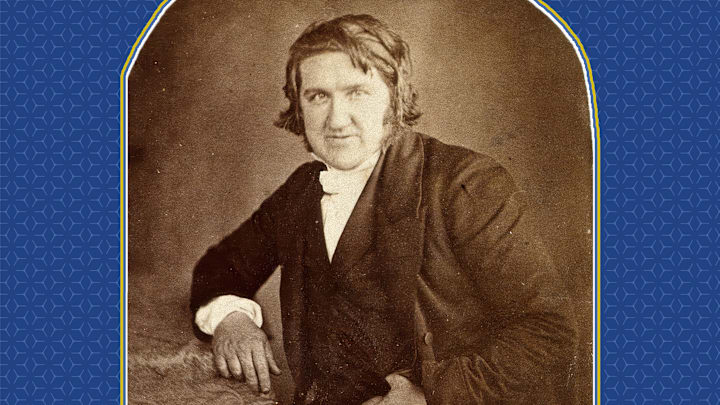
The Wood Library Museum of Anesthesiology in Schaumburg, Illinois—a sprawling exurb of Chicago—is home to an obstetric treasure: a plaster cast of a newborn infant’s head. The bust shows the trauma of birth, the infant’s head squeezed to a blunted point. The cast was made on January 19, 1847, by Sir James Y. Simpson in Edinburgh, Scotland, for a very special reason: It commemorates the first time that modern anesthesia was used to ease the pain of childbirth.
A Worthy Experiment
Simpson was not only a titled 1st Baronet but a gifted obstetrician. At age 28, he became Professor of Medicine and Midwifery at the University of Edinburgh. Many his senior in the medical community thought Simpson was an upstart—in fact, it’s said that his middle name, Young, was originally a derogatory taunt by his elders. In response to their jeers, Simpson adopted it for good.
Simpson initially used ether as an anesthetic in deliveries, but he soon began looking for an alternative anesthetic because of the gas’s “disagreeable and very persistent smell” and the fact that it was irritating to the patients’ lungs. His experimentation with chloroform—invented in the United States in 1831 by physician Samuel Guthrie—began in November 1847, with a brandy bottle and some post-dinner party research. The story goes that he presented the filled bottle to his guests to inhale. The next morning, the party were all found on the floor unconscious.
Scholars say this dramatic version of events is likely overblown, but the story illustrates the dangers of discovery. As Simpson’s experiments continued, one neighbor and fellow doctor reportedly came around to his home at 52 Queen Street every morning “just to inquire if every-one was still alive” [PDF].

Eventually, Simpson got the formulation right with some help from his assistants, who were also local chemists. Over time, the delivery method also improved: Instead of a whiff of fumes from a brandy bottle, doctors developed an apparatus that resembled a glass hookah with long tubes attached to a mask. Later in the century, a soft flannel-covered, metal-handled cup or pouch placed over the nose and mouth of the patient was the preferred delivery method. The doctor—hopefully competent—doled out the anesthetic drop by drop. This method sought to reduce the risk of overdose deaths, which were a significant concern early on.
You May Also Like ...
- 20 Surprising (and Horrifying) Facts About Pregnancy
- The Unkindest Cut: The Chainsaw Was Invented to Assist With Difficult Childbirths
- 10 Old-Timey Ways to Say You’re Pregnant
Chloroform Vs. “the Curse of Eve”
Simpson was the first to discover the anesthetic properties of chloroform, and soon began to use the drug to help women in labor. The medical community applauded his achievements, as did many women of childbearing age, but some Scottish Calvinists (and members of other religions) were not so happy. Genesis 3:16 was very clear on the matter of women suffering in childbirth as punishment for eating fruit from the Tree of Knowledge: “To the woman he said, I will surely multiply your pain in childbearing; in pain you shall bring forth children.” For those who took the Bible literally, easing a woman’s pain was anathema.
Some reports from the time describe the divide between medicine and religion on this issue as an all-out revolt, while other accounts claim the religious response to anesthetizing “the curse of Eve” has been overblown by history. In general, it’s fair to say the church wasn’t thrilled about the use of anesthesia in labor. When Simpson introduced his discovery in 1847, the Scottish Calvinist Church proclaimed it a “Satanic invention.” Pregnant women were reportedly warned by preachers: Use this “devilish treatment” and your baby will be denied a baptism.

Simpson disagreed—he didn’t think women should have to suffer the pain of childbirth. He made both a scientific and biblical argument for anesthesia during labor. In a pamphlet, Answers to the Religious Objections Advanced Against the Employment of Anaesthetic Agents in Midwifery and Surgery and Obstetrics, Simpson pointed to Genesis and the deep sleep of Adam while his rib was being removed as being evidence “of our Creator himself using means to save poor human nature from the unnecessary endurance of physical pain.” He went further, declaring that labor pains were caused by anatomical and biological forces (a small pelvis and a big baby caused uterine contractions)—not a result of the curse of Eve.
Public opinion changed after Queen Victoria took chloroform (applied by Dr. John Snow, famous for his work related to cholera) for the birth of her eighth child, Leopold, in 1853. The queen wrote in her diary: “Dr Snow administered that blessed chloroform and the effect was soothing, quieting and delightful beyond measure.” Her final child, Princess Beatrice, was also born with the aid of anesthesia. Clearly, she approved.
A version of this story originally ran in 2017; it has been updated for 2026.