%20%20--%3E%0A%3Csvg%20version%3D%221.1%22%20id%3D%22Layer_1%22%20xmlns%3D%22http%3A%2F%2Fwww.w3.org%2F2000%2Fsvg%22%20xmlns%3Axlink%3D%22http%3A%2F%2Fwww.w3.org%2F1999%2Fxlink%22%20x%3D%220px%22%20y%3D%220px%22%0A%09%20viewBox%3D%220%200%20684.6%2068.1%22%20style%3D%22enable-background%3Anew%200%200%20684.6%2068.1%3B%22%20xml%3Aspace%3D%22preserve%22%3E%0A%3Cg%3E%0A%09%3Cpath%20d%3D%22M444.1%2C29.3h-17.4v14.5h17.4V29.3z%20M36.4%2C68.1l29.3-50.8V0H50.4L32.9%2C36.8L15.5%2C0H0v68.1h16.7V45.8l12.4%2C22.3H36.4z%0A%09%09%20M49.1%2C68.1h16.6V23.4L49.1%2C52.1V68.1z%20M76.6%2C68.1h45V53.8H93.3V41.6h21V27.1h-21V14.8h28.3V0.1h-45V68.1z%20M175.6%2C68.1h17.3v-68%0A%09%09h-16.5v40.3L150%2C0.1h-17.6v68h16.7V27.7L175.6%2C68.1z%20M235.8%2C14.8h15.4V0.1h-47.4v14.7H219v53.2h16.8V14.8z%20M290.3%2C45.9h-17.1%0A%09%09l7.5-15.6h2L290.3%2C45.9z%20M298.7%2C68.1h18l-32.2-68h-5.7l-32%2C68h18l3.3-7.1h27.1L298.7%2C68.1z%20M325.2%2C68.1h46.2V53.8h-29.6V0.1h-16.7%0A%09%09V68.1z%20M423.7%2C14.8h27.2V0.1H407v68h16.7V14.8z%20M462%2C68.1h46.2V53.8h-29.6V0.1H462V68.1z%20M564.8%2C34.1c0%2C10.7-7.2%2C19.2-18.5%2C19.2%0A%09%09c-11.4%2C0-18.5-8.5-18.5-19.2s7.1-19.2%2C18.5-19.2C557.6%2C14.9%2C564.8%2C23.4%2C564.8%2C34.1%20M580.6%2C34.1c0-19-14.2-34-34.3-34%0A%09%09c-20.2%2C0-34.3%2C15-34.3%2C34c0%2C19%2C14.1%2C34%2C34.3%2C34C566.4%2C68.1%2C580.6%2C53.1%2C580.6%2C34.1%20M604.8%2C20.5c0-4.1%2C3.3-6.2%2C6.7-6.2%0A%09%09c4.4%2C0%2C6.6%2C3%2C6.6%2C6.6h14.7C631.8%2C9.1%2C625.1%2C0.1%2C611%2C0.1c-12%2C0-21.7%2C9.3-21.7%2C20.6c0%2C10.9%2C5.9%2C15.9%2C16.7%2C19.8%0A%09%09c5.2%2C1.8%2C11.5%2C3.2%2C11.5%2C8c0%2C3.3-2.4%2C5.5-6.4%2C5.5c-3.6%2C0-6.6-3-6.6-6.7h-15.2c0%2C11.5%2C7.9%2C20.8%2C21.8%2C20.8c12%2C0%2C21.6-9.3%2C21.6-20.6%0A%09%09c0-10-5.3-16.4-16.7-19.8C610.6%2C26.1%2C604.8%2C25.3%2C604.8%2C20.5%20M670%2C20.9h14.7C683.8%2C9.1%2C677.1%2C0.1%2C663%2C0.1c-12%2C0-21.7%2C9.3-21.7%2C20.6%0A%09%09c0%2C10.9%2C5.9%2C15.9%2C16.7%2C19.8c5.2%2C1.8%2C11.5%2C3.2%2C11.5%2C8c0%2C3.3-2.4%2C5.5-6.4%2C5.5c-3.6%2C0-6.6-3-6.6-6.7h-15.2c0%2C11.5%2C7.9%2C20.8%2C21.8%2C20.8%0A%09%09c12%2C0%2C21.6-9.3%2C21.6-20.6c0-10-5.3-16.4-16.7-19.8c-5.4-1.6-11.3-2.4-11.3-7.2c0-4.1%2C3.3-6.2%2C6.7-6.2C667.7%2C14.4%2C670%2C17.3%2C670%2C20.9%0A%09%09%22%2F%3E%0A%3C%2Fg%3E%0A%3C%2Fsvg%3E%0A)

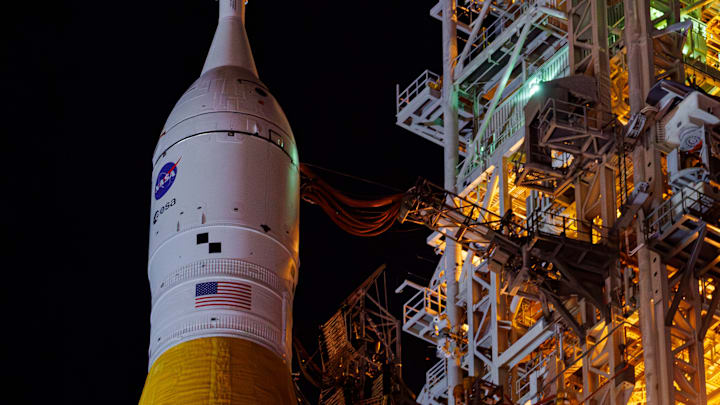
On April 1, 2026, a rocket containing four astronauts is scheduled to head out into space. The launch, if it happens, will mark the United States’ first crewed mission to the moon since the Apollo program's final mission in 1972. The mission is expected to take a total of 10 days and will see the astronauts depart from the Kennedy Space Center in Florida and circle the moon.
What Is NASA’s Artemis Program?

NASA’s Artemis Program is an ambitious initiative that focuses on “landing American astronauts on the surface of the Moon and maintaining U.S. superiority in exploration and discovery,” according to NASA’s website.
It kicked off in 2022 with the launch of Artemis I, an uncrewed test meant to check the capabilities of NASA’s Space Launch System rocket and the Orion capsule, a spacecraft designed to carry astronauts. That launch took place on November 16, 2022, and saw the rocket travel a total of 1.4 million miles over 25.5 days. It also journeyed roughly 270,000 miles away from Earth, the furthest a spacecraft designed to carry humans has ever traveled.
The Artemis Program’s overall goal, per NASA, is to create a regular system of travel between the Earth and the moon, and also to set up permanent infrastructure and outposts on the moon designed to foster further lunar study and exploration. After that, it also plans to eventually land humans on Mars.
What Is Artemis II, and When Will It Take Off?

Artemis II is set to launch in the first six days of April 2026, with liftoff set for as early as April I. The launch was originally scheduled for February, though it was delayed by a helium leak and other concerns. It is set to carry four astronauts: Commander Reid Wiseman, pilot Victor Glover, and mission specialists Christina Koch and Jeremy Hansen. Koch will be the first woman ever to fly to the moon.
The craft was originally set to launch in 2016, but wound up taking far more time than expected while also far exceeding the project’s projected budget. In total, the Space Launch System Rocket and the Orion spacecraft have reportedly required around $44 billion.
The mission will see the astronauts looping around the moon, though they will not land there, and they will return to Earth after 10 days. The mission will test out Orion’s communication abilities, navigation systems, and life-support infrastructure, among other vital technologies. The ship is built to handle massive radiation and has everything from a launch abort system to a toilet.
What Future Artemis Missions Are Planned?

NASA has a total of five Artemis missions planned, according to its website, though the details of these missions have changed drastically over the years. Artemis III, which is planned for 2027, was originally slated to land astronauts on the moon, but it is now set to serve as another test that will orbit the Earth and test out new technologies.
Artemis IV, which is scheduled for 2028, is set to mark the first time U.S. astronauts set foot on the moon since 1972. During this mission, two crew members are scheduled to land on the moon and will spend around a week exploring and studying the moon’s South Pole region. The following mission, Artemis V, is slated to be the first of many regular U.S. missions to the moon.
At a March 2026 NASA event, NASA Administrator Jared Isaacman also said that America plans to spend $20 billion to build a base on the moon over the next seven years as part of the project. He also said that in the coming years, the Artemis program will transition from using government-owned rockets to privately owned machinery belonging to Elon Musk’s SpaceX, Jeff Bezos’s Blue Origin, and other funders.
Isaacman also said that 2028 may see a mission called “Skyfall” that would see a fission reactor power three unmanned helicopters into Martian airspace as part of an effort to learn more about possible future landing locations for astronauts. He added that the program also plans to install nuclear power systems on the moon and Mars that could help warm astronauts and power equipment during explorations.
Why Is the Artemis Program Controversial?

The price tag of the Artemis Program—expected to be over $93 billion per a 2021 audit—has sparked some controversy among people who question the need for further space exploration. Additionally, the project’s intention to eventually mine resources on the moon has raised big questions about who, on Earth, can claim ownership of space.
2020’s Artemis Accords, which had been signed by 61 countries as of January 2026, attempted to settle some of these questions by creating a framework for other nations to use existing space infrastructure. However, some countries, such as Russia, have accused the accords of being too “U.S.-centric.” Critics have also questioned the safety, reliability, and feasibility of some Artemis technology.
Proponents of the Artemis endeavors have pointed out the possible economic importance of mining on the moon, and others have noted that the mission represents an important step for the United States in its race against China, which also has a powerful space program. Isaacman emphasized this in his March 2026 speech.
“Should we fail, and should we look on as our rivals achieve their lunar goals ahead of our own, we are not going to celebrate our adherence to excess requirements, policy or bureaucratic process,” he said, adding that the public should “expect uncomfortable action if that is what it takes, because the public has invested over $100 billion and has been very patient with respect to America’s return to the moon. Expectations are rightfully very high.”