%20%20--%3E%0A%3Csvg%20version%3D%221.1%22%20id%3D%22Layer_1%22%20xmlns%3D%22http%3A%2F%2Fwww.w3.org%2F2000%2Fsvg%22%20xmlns%3Axlink%3D%22http%3A%2F%2Fwww.w3.org%2F1999%2Fxlink%22%20x%3D%220px%22%20y%3D%220px%22%0A%09%20viewBox%3D%220%200%20684.6%2068.1%22%20style%3D%22enable-background%3Anew%200%200%20684.6%2068.1%3B%22%20xml%3Aspace%3D%22preserve%22%3E%0A%3Cg%3E%0A%09%3Cpath%20d%3D%22M444.1%2C29.3h-17.4v14.5h17.4V29.3z%20M36.4%2C68.1l29.3-50.8V0H50.4L32.9%2C36.8L15.5%2C0H0v68.1h16.7V45.8l12.4%2C22.3H36.4z%0A%09%09%20M49.1%2C68.1h16.6V23.4L49.1%2C52.1V68.1z%20M76.6%2C68.1h45V53.8H93.3V41.6h21V27.1h-21V14.8h28.3V0.1h-45V68.1z%20M175.6%2C68.1h17.3v-68%0A%09%09h-16.5v40.3L150%2C0.1h-17.6v68h16.7V27.7L175.6%2C68.1z%20M235.8%2C14.8h15.4V0.1h-47.4v14.7H219v53.2h16.8V14.8z%20M290.3%2C45.9h-17.1%0A%09%09l7.5-15.6h2L290.3%2C45.9z%20M298.7%2C68.1h18l-32.2-68h-5.7l-32%2C68h18l3.3-7.1h27.1L298.7%2C68.1z%20M325.2%2C68.1h46.2V53.8h-29.6V0.1h-16.7%0A%09%09V68.1z%20M423.7%2C14.8h27.2V0.1H407v68h16.7V14.8z%20M462%2C68.1h46.2V53.8h-29.6V0.1H462V68.1z%20M564.8%2C34.1c0%2C10.7-7.2%2C19.2-18.5%2C19.2%0A%09%09c-11.4%2C0-18.5-8.5-18.5-19.2s7.1-19.2%2C18.5-19.2C557.6%2C14.9%2C564.8%2C23.4%2C564.8%2C34.1%20M580.6%2C34.1c0-19-14.2-34-34.3-34%0A%09%09c-20.2%2C0-34.3%2C15-34.3%2C34c0%2C19%2C14.1%2C34%2C34.3%2C34C566.4%2C68.1%2C580.6%2C53.1%2C580.6%2C34.1%20M604.8%2C20.5c0-4.1%2C3.3-6.2%2C6.7-6.2%0A%09%09c4.4%2C0%2C6.6%2C3%2C6.6%2C6.6h14.7C631.8%2C9.1%2C625.1%2C0.1%2C611%2C0.1c-12%2C0-21.7%2C9.3-21.7%2C20.6c0%2C10.9%2C5.9%2C15.9%2C16.7%2C19.8%0A%09%09c5.2%2C1.8%2C11.5%2C3.2%2C11.5%2C8c0%2C3.3-2.4%2C5.5-6.4%2C5.5c-3.6%2C0-6.6-3-6.6-6.7h-15.2c0%2C11.5%2C7.9%2C20.8%2C21.8%2C20.8c12%2C0%2C21.6-9.3%2C21.6-20.6%0A%09%09c0-10-5.3-16.4-16.7-19.8C610.6%2C26.1%2C604.8%2C25.3%2C604.8%2C20.5%20M670%2C20.9h14.7C683.8%2C9.1%2C677.1%2C0.1%2C663%2C0.1c-12%2C0-21.7%2C9.3-21.7%2C20.6%0A%09%09c0%2C10.9%2C5.9%2C15.9%2C16.7%2C19.8c5.2%2C1.8%2C11.5%2C3.2%2C11.5%2C8c0%2C3.3-2.4%2C5.5-6.4%2C5.5c-3.6%2C0-6.6-3-6.6-6.7h-15.2c0%2C11.5%2C7.9%2C20.8%2C21.8%2C20.8%0A%09%09c12%2C0%2C21.6-9.3%2C21.6-20.6c0-10-5.3-16.4-16.7-19.8c-5.4-1.6-11.3-2.4-11.3-7.2c0-4.1%2C3.3-6.2%2C6.7-6.2C667.7%2C14.4%2C670%2C17.3%2C670%2C20.9%0A%09%09%22%2F%3E%0A%3C%2Fg%3E%0A%3C%2Fsvg%3E%0A)

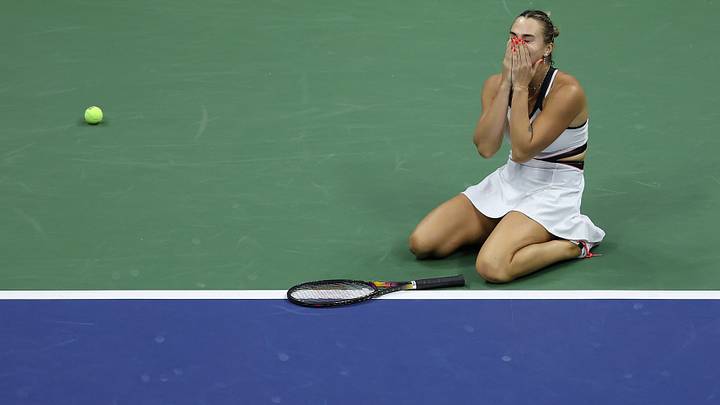
Tennis courts are green, at least historically and traditionally.
The sport, which originated in 1877, was first played on outdoor grass courts, a tradition that continues each year at Wimbledon. Over time, different surfaces were introduced, from red clay to asphalt and acrylic, but many courts remained green. That is, until 2005, when the U.S. Open debuted the first professional blue tennis courts.
As it turns out, the color switch was not simply a style preference; it’s actually backed by science, just one of many measures taken to improve gameplay for both competitors and the audience.
But how, exactly?
Before the US Open begins on Sunday, August 23, let's learn more about the reasoning behind the venue’s design choices.
THE COLOR OF THE COURT

According to Sports Illustrated, the color change was first suggested by experts at California Sports Surfaces, who recommended blue for its contrast. There is an art to this as well: referencing the color wheel, blue is directly opposite yellow, conveniently, the color of a Wilson tennis ball. This basically means the ball is much easier to spot on a blue court than on a green one.
So, in 2005, the US Open painted its in-bounds courts blue to improve the experience for both players and fans. The color became so synonymous with the event that it was trademarked as "US Open Blue" (Pantone 2965 U), even though blue is now commonly used on modern tennis courts nationwide.
Trademarking the blue was, however, not enough. The US Open also claimed the green color used just outside the in-bounds court as, you guessed it, "US Open Green" (Pantone 357U). This particular green, with its yellow hue, makes it more difficult to spot the ball the second it rolls off the blue.
NO TENNIS BALL LEFT UNTURNED

In addition to the color, the surface of the court, specifically the courts at the US Open, held at the USTA Billie Jean King National Tennis Center in Flushing Meadows in Queens, is also strategic. As previously mentioned, tennis courts throughout history have used a variety of surface materials.
The US Open courts are constructed in multiple layers, starting with asphalt. The asphalt is then mixed with sand to "smooth out any imperfections," followed by three layers of rubber to provide "cushion" for the players, though not so much as to increase bounce.
The next layer includes the color pigment and an "acrylic-silica formula" that affects the ball’s speed. Another coat is added to enhance the color, and the final layer consists of the lines and additional silica to prevent skid.
So, the next time you watch the US Open, remember that part sport and part science were used to create the ideal playing and viewing experience.