%20%20--%3E%0A%3Csvg%20version%3D%221.1%22%20id%3D%22Layer_1%22%20xmlns%3D%22http%3A%2F%2Fwww.w3.org%2F2000%2Fsvg%22%20xmlns%3Axlink%3D%22http%3A%2F%2Fwww.w3.org%2F1999%2Fxlink%22%20x%3D%220px%22%20y%3D%220px%22%0A%09%20viewBox%3D%220%200%20684.6%2068.1%22%20style%3D%22enable-background%3Anew%200%200%20684.6%2068.1%3B%22%20xml%3Aspace%3D%22preserve%22%3E%0A%3Cg%3E%0A%09%3Cpath%20d%3D%22M444.1%2C29.3h-17.4v14.5h17.4V29.3z%20M36.4%2C68.1l29.3-50.8V0H50.4L32.9%2C36.8L15.5%2C0H0v68.1h16.7V45.8l12.4%2C22.3H36.4z%0A%09%09%20M49.1%2C68.1h16.6V23.4L49.1%2C52.1V68.1z%20M76.6%2C68.1h45V53.8H93.3V41.6h21V27.1h-21V14.8h28.3V0.1h-45V68.1z%20M175.6%2C68.1h17.3v-68%0A%09%09h-16.5v40.3L150%2C0.1h-17.6v68h16.7V27.7L175.6%2C68.1z%20M235.8%2C14.8h15.4V0.1h-47.4v14.7H219v53.2h16.8V14.8z%20M290.3%2C45.9h-17.1%0A%09%09l7.5-15.6h2L290.3%2C45.9z%20M298.7%2C68.1h18l-32.2-68h-5.7l-32%2C68h18l3.3-7.1h27.1L298.7%2C68.1z%20M325.2%2C68.1h46.2V53.8h-29.6V0.1h-16.7%0A%09%09V68.1z%20M423.7%2C14.8h27.2V0.1H407v68h16.7V14.8z%20M462%2C68.1h46.2V53.8h-29.6V0.1H462V68.1z%20M564.8%2C34.1c0%2C10.7-7.2%2C19.2-18.5%2C19.2%0A%09%09c-11.4%2C0-18.5-8.5-18.5-19.2s7.1-19.2%2C18.5-19.2C557.6%2C14.9%2C564.8%2C23.4%2C564.8%2C34.1%20M580.6%2C34.1c0-19-14.2-34-34.3-34%0A%09%09c-20.2%2C0-34.3%2C15-34.3%2C34c0%2C19%2C14.1%2C34%2C34.3%2C34C566.4%2C68.1%2C580.6%2C53.1%2C580.6%2C34.1%20M604.8%2C20.5c0-4.1%2C3.3-6.2%2C6.7-6.2%0A%09%09c4.4%2C0%2C6.6%2C3%2C6.6%2C6.6h14.7C631.8%2C9.1%2C625.1%2C0.1%2C611%2C0.1c-12%2C0-21.7%2C9.3-21.7%2C20.6c0%2C10.9%2C5.9%2C15.9%2C16.7%2C19.8%0A%09%09c5.2%2C1.8%2C11.5%2C3.2%2C11.5%2C8c0%2C3.3-2.4%2C5.5-6.4%2C5.5c-3.6%2C0-6.6-3-6.6-6.7h-15.2c0%2C11.5%2C7.9%2C20.8%2C21.8%2C20.8c12%2C0%2C21.6-9.3%2C21.6-20.6%0A%09%09c0-10-5.3-16.4-16.7-19.8C610.6%2C26.1%2C604.8%2C25.3%2C604.8%2C20.5%20M670%2C20.9h14.7C683.8%2C9.1%2C677.1%2C0.1%2C663%2C0.1c-12%2C0-21.7%2C9.3-21.7%2C20.6%0A%09%09c0%2C10.9%2C5.9%2C15.9%2C16.7%2C19.8c5.2%2C1.8%2C11.5%2C3.2%2C11.5%2C8c0%2C3.3-2.4%2C5.5-6.4%2C5.5c-3.6%2C0-6.6-3-6.6-6.7h-15.2c0%2C11.5%2C7.9%2C20.8%2C21.8%2C20.8%0A%09%09c12%2C0%2C21.6-9.3%2C21.6-20.6c0-10-5.3-16.4-16.7-19.8c-5.4-1.6-11.3-2.4-11.3-7.2c0-4.1%2C3.3-6.2%2C6.7-6.2C667.7%2C14.4%2C670%2C17.3%2C670%2C20.9%0A%09%09%22%2F%3E%0A%3C%2Fg%3E%0A%3C%2Fsvg%3E%0A)

If you've ever paired your headphones or connected your smartphone to a speaker, you're familiar with Bluetooth.
While we barely notice it, this behind-the-scenes technology seamlessly connects our devices, freeing us from tangles upon tangles of wires that previous generations had to tolerate. Millions of people use Bluetooth every single day, but its unexpectedly fascinating history, spanning centuries, is lesser known.
To uncover Bluetooth’s namesake, we must journey all the way back to the Viking Age, where the tale of a king’s discolored tooth laid the foundation for today’s universal pairing standard.
THE ORIGINS OF BLUETOOTH

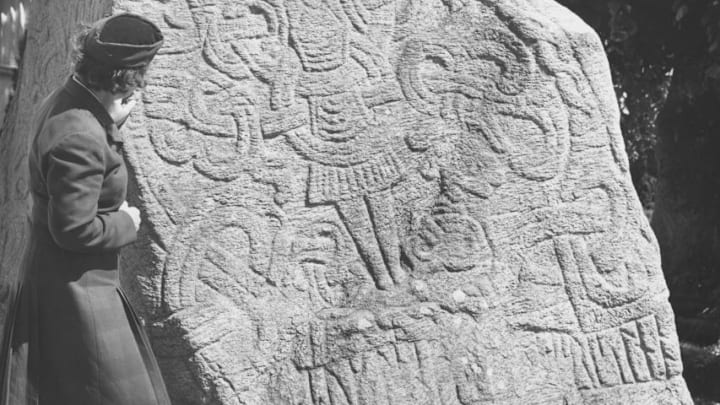
Despite sounding like a desperate attempt to rack up points in Scrabble, "Bluetooth" was actually the nickname of a 10th-century king: Harald "Bluetooth" Gormsson. He ruled Denmark and Norway and was known for uniting the two regions in 958 AD.
So, why exactly did they call him “Bluetooth”? Harald reportedly had a dead tooth that appeared dark blue or gray, which earned him the name that would connect him to modern wireless technology centuries later.
More than just a clever alias, “Bluetooth” is a lasting symbol of connection and Harald Bluetooth’s legacy of creating unity. Ages later, his legacy provided the perfect metaphor when engineers needed a name for a technology designed to connect various devices and telecommunication industries under one wireless system.
The Bluetooth logo also pays tribute to its historical roots. It combines ancient runes for Harald’s initials, discreetly intertwining the story of a Viking king and modern technology in a way that’s both meaningful and witty.
A SYMBOL OF UNITY

Fast forward to 1996. Intel, Ericsson, and Nokia teamed up to formalize a new wireless technology that would help devices pair smoothly. During one of their meetings, Intel engineer Jim Kardach suggested "Bluetooth" as a temporary code name for the tech. He explained that, just as King Harald Bluetooth united the people of Scandinavia, this technology would bring unity to cellular industries and the world.
At the time, no one expected the name to stick, but when the moment arrived to choose a final name, things didn't go as planned. The companies considered PAN (Personal Area Networking) and RadioWire. PAN was promising, but unfortunately, already in use. RadioWire could not be cleared in time for the launch due to trademark issues.
That left "Bluetooth" as their only option. And just like that, a temporary code name became a universal term we still use today.
FROM A VIKING KING TO MODERN CONNECTIVITY

The ingenious code name, inspired by a Viking king, evolved into one of the most iconic names in modern technology. The story of Bluetooth is less about a dead tooth and more about the connection of time, ideas, and industries. From uniting kingdoms in the 10th century to pairing devices in the 21st, the intent behind the name has never changed.
The next time you connect to a device without having to sort through a mess of jumbled wires, say a little thank you to a Viking king with a blue tooth, and the wise engineers who kept his message alive.