%20%20--%3E%0A%3Csvg%20version%3D%221.1%22%20id%3D%22Layer_1%22%20xmlns%3D%22http%3A%2F%2Fwww.w3.org%2F2000%2Fsvg%22%20xmlns%3Axlink%3D%22http%3A%2F%2Fwww.w3.org%2F1999%2Fxlink%22%20x%3D%220px%22%20y%3D%220px%22%0A%09%20viewBox%3D%220%200%20684.6%2068.1%22%20style%3D%22enable-background%3Anew%200%200%20684.6%2068.1%3B%22%20xml%3Aspace%3D%22preserve%22%3E%0A%3Cg%3E%0A%09%3Cpath%20d%3D%22M444.1%2C29.3h-17.4v14.5h17.4V29.3z%20M36.4%2C68.1l29.3-50.8V0H50.4L32.9%2C36.8L15.5%2C0H0v68.1h16.7V45.8l12.4%2C22.3H36.4z%0A%09%09%20M49.1%2C68.1h16.6V23.4L49.1%2C52.1V68.1z%20M76.6%2C68.1h45V53.8H93.3V41.6h21V27.1h-21V14.8h28.3V0.1h-45V68.1z%20M175.6%2C68.1h17.3v-68%0A%09%09h-16.5v40.3L150%2C0.1h-17.6v68h16.7V27.7L175.6%2C68.1z%20M235.8%2C14.8h15.4V0.1h-47.4v14.7H219v53.2h16.8V14.8z%20M290.3%2C45.9h-17.1%0A%09%09l7.5-15.6h2L290.3%2C45.9z%20M298.7%2C68.1h18l-32.2-68h-5.7l-32%2C68h18l3.3-7.1h27.1L298.7%2C68.1z%20M325.2%2C68.1h46.2V53.8h-29.6V0.1h-16.7%0A%09%09V68.1z%20M423.7%2C14.8h27.2V0.1H407v68h16.7V14.8z%20M462%2C68.1h46.2V53.8h-29.6V0.1H462V68.1z%20M564.8%2C34.1c0%2C10.7-7.2%2C19.2-18.5%2C19.2%0A%09%09c-11.4%2C0-18.5-8.5-18.5-19.2s7.1-19.2%2C18.5-19.2C557.6%2C14.9%2C564.8%2C23.4%2C564.8%2C34.1%20M580.6%2C34.1c0-19-14.2-34-34.3-34%0A%09%09c-20.2%2C0-34.3%2C15-34.3%2C34c0%2C19%2C14.1%2C34%2C34.3%2C34C566.4%2C68.1%2C580.6%2C53.1%2C580.6%2C34.1%20M604.8%2C20.5c0-4.1%2C3.3-6.2%2C6.7-6.2%0A%09%09c4.4%2C0%2C6.6%2C3%2C6.6%2C6.6h14.7C631.8%2C9.1%2C625.1%2C0.1%2C611%2C0.1c-12%2C0-21.7%2C9.3-21.7%2C20.6c0%2C10.9%2C5.9%2C15.9%2C16.7%2C19.8%0A%09%09c5.2%2C1.8%2C11.5%2C3.2%2C11.5%2C8c0%2C3.3-2.4%2C5.5-6.4%2C5.5c-3.6%2C0-6.6-3-6.6-6.7h-15.2c0%2C11.5%2C7.9%2C20.8%2C21.8%2C20.8c12%2C0%2C21.6-9.3%2C21.6-20.6%0A%09%09c0-10-5.3-16.4-16.7-19.8C610.6%2C26.1%2C604.8%2C25.3%2C604.8%2C20.5%20M670%2C20.9h14.7C683.8%2C9.1%2C677.1%2C0.1%2C663%2C0.1c-12%2C0-21.7%2C9.3-21.7%2C20.6%0A%09%09c0%2C10.9%2C5.9%2C15.9%2C16.7%2C19.8c5.2%2C1.8%2C11.5%2C3.2%2C11.5%2C8c0%2C3.3-2.4%2C5.5-6.4%2C5.5c-3.6%2C0-6.6-3-6.6-6.7h-15.2c0%2C11.5%2C7.9%2C20.8%2C21.8%2C20.8%0A%09%09c12%2C0%2C21.6-9.3%2C21.6-20.6c0-10-5.3-16.4-16.7-19.8c-5.4-1.6-11.3-2.4-11.3-7.2c0-4.1%2C3.3-6.2%2C6.7-6.2C667.7%2C14.4%2C670%2C17.3%2C670%2C20.9%0A%09%09%22%2F%3E%0A%3C%2Fg%3E%0A%3C%2Fsvg%3E%0A)

Hindsight is a fool’s pursuit.
By definition, it’s the “perception of the nature of an event after it has happened.”
If “x” had been different, then “y” might never have occurred. The trouble with hindsight is that, by the time you’re reflecting on what you could have changed to alter an outcome, it’s already too late. You can rationalize and think yourself in circles, but it's no use.
Often, in hindsight, we didn’t have the reason or knowledge to prevent something. This was true of airport security before 9/11, and of many other aviation-related incidents. Only after these incidents occurred did experts consider extensive safety precautions, because before, there was no need.
That being said, airport security looked very different before hijacked planes, flown by al-Qaeda terrorists (who went through security), struck the Pentagon and the Twin Towers on September 11, 2001, killing 2,977 people and leaving a gaping hole in the Lower Manhattan skyline. The lack of airport restrictions isn’t entirely to blame, but it was a factor that enabled the hijackers to move forward with their plans of attack.
Ask someone who flew before the tragedy, and they'll likely describe how lax airport security was. Not only were certain types of knives and blades permitted, but you didn't even need a ticket or ID to reach the gate.
For those who traveled in a pre-9/11 world, this probably isn't surprising. But for anyone who didn't, the lack of restrictions is almost unimaginable.
AIRPORT SECURITY BEFORE 9/11
Mary Schiavo, the U.S. Department of Transportation’s inspector general from 1990 to 1996, told Fortune that at the time, it was generally assumed that anyone hijacking a plane would want to negotiate, not deliberately crash it and kill everyone on board, including themselves. So, many of the safety features we have now were simply considered unnecessary before 2001.
Prior to September 11, 2001, airport security was, frankly, much less secure.
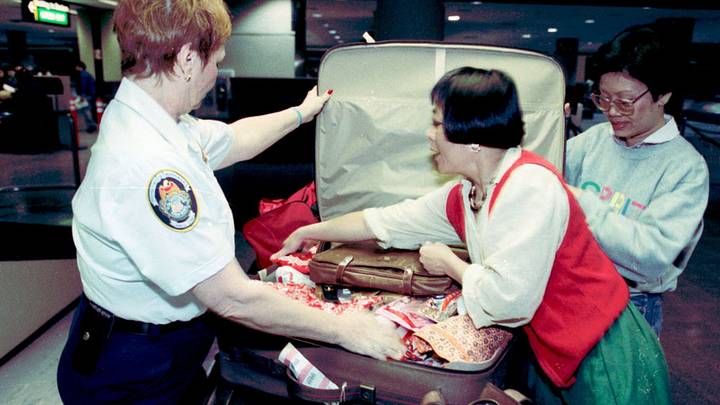
Loved ones without tickets could walk travelers to their gates and say goodbye as they boarded, and IDs weren't required to enter the concourse. People went through a screening process run by private companies that employed minimally trained individuals instead of a qualified federal workforce.
Before 9/11, luggage wasn't screened for knives and box cutters, and passengers could legally carry them. Since these items weren't banned, the hijackers brought them on the flight and used them to threaten travelers and crew.
The process for screening luggage for explosives was also less thorough than it is today; checked bags weren't even legally required to be X-rayed before an incident in 1988 in which explosives were packed in a suitcase, resulting in the deaths of 270 people. Once again, though tempting, hindsight has no practical value.
Travelers also routinely packed full bottles of lotion, shampoo, and other liquids, and everyone got to keep their shoes on.
AIRPORT SECURITY AFTER 9/11
After 9/11, cockpit doors were redesigned to prevent hijackers from entering, and the screening process was passed on to a federal workforce of highly trained professionals. Luggage is now thoroughly screened, and weapons of any kind are no longer allowed on flights.
Because screening became more thorough (and people on watch lists were checked much more intensively), lines grew longer, which led to the creation of TSA PreCheck.
Perhaps the biggest change is who’s allowed in various parts of the airport. After 9/11, passengers needed both an ID and a ticket to get through security, and those without either are not permitted past the checkpoint. Basically, if you want to say goodbye to a traveller, you have to do it in the car or by the check-in area.
In 2026, we utilize facial recognition technology, along with ID, to prove our identity.
Three months after the horrific events of 9/11, a traveler flying from Paris, France, to Miami, Florida, was caught with bombs in his shoes, prompting the now-standard shoe removal process. Similar incidents involving liquid explosives on flights headed to the U.S. and Canada led to the 3.4-ounce liquid restriction we still follow.
Metal detectors existed before 9/11, but after the attacks, the technology was enhanced, and their use became much more widespread. This and other airport security measures we have in place in 2026, protecting millions of travelers every day, were developed in response to 9/11 and other tragic aviation events.
While these technological advancements show real progress, hindsight (that unwanted item we can't help but unpack) can’t turn back time, bring back the dead, or rebuild destroyed property, no matter how desperately we wish it could. Yet gratitude for improved safety standards following 9/11, for the brave men and women who risked their lives for others, and for those who returned to restore the rubble, can preserve their memory.