%20%20--%3E%0A%3Csvg%20version%3D%221.1%22%20id%3D%22Layer_1%22%20xmlns%3D%22http%3A%2F%2Fwww.w3.org%2F2000%2Fsvg%22%20xmlns%3Axlink%3D%22http%3A%2F%2Fwww.w3.org%2F1999%2Fxlink%22%20x%3D%220px%22%20y%3D%220px%22%0A%09%20viewBox%3D%220%200%20684.6%2068.1%22%20style%3D%22enable-background%3Anew%200%200%20684.6%2068.1%3B%22%20xml%3Aspace%3D%22preserve%22%3E%0A%3Cg%3E%0A%09%3Cpath%20d%3D%22M444.1%2C29.3h-17.4v14.5h17.4V29.3z%20M36.4%2C68.1l29.3-50.8V0H50.4L32.9%2C36.8L15.5%2C0H0v68.1h16.7V45.8l12.4%2C22.3H36.4z%0A%09%09%20M49.1%2C68.1h16.6V23.4L49.1%2C52.1V68.1z%20M76.6%2C68.1h45V53.8H93.3V41.6h21V27.1h-21V14.8h28.3V0.1h-45V68.1z%20M175.6%2C68.1h17.3v-68%0A%09%09h-16.5v40.3L150%2C0.1h-17.6v68h16.7V27.7L175.6%2C68.1z%20M235.8%2C14.8h15.4V0.1h-47.4v14.7H219v53.2h16.8V14.8z%20M290.3%2C45.9h-17.1%0A%09%09l7.5-15.6h2L290.3%2C45.9z%20M298.7%2C68.1h18l-32.2-68h-5.7l-32%2C68h18l3.3-7.1h27.1L298.7%2C68.1z%20M325.2%2C68.1h46.2V53.8h-29.6V0.1h-16.7%0A%09%09V68.1z%20M423.7%2C14.8h27.2V0.1H407v68h16.7V14.8z%20M462%2C68.1h46.2V53.8h-29.6V0.1H462V68.1z%20M564.8%2C34.1c0%2C10.7-7.2%2C19.2-18.5%2C19.2%0A%09%09c-11.4%2C0-18.5-8.5-18.5-19.2s7.1-19.2%2C18.5-19.2C557.6%2C14.9%2C564.8%2C23.4%2C564.8%2C34.1%20M580.6%2C34.1c0-19-14.2-34-34.3-34%0A%09%09c-20.2%2C0-34.3%2C15-34.3%2C34c0%2C19%2C14.1%2C34%2C34.3%2C34C566.4%2C68.1%2C580.6%2C53.1%2C580.6%2C34.1%20M604.8%2C20.5c0-4.1%2C3.3-6.2%2C6.7-6.2%0A%09%09c4.4%2C0%2C6.6%2C3%2C6.6%2C6.6h14.7C631.8%2C9.1%2C625.1%2C0.1%2C611%2C0.1c-12%2C0-21.7%2C9.3-21.7%2C20.6c0%2C10.9%2C5.9%2C15.9%2C16.7%2C19.8%0A%09%09c5.2%2C1.8%2C11.5%2C3.2%2C11.5%2C8c0%2C3.3-2.4%2C5.5-6.4%2C5.5c-3.6%2C0-6.6-3-6.6-6.7h-15.2c0%2C11.5%2C7.9%2C20.8%2C21.8%2C20.8c12%2C0%2C21.6-9.3%2C21.6-20.6%0A%09%09c0-10-5.3-16.4-16.7-19.8C610.6%2C26.1%2C604.8%2C25.3%2C604.8%2C20.5%20M670%2C20.9h14.7C683.8%2C9.1%2C677.1%2C0.1%2C663%2C0.1c-12%2C0-21.7%2C9.3-21.7%2C20.6%0A%09%09c0%2C10.9%2C5.9%2C15.9%2C16.7%2C19.8c5.2%2C1.8%2C11.5%2C3.2%2C11.5%2C8c0%2C3.3-2.4%2C5.5-6.4%2C5.5c-3.6%2C0-6.6-3-6.6-6.7h-15.2c0%2C11.5%2C7.9%2C20.8%2C21.8%2C20.8%0A%09%09c12%2C0%2C21.6-9.3%2C21.6-20.6c0-10-5.3-16.4-16.7-19.8c-5.4-1.6-11.3-2.4-11.3-7.2c0-4.1%2C3.3-6.2%2C6.7-6.2C667.7%2C14.4%2C670%2C17.3%2C670%2C20.9%0A%09%09%22%2F%3E%0A%3C%2Fg%3E%0A%3C%2Fsvg%3E%0A)

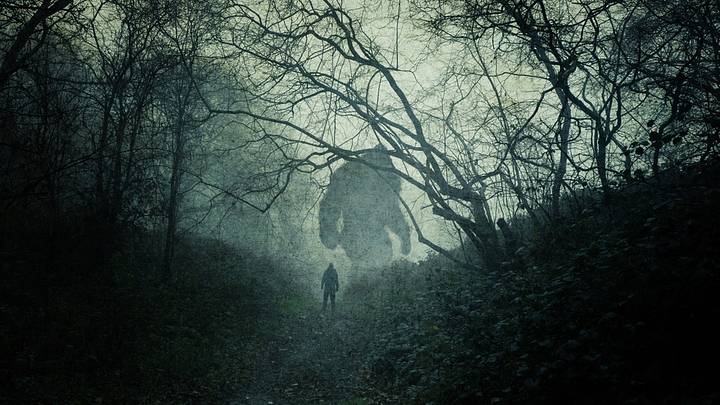
An unusual creature called Jimothy took the internet by storm this summer. Although the first viral videos of him declared that a new cryptid had dropped, it soon became evident that he was really a raccoon with short spine syndrome. But there are actually a handful of animals that were categorized as cryptids for many years before surprisingly being scientifically confirmed as real.
Evidence of Bigfoot and the Loch Ness Monster may have eluded cryptozoologists to this day, but here are six creatures that did make the leap into reality.
Komodo Dragon

It’s no wonder that Komodo dragons were once considered to be cryptids. The idea of a little-known island populated by dragons is hard to believe, and it was only during the 20th century that evidence of the animal actually being real started mounting.
In 1910, Dutch Lieutenant Jacques Karel Henri van Steyn van Hensbroek, who was stationed on Indonesia’s Flores Island, heard that a “land crocodile” lived on the nearby island of Komodo. He went to see the strange beast for himself, and in 1912 sent Peter Ouwens, director of the Zoological Museum of Bogor, a photograph and the skin of the creature. Although the Komodo dragon isn’t really a dragon, the discovery was still monumental, as the animal is Earth’s largest living lizard (it can be up to 10 feet long and weigh up to 330 pounds).
Further proof came in 1926 thanks to an expedition led by William Douglas Burden. The team not only managed to record footage of Komodo dragons; they also captured two live specimens, which were transported back to the U.S. and put on display at the Bronx Zoo. The expedition also partly inspired the classic monster movie King Kong (1933); co-director Merian C. Cooper was friends with Burden and came up with the plot after hearing of his adventures on Komodo Island.
Okapi

When Europeans were exploring central Africa throughout the 19th century, they heard tales of an elusive striped zebra-like mammal that lived in the forest. Although Africans had known of the animal for centuries—they called it an o’api, which became okapi in English—the creature was so shy that foreign explorers couldn’t catch a glimpse of it and some doubted it was even real.
When word of the mysterious hoofed cryptid reached British explorer Sir Harry Hamilton Johnston, he set out on a quest to prove that it existed. Although he never saw a live okapi himself, in 1901 he acquired a whole skin and two skulls which not only proved its existence to the Western scientific community, but revealed that it was actually a relative of the giraffe, not the zebra. In subsequent years, live specimens were caught and shipped around the world and many zoos now have okapi on display.
Jackalope

A jackalope is a rabbit with antlers. There are some people who still consider this creature to be a cryptid, and indeed, many specimens are just taxidermy hoaxes. But jackalopes have actually been proven to be real—in a sense. Stories of horned rabbits date back to the medieval period, but rather than being a rare type of bunny not yet confirmed by science, they’re actually regular rabbits infected with Shope papilloma virus (SPV).
SPV causes growths that resemble horns to sprout from a rabbit’s head. Sometimes these horns only protrude from the forehead (like the classic image of a jackalope), but they can form all over the head and face—to horrifying effect. SPV wasn’t scientifically described until 1933, so it’s understandable that for hundreds of years people thought that a strange and rare type of rabbit was hopping around the woods. It’s these infected rabbits that likely inspired the taxidermied jackalope hoaxes—a trend that kicked off in 1932 thanks to a man named Douglas Herrick from Wyoming.
Giant Squid

Stories of kraken dragging sailors to their deaths on the high seas date back to the 13th century. Many people thought that the tales of giant sea creatures lurking in the depths were the stuff of fantasy, but during the 1800s the stories were proven to be true—sort of.
Although reports of the aquatic beast’s size and aggression were exaggerated, during the second half of the 19th century it started to become clear that there really were huge tentacled creatures swimming the world’s seas. But they weren’t kraken; they were giant squid.
In 1861, the crew of the French ship Alecton tried to capture a giant squid, but it fell into the sea while being hoisted aboard (this event partly inspired the squid in Jules Verne’s Twenty Thousand Leagues Under the Sea). Then in 1873, the crew of a Canadian fishing boat returned to land with a 20-foot-long tentacle. “I was now the possessor of one of the rarest curiosities in the whole animal kingdom,” wrote the Reverend of St. John’s, Newfoundland. “The veritable arm of the hitherto mythical devilfish, about whose existence naturalists had been disputing for centuries.”
Throughout the 1870s, so much evidence of giant squid was found that scientists finally declared the creature real. But the animal has remained fairly elusive, and it’s only been during the 21st century that photos and footage of giant squid in their natural habitat have been captured.
The Devil Bird

Many cultures have stories about mythical creatures whose cries are a bad omen. In Irish folklore the wail of a Banshee signals the death of a family member, while in Māori mythology the call of the Hakawai precedes war. But it turns out that the animal that is an omen of death in Sri Lankan folklore—known as the Devil Bird or Ulama—is actually real.
The Devil Bird is known for uttering an unnerving cry, which, according to Sydney’s Sunday Times, “resembles nothing so much as the scream of a human being undergoing the most terrible torture.” Although the avian had often been dismissed as mere superstition—thereby relegating it to the cryptid category—in 1907 scientists realized that there really was a scary-sounding bird out in the woods (although its supposedly portentous powers haven’t been proven).
Although initially thought to be the brown wood owl, the winged culprit is now widely considered to be the spot-bellied eagle owl—which even has devilish ear tufts to match the legend—but it’s still not 100% confirmed to be that species making the terrifying noise.
Mountain Gorilla

Throughout the 1800s, explorers in East Africa heard tales of hairy humanoid creatures living on the slopes of the Virunga Mountains, but their existence had never been verified. That all changed in 1902, when Captain Robert von Beringe of Germany was climbing Mount Sabinyo with a small team and spotted a troop of the huge primates. They managed to shoot two of them, but only one was able to be recovered (it had to be pulled out of a ravine with a rope, and males can weigh around 400 pounds).
The massive ape’s remains were then sent to the Zoologisches Museum in Berlin, where Professor Paul Matschie confirmed it as a new species. The animal’s formal Latin name is Gorilla beringei beringei—after the man who shot it—but it’s commonly known as the mountain gorilla. Sadly, the species has been on the endangered list since 2018.