%20%20--%3E%0A%3Csvg%20version%3D%221.1%22%20id%3D%22Layer_1%22%20xmlns%3D%22http%3A%2F%2Fwww.w3.org%2F2000%2Fsvg%22%20xmlns%3Axlink%3D%22http%3A%2F%2Fwww.w3.org%2F1999%2Fxlink%22%20x%3D%220px%22%20y%3D%220px%22%0A%09%20viewBox%3D%220%200%20684.6%2068.1%22%20style%3D%22enable-background%3Anew%200%200%20684.6%2068.1%3B%22%20xml%3Aspace%3D%22preserve%22%3E%0A%3Cg%3E%0A%09%3Cpath%20d%3D%22M444.1%2C29.3h-17.4v14.5h17.4V29.3z%20M36.4%2C68.1l29.3-50.8V0H50.4L32.9%2C36.8L15.5%2C0H0v68.1h16.7V45.8l12.4%2C22.3H36.4z%0A%09%09%20M49.1%2C68.1h16.6V23.4L49.1%2C52.1V68.1z%20M76.6%2C68.1h45V53.8H93.3V41.6h21V27.1h-21V14.8h28.3V0.1h-45V68.1z%20M175.6%2C68.1h17.3v-68%0A%09%09h-16.5v40.3L150%2C0.1h-17.6v68h16.7V27.7L175.6%2C68.1z%20M235.8%2C14.8h15.4V0.1h-47.4v14.7H219v53.2h16.8V14.8z%20M290.3%2C45.9h-17.1%0A%09%09l7.5-15.6h2L290.3%2C45.9z%20M298.7%2C68.1h18l-32.2-68h-5.7l-32%2C68h18l3.3-7.1h27.1L298.7%2C68.1z%20M325.2%2C68.1h46.2V53.8h-29.6V0.1h-16.7%0A%09%09V68.1z%20M423.7%2C14.8h27.2V0.1H407v68h16.7V14.8z%20M462%2C68.1h46.2V53.8h-29.6V0.1H462V68.1z%20M564.8%2C34.1c0%2C10.7-7.2%2C19.2-18.5%2C19.2%0A%09%09c-11.4%2C0-18.5-8.5-18.5-19.2s7.1-19.2%2C18.5-19.2C557.6%2C14.9%2C564.8%2C23.4%2C564.8%2C34.1%20M580.6%2C34.1c0-19-14.2-34-34.3-34%0A%09%09c-20.2%2C0-34.3%2C15-34.3%2C34c0%2C19%2C14.1%2C34%2C34.3%2C34C566.4%2C68.1%2C580.6%2C53.1%2C580.6%2C34.1%20M604.8%2C20.5c0-4.1%2C3.3-6.2%2C6.7-6.2%0A%09%09c4.4%2C0%2C6.6%2C3%2C6.6%2C6.6h14.7C631.8%2C9.1%2C625.1%2C0.1%2C611%2C0.1c-12%2C0-21.7%2C9.3-21.7%2C20.6c0%2C10.9%2C5.9%2C15.9%2C16.7%2C19.8%0A%09%09c5.2%2C1.8%2C11.5%2C3.2%2C11.5%2C8c0%2C3.3-2.4%2C5.5-6.4%2C5.5c-3.6%2C0-6.6-3-6.6-6.7h-15.2c0%2C11.5%2C7.9%2C20.8%2C21.8%2C20.8c12%2C0%2C21.6-9.3%2C21.6-20.6%0A%09%09c0-10-5.3-16.4-16.7-19.8C610.6%2C26.1%2C604.8%2C25.3%2C604.8%2C20.5%20M670%2C20.9h14.7C683.8%2C9.1%2C677.1%2C0.1%2C663%2C0.1c-12%2C0-21.7%2C9.3-21.7%2C20.6%0A%09%09c0%2C10.9%2C5.9%2C15.9%2C16.7%2C19.8c5.2%2C1.8%2C11.5%2C3.2%2C11.5%2C8c0%2C3.3-2.4%2C5.5-6.4%2C5.5c-3.6%2C0-6.6-3-6.6-6.7h-15.2c0%2C11.5%2C7.9%2C20.8%2C21.8%2C20.8%0A%09%09c12%2C0%2C21.6-9.3%2C21.6-20.6c0-10-5.3-16.4-16.7-19.8c-5.4-1.6-11.3-2.4-11.3-7.2c0-4.1%2C3.3-6.2%2C6.7-6.2C667.7%2C14.4%2C670%2C17.3%2C670%2C20.9%0A%09%09%22%2F%3E%0A%3C%2Fg%3E%0A%3C%2Fsvg%3E%0A)

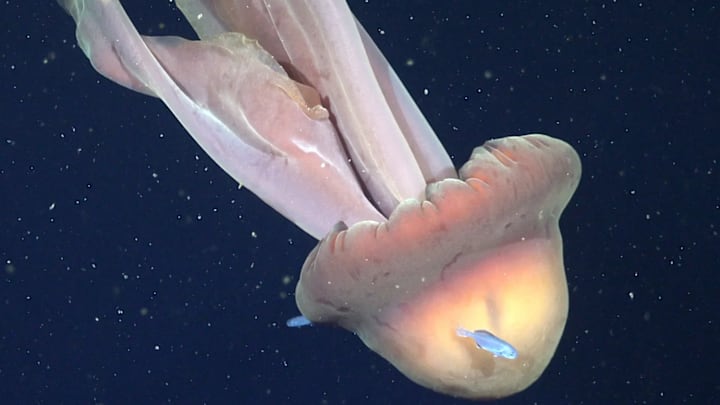
Forget Bigfoot. Some of the ocean’s rarest animals have been spotted far less often than mythical monsters. Many live in the twilight zone, 650 to 3,300 feet below the surface, where just enough sunlight filters through for faint shadows to form. It’s a dim, mysterious world—and home to otherworldly organisms like the giant phantom jelly, a creature so elusive that even the best underwater cameras rarely catch a glimpse. And it’s not alone: from shadowy fish to translucent predators, the deep blue is full of bizarre beasts that most people will never see firsthand.
- King–of-the-Salmon (Trachipterus altivelis)
- Giant Phantom Jellyfish (Stygiomedusa gigantea)
- Barreleye Fish (Macropinna microstoma)
- Antarctic Gonate Squid (Gonatus antarcticus)
- Goblin Shark (Mitsukurina owstoni)
King–of-the-Salmon (Trachipterus altivelis)
Whether you’ve seen salmon swimming upriver or served as sashimi, the king-of-the-salmon probably doesn’t seem rare. But despite its name, this fickle fish isn’t actually a salmon. Its silver, ribbon-like body marks it as a member of the ribbonfish family, and unlike salmon, it rarely comes near the surface—usually dwelling around 3,000 feet deep. The most recent sighting, however, occurred in Monterey Bay in 2025, when diver Ted Judah spotted a juvenile just 15 feet below the surface. This marks only the second recent Bay Area sighting, though the species has been recorded washing up along the coasts of British Columbia and Washington a handful of times.
With multiple documented sightings, this fish is far from a myth—though its name comes from one. The king-of-the-salmon was named by the Makah, an Indigenous people of the Pacific Northwest, who believed this elusive species guided salmon back to their spawning grounds.
Giant Phantom Jellyfish (Stygiomedusa gigantea)
When researchers spotted this ginormous, gelatinous creature off the coast of Argentina in 2026, it was like seeing a ghost. These giant phantom jellyfish can stretch up to 33 feet—longer than the average school bus—but despite their size, they’ve been recorded only about 120 times since the first sighting in 1899. Recent footage shows their long, ribbon-like oral arms—used to grab prey rather than sting like typical tentacles—about 800 feet below the surface of the Atlantic. Previously, MBARI captured a mesmerizing deep-sea dance featuring the giant phantom jelly and a fish during an expedition to the Gulf of California.
Barreleye Fish (Macropinna microstoma)
For the barreleye fish, rolling its eyes to the back of its head isn’t a sign of sass: it’s a means of survival. Its glassy head houses glowing green eyes that can pivot to peer upward through its transparent forehead, letting it scan for prey while drifting in the deep. Usually found 600 to 800 feet below the surface, this rare fish feeds on small crustaceans, floating motionless until a meal crosses its path. As of 2022, the barreleye fish has been spotted only nine times, with the first sighting in 2009 by researchers from the Monterey Bay Aquarium Research Institute.
Antarctic Gonate Squid (Gonatus antarcticus)
It isn’t the size of the Antarctic gonate squid that makes it fascinating; it’s that this rare, blood-red squid thrives in the icy depths of the Southern Ocean. Its tentacles end in sharp hooks, and it can even release clouds of green ink, making it appear almost alien. The species was first filmed on Christmas Day 2024 by a remotely operated vehicle from the Schmidt Ocean Institute during a National Geographic expedition, where scientists spotted the three-foot squid gliding 7,000 feet beneath the frigid surface.
Before this Christmas miracle, the squid was known only from individuals found in fishing nets or in the stomachs of whales and seals, making this footage a truly historic glimpse of a creature almost no one has ever seen alive.
Goblin Shark (Mitsukurina owstoni)
You're probably more likely to see goblins around Halloween than in the sea: this super-rare shark has only been documented about 250 times since a fisherman in Japan first spotted it in 1898. Often called a "living fossil," it has a long, pointy, purplish-pink snout studded with sharp teeth and an extendable jaw that allows it to ambush fish, squid, and crustaceans. Goblin sharks lurk in deep waters—typically 800 to 4,000 feet—across the Atlantic, Pacific, and Indian Oceans. The first-ever live sighting of a goblin shark in the Canary Islands occurred in 2026, proving the species is more than just a scary story.