%20%20--%3E%0A%3Csvg%20version%3D%221.1%22%20id%3D%22Layer_1%22%20xmlns%3D%22http%3A%2F%2Fwww.w3.org%2F2000%2Fsvg%22%20xmlns%3Axlink%3D%22http%3A%2F%2Fwww.w3.org%2F1999%2Fxlink%22%20x%3D%220px%22%20y%3D%220px%22%0A%09%20viewBox%3D%220%200%20684.6%2068.1%22%20style%3D%22enable-background%3Anew%200%200%20684.6%2068.1%3B%22%20xml%3Aspace%3D%22preserve%22%3E%0A%3Cg%3E%0A%09%3Cpath%20d%3D%22M444.1%2C29.3h-17.4v14.5h17.4V29.3z%20M36.4%2C68.1l29.3-50.8V0H50.4L32.9%2C36.8L15.5%2C0H0v68.1h16.7V45.8l12.4%2C22.3H36.4z%0A%09%09%20M49.1%2C68.1h16.6V23.4L49.1%2C52.1V68.1z%20M76.6%2C68.1h45V53.8H93.3V41.6h21V27.1h-21V14.8h28.3V0.1h-45V68.1z%20M175.6%2C68.1h17.3v-68%0A%09%09h-16.5v40.3L150%2C0.1h-17.6v68h16.7V27.7L175.6%2C68.1z%20M235.8%2C14.8h15.4V0.1h-47.4v14.7H219v53.2h16.8V14.8z%20M290.3%2C45.9h-17.1%0A%09%09l7.5-15.6h2L290.3%2C45.9z%20M298.7%2C68.1h18l-32.2-68h-5.7l-32%2C68h18l3.3-7.1h27.1L298.7%2C68.1z%20M325.2%2C68.1h46.2V53.8h-29.6V0.1h-16.7%0A%09%09V68.1z%20M423.7%2C14.8h27.2V0.1H407v68h16.7V14.8z%20M462%2C68.1h46.2V53.8h-29.6V0.1H462V68.1z%20M564.8%2C34.1c0%2C10.7-7.2%2C19.2-18.5%2C19.2%0A%09%09c-11.4%2C0-18.5-8.5-18.5-19.2s7.1-19.2%2C18.5-19.2C557.6%2C14.9%2C564.8%2C23.4%2C564.8%2C34.1%20M580.6%2C34.1c0-19-14.2-34-34.3-34%0A%09%09c-20.2%2C0-34.3%2C15-34.3%2C34c0%2C19%2C14.1%2C34%2C34.3%2C34C566.4%2C68.1%2C580.6%2C53.1%2C580.6%2C34.1%20M604.8%2C20.5c0-4.1%2C3.3-6.2%2C6.7-6.2%0A%09%09c4.4%2C0%2C6.6%2C3%2C6.6%2C6.6h14.7C631.8%2C9.1%2C625.1%2C0.1%2C611%2C0.1c-12%2C0-21.7%2C9.3-21.7%2C20.6c0%2C10.9%2C5.9%2C15.9%2C16.7%2C19.8%0A%09%09c5.2%2C1.8%2C11.5%2C3.2%2C11.5%2C8c0%2C3.3-2.4%2C5.5-6.4%2C5.5c-3.6%2C0-6.6-3-6.6-6.7h-15.2c0%2C11.5%2C7.9%2C20.8%2C21.8%2C20.8c12%2C0%2C21.6-9.3%2C21.6-20.6%0A%09%09c0-10-5.3-16.4-16.7-19.8C610.6%2C26.1%2C604.8%2C25.3%2C604.8%2C20.5%20M670%2C20.9h14.7C683.8%2C9.1%2C677.1%2C0.1%2C663%2C0.1c-12%2C0-21.7%2C9.3-21.7%2C20.6%0A%09%09c0%2C10.9%2C5.9%2C15.9%2C16.7%2C19.8c5.2%2C1.8%2C11.5%2C3.2%2C11.5%2C8c0%2C3.3-2.4%2C5.5-6.4%2C5.5c-3.6%2C0-6.6-3-6.6-6.7h-15.2c0%2C11.5%2C7.9%2C20.8%2C21.8%2C20.8%0A%09%09c12%2C0%2C21.6-9.3%2C21.6-20.6c0-10-5.3-16.4-16.7-19.8c-5.4-1.6-11.3-2.4-11.3-7.2c0-4.1%2C3.3-6.2%2C6.7-6.2C667.7%2C14.4%2C670%2C17.3%2C670%2C20.9%0A%09%09%22%2F%3E%0A%3C%2Fg%3E%0A%3C%2Fsvg%3E%0A)

Everyone knows these iconic paintings, but most people get the story wrong. From the mistaken belief that Mona Lisa's eyes follow you around the room to the idea that George Washington actually stood tall on a moving boat, some of the world's most recognizable paintings have been widely misinterpreted. Over the years, details have been exaggerated, misunderstood, or completely invented, turning these masterpieces into myths as much as art. Here's the truth behind six common misconceptions about these famous historical paintings.
1. American Gothic does not portray a romantic pair.

Once you realize the man and woman in Grant Wood’s American Gothic are a farmer and his daughter—not a married couple—their stern expressions make more sense. Inspired by a small white house in Iowa, Wood set out to capture the steadfast spirit of its inhabitants. He enlisted his sister, Nan Wood Graham, and his dentist, Dr. Byron McKeeby, as models. While most viewers assume they are husband and wife, Wood intended a father-and-daughter pairing, which gives the pitchfork and their unwavering gazes added meaning. Although it looks like a family portrait in front of the house, the models posed separately in Wood's studio.
2. Dalí's melting clocks were inspired by cheese, not physics

If cheese drives you, you have more in common with surrealist artist Salvador Dalí than you might think. His iconic paintingThe Persistence of Memory, known for its symbolic "melting" clocks, is often interpreted as a meditation on time and space, with many critics at the time believing Dalí had an Einstein-level understanding of relativity. Yet the story behind those soft, drooping clocks is delightfully simple: Dalí himself said they were inspired by the image of Camembert cheese melting in the sun. In his own words, they represent "the camembert of time."
3. The Mona Lisa isn't following your every move.

Mona Lisa's smile and eyes have captivated viewers for centuries, partly because they seem to follow you around the room. While there's no omnipresent entity behind the painting, scientists have identified the "Mona Lisa effect," a phenomenon that explains that eerie feeling of being watched. Interestingly, a study found that da Vinci's painting doesn't actually produce the effect: the figure's gaze is angled about 15.4 degrees to the right. This is well outside the range in which the Mona Lisa effect occurs, which is about five degrees to the left or right.
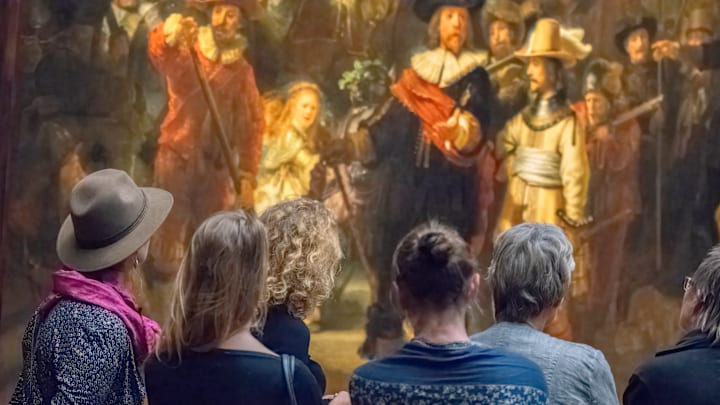
4. The Night Watch isn't a nighttime scene.

As if the dark hues and tense, weapon-wielding men weren't enough, the title of The Night Watch seems to suggest a scene set after dusk. In reality, Rembrandt's painting depicts a daytime militia parade, commissioned by the Kloveniers—Amsterdam's civic guard—for their meeting hall. The title was not given by Rembrandt; it was added at the end of the eighteenth century, long after layers of varnish and dirt had darkened the painting and created the illusion of a nighttime scene.
5. The figure in The Scream isn't actually screaming.

Edvard Munch's The Scream is one of the most recognizable paintings in the world, but it’s often misunderstood. The blood-curdling scream that viewers imagine actually comes from the environment, while the figure covers its ears to block it out. Munch was inspired by a red sunset that made him feel a “great scream passing through nature,” an experience he recorded in his diaries.
6. Washington's famous Delaware crossing wasn't that dramatic.

You may not be able to rewrite history, but you can repaint it. Emanuel Leutze's famous painting, Washington Crossing the Delaware, shows a heroic George Washington kneeling at the front of a boat, leading his troops to victory. The actual crossing was a secret nighttime attack in icy waters, making such a pose impossible. Even the golden light washing over him and his soldiers was an artistic choice rather than fact, turning a risky maneuver into a dramatic, larger-than-life scene.