%20%20--%3E%0A%3Csvg%20version%3D%221.1%22%20id%3D%22Layer_1%22%20xmlns%3D%22http%3A%2F%2Fwww.w3.org%2F2000%2Fsvg%22%20xmlns%3Axlink%3D%22http%3A%2F%2Fwww.w3.org%2F1999%2Fxlink%22%20x%3D%220px%22%20y%3D%220px%22%0A%09%20viewBox%3D%220%200%20684.6%2068.1%22%20style%3D%22enable-background%3Anew%200%200%20684.6%2068.1%3B%22%20xml%3Aspace%3D%22preserve%22%3E%0A%3Cg%3E%0A%09%3Cpath%20d%3D%22M444.1%2C29.3h-17.4v14.5h17.4V29.3z%20M36.4%2C68.1l29.3-50.8V0H50.4L32.9%2C36.8L15.5%2C0H0v68.1h16.7V45.8l12.4%2C22.3H36.4z%0A%09%09%20M49.1%2C68.1h16.6V23.4L49.1%2C52.1V68.1z%20M76.6%2C68.1h45V53.8H93.3V41.6h21V27.1h-21V14.8h28.3V0.1h-45V68.1z%20M175.6%2C68.1h17.3v-68%0A%09%09h-16.5v40.3L150%2C0.1h-17.6v68h16.7V27.7L175.6%2C68.1z%20M235.8%2C14.8h15.4V0.1h-47.4v14.7H219v53.2h16.8V14.8z%20M290.3%2C45.9h-17.1%0A%09%09l7.5-15.6h2L290.3%2C45.9z%20M298.7%2C68.1h18l-32.2-68h-5.7l-32%2C68h18l3.3-7.1h27.1L298.7%2C68.1z%20M325.2%2C68.1h46.2V53.8h-29.6V0.1h-16.7%0A%09%09V68.1z%20M423.7%2C14.8h27.2V0.1H407v68h16.7V14.8z%20M462%2C68.1h46.2V53.8h-29.6V0.1H462V68.1z%20M564.8%2C34.1c0%2C10.7-7.2%2C19.2-18.5%2C19.2%0A%09%09c-11.4%2C0-18.5-8.5-18.5-19.2s7.1-19.2%2C18.5-19.2C557.6%2C14.9%2C564.8%2C23.4%2C564.8%2C34.1%20M580.6%2C34.1c0-19-14.2-34-34.3-34%0A%09%09c-20.2%2C0-34.3%2C15-34.3%2C34c0%2C19%2C14.1%2C34%2C34.3%2C34C566.4%2C68.1%2C580.6%2C53.1%2C580.6%2C34.1%20M604.8%2C20.5c0-4.1%2C3.3-6.2%2C6.7-6.2%0A%09%09c4.4%2C0%2C6.6%2C3%2C6.6%2C6.6h14.7C631.8%2C9.1%2C625.1%2C0.1%2C611%2C0.1c-12%2C0-21.7%2C9.3-21.7%2C20.6c0%2C10.9%2C5.9%2C15.9%2C16.7%2C19.8%0A%09%09c5.2%2C1.8%2C11.5%2C3.2%2C11.5%2C8c0%2C3.3-2.4%2C5.5-6.4%2C5.5c-3.6%2C0-6.6-3-6.6-6.7h-15.2c0%2C11.5%2C7.9%2C20.8%2C21.8%2C20.8c12%2C0%2C21.6-9.3%2C21.6-20.6%0A%09%09c0-10-5.3-16.4-16.7-19.8C610.6%2C26.1%2C604.8%2C25.3%2C604.8%2C20.5%20M670%2C20.9h14.7C683.8%2C9.1%2C677.1%2C0.1%2C663%2C0.1c-12%2C0-21.7%2C9.3-21.7%2C20.6%0A%09%09c0%2C10.9%2C5.9%2C15.9%2C16.7%2C19.8c5.2%2C1.8%2C11.5%2C3.2%2C11.5%2C8c0%2C3.3-2.4%2C5.5-6.4%2C5.5c-3.6%2C0-6.6-3-6.6-6.7h-15.2c0%2C11.5%2C7.9%2C20.8%2C21.8%2C20.8%0A%09%09c12%2C0%2C21.6-9.3%2C21.6-20.6c0-10-5.3-16.4-16.7-19.8c-5.4-1.6-11.3-2.4-11.3-7.2c0-4.1%2C3.3-6.2%2C6.7-6.2C667.7%2C14.4%2C670%2C17.3%2C670%2C20.9%0A%09%09%22%2F%3E%0A%3C%2Fg%3E%0A%3C%2Fsvg%3E%0A)

Optical illusions are perplexing and exciting…in that order.
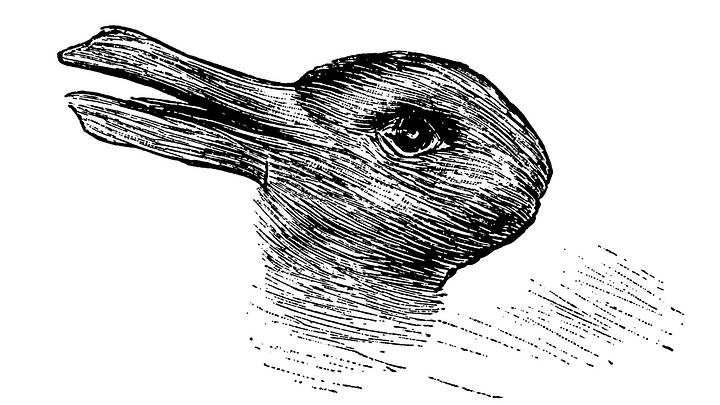
First, we look at an image meant to show multiple subjects or scenes, but all we see is one. After bending our brains a bit, we might make out two different images, or at least see the image in a way that changes what we first thought. Finally figuring it out and seeing two images is the exciting part.
And that’s the curiosity and amusement of an optical illusion in a nutshell (or is it a mask or maybe a boat?).
But when did people first start creating these sculptures and illustrations to tease our minds? Let’s take a closer look at the history of optical illusions, and hopefully get some help piecing together the following images.
THE EVOLUTION OF OPTICAL ILLUSIONS
According to the Museum of Illusions in New Delhi, the first optical illusions appeared in cave art around 30,000 BCE. Drawings with crossed lines and strokes to represent movement made the art more difficult for the mind to process.
In 500 BCE, the Greeks tried their hand at optical illusions, this time through architecture. The Greek city-states were home to many philosophers and intellectuals. From extremely detailed mosaic designs to the Parthenon’s curved (or are they straight?) columns, they knew how to incorporate entrancing optical illusions into the real world.
Then came the Renaissance (1300 to 1600), with perspective and anamorphic art.

The museum specifically pointed to Leonardo da Vinci’s depth techniques, which created a dimensional effect, even on a flat surface. In The Last Supper, for example, these techniques “would manipulate the viewer's eye to go in his compositions.” The power of perception is evident throughout da Vinci’s work, including his most famous painting, the Mona Lisa, whose smile disappears depending on the angle you view it from.
Perspective art mastered depth, while anamorphic art was all angles. Using reflective surfaces, artists like Hans Holbein hid objects in their works that were visible only from a specific angle.
The 19th century eventually arrived, along with a growing interest in psychology. By the 1870s, psychologists were creating optical illusions that “demonstrated differences in size, contrast, and brightness” to find out how our brains “interpret conflicting visual signals.” They believed what you observed revealed something about the way your brain worked.
This is just one example, created by Professor Edward H. Adelson in 1995.
Then photographers started using optical illusions to make their pictures more intriguing, and magicians to make their tricks more…magical.
Today, you can visit museums dedicated entirely to optical illusions, with tunnels, mirrors, and immersive artwork that really boggles the mind. In the digital age, these illusions seem to grow more and more bewildering.
Give your brain a workout with the eight included below!
8 PERPLEXING OPTICAL ILLUSIONS


