%20%20--%3E%0A%3Csvg%20version%3D%221.1%22%20id%3D%22Layer_1%22%20xmlns%3D%22http%3A%2F%2Fwww.w3.org%2F2000%2Fsvg%22%20xmlns%3Axlink%3D%22http%3A%2F%2Fwww.w3.org%2F1999%2Fxlink%22%20x%3D%220px%22%20y%3D%220px%22%0A%09%20viewBox%3D%220%200%20684.6%2068.1%22%20style%3D%22enable-background%3Anew%200%200%20684.6%2068.1%3B%22%20xml%3Aspace%3D%22preserve%22%3E%0A%3Cg%3E%0A%09%3Cpath%20d%3D%22M444.1%2C29.3h-17.4v14.5h17.4V29.3z%20M36.4%2C68.1l29.3-50.8V0H50.4L32.9%2C36.8L15.5%2C0H0v68.1h16.7V45.8l12.4%2C22.3H36.4z%0A%09%09%20M49.1%2C68.1h16.6V23.4L49.1%2C52.1V68.1z%20M76.6%2C68.1h45V53.8H93.3V41.6h21V27.1h-21V14.8h28.3V0.1h-45V68.1z%20M175.6%2C68.1h17.3v-68%0A%09%09h-16.5v40.3L150%2C0.1h-17.6v68h16.7V27.7L175.6%2C68.1z%20M235.8%2C14.8h15.4V0.1h-47.4v14.7H219v53.2h16.8V14.8z%20M290.3%2C45.9h-17.1%0A%09%09l7.5-15.6h2L290.3%2C45.9z%20M298.7%2C68.1h18l-32.2-68h-5.7l-32%2C68h18l3.3-7.1h27.1L298.7%2C68.1z%20M325.2%2C68.1h46.2V53.8h-29.6V0.1h-16.7%0A%09%09V68.1z%20M423.7%2C14.8h27.2V0.1H407v68h16.7V14.8z%20M462%2C68.1h46.2V53.8h-29.6V0.1H462V68.1z%20M564.8%2C34.1c0%2C10.7-7.2%2C19.2-18.5%2C19.2%0A%09%09c-11.4%2C0-18.5-8.5-18.5-19.2s7.1-19.2%2C18.5-19.2C557.6%2C14.9%2C564.8%2C23.4%2C564.8%2C34.1%20M580.6%2C34.1c0-19-14.2-34-34.3-34%0A%09%09c-20.2%2C0-34.3%2C15-34.3%2C34c0%2C19%2C14.1%2C34%2C34.3%2C34C566.4%2C68.1%2C580.6%2C53.1%2C580.6%2C34.1%20M604.8%2C20.5c0-4.1%2C3.3-6.2%2C6.7-6.2%0A%09%09c4.4%2C0%2C6.6%2C3%2C6.6%2C6.6h14.7C631.8%2C9.1%2C625.1%2C0.1%2C611%2C0.1c-12%2C0-21.7%2C9.3-21.7%2C20.6c0%2C10.9%2C5.9%2C15.9%2C16.7%2C19.8%0A%09%09c5.2%2C1.8%2C11.5%2C3.2%2C11.5%2C8c0%2C3.3-2.4%2C5.5-6.4%2C5.5c-3.6%2C0-6.6-3-6.6-6.7h-15.2c0%2C11.5%2C7.9%2C20.8%2C21.8%2C20.8c12%2C0%2C21.6-9.3%2C21.6-20.6%0A%09%09c0-10-5.3-16.4-16.7-19.8C610.6%2C26.1%2C604.8%2C25.3%2C604.8%2C20.5%20M670%2C20.9h14.7C683.8%2C9.1%2C677.1%2C0.1%2C663%2C0.1c-12%2C0-21.7%2C9.3-21.7%2C20.6%0A%09%09c0%2C10.9%2C5.9%2C15.9%2C16.7%2C19.8c5.2%2C1.8%2C11.5%2C3.2%2C11.5%2C8c0%2C3.3-2.4%2C5.5-6.4%2C5.5c-3.6%2C0-6.6-3-6.6-6.7h-15.2c0%2C11.5%2C7.9%2C20.8%2C21.8%2C20.8%0A%09%09c12%2C0%2C21.6-9.3%2C21.6-20.6c0-10-5.3-16.4-16.7-19.8c-5.4-1.6-11.3-2.4-11.3-7.2c0-4.1%2C3.3-6.2%2C6.7-6.2C667.7%2C14.4%2C670%2C17.3%2C670%2C20.9%0A%09%09%22%2F%3E%0A%3C%2Fg%3E%0A%3C%2Fsvg%3E%0A)

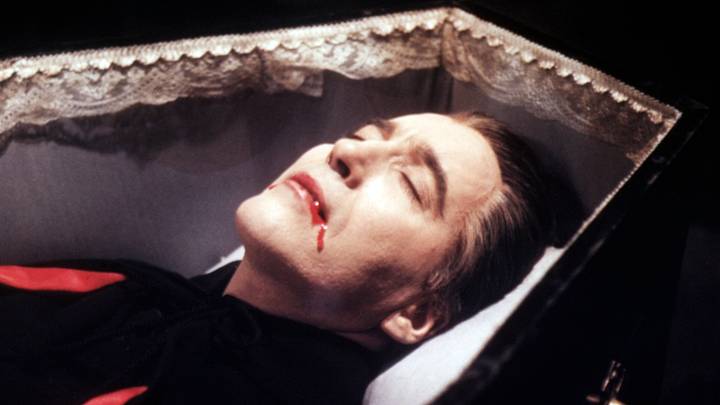
There are many aspects of vampire lore which have become familiar, including the idea that they do not cast a reflection in mirrors, and that they fear the sight of a crucifix. One of the most frequently visualized elements of their iconography concerns the legend that they sleep in coffins, as opposed to on a bed or on the floor. So why has this detail become such an enduring element of the vampire myth?
So why has this detail become such an enduring element of the vampire myth?
The History Behind the Belief

The concept of vampires sleeping in coffins has occurred in folklore, including local tales which claim to know of real examples of vampirism. In his autobiography The Story of My Life, the Victorian writer Augustus Hare recounted a story he claimed to have been told by a man named Captain Fisher, who described a vampire which had allegedly haunted a place known as Croglin Grange, near Guildford in England.
According to the seaman’s story, a member of a family staying at the grange in question had been attacked by a vampire in the middle of the night. The brothers of the woman decided to investigate the grange’s vault, and were met with the following scene, in which most of the coffins in the vault were found to be in disarray, with a sole exception:
“One coffin alone remained intact. Of that the lid had been lifted, but still lay loose upon the coffin. They raised it, and there, brown, withered, shrivelled, mummified, but quite entire, was the same hideous figure which had looked in at the windows of Croglin Grange, with the marks of a recent pistol-shot in the leg; and they did—the only thing that can lay a vampire—they burnt it.”
The story remains unverified, but these claims from folklore have often been echoed in fiction about these supernatural beings, as they chime with other popular aspects of their mythology. The concept of vampires sleeping in coffins is consistent with another element of vampire legend: that they must avoid sunlight as they crumble when exposed to it.

This notion was actually created by the 1922 film Nosferatu but has since become intertwined with the image of the vampire. The idea that many vampires also sleep within crypts, which are likewise sealed from the light, also interconnects the idea of the vampire as a being which both sleeps in a coffin while also avoiding the daytime light.
The fact that vampires are believed to sleep in coffins also stems from the idea that they are creatures who supposedly rise from the dead, and so it is logical that they might rise from the coffins in which they had been buried, and continue to use them in their undead existence.
It also emphasizes their isolation: vampires were once humans, but are no longer, and the idea that they sleep in enclosed spaces shows their sense of disconnection from the human world to which they once belonged.