%20%20--%3E%0A%3Csvg%20version%3D%221.1%22%20id%3D%22Layer_1%22%20xmlns%3D%22http%3A%2F%2Fwww.w3.org%2F2000%2Fsvg%22%20xmlns%3Axlink%3D%22http%3A%2F%2Fwww.w3.org%2F1999%2Fxlink%22%20x%3D%220px%22%20y%3D%220px%22%0A%09%20viewBox%3D%220%200%20684.6%2068.1%22%20style%3D%22enable-background%3Anew%200%200%20684.6%2068.1%3B%22%20xml%3Aspace%3D%22preserve%22%3E%0A%3Cg%3E%0A%09%3Cpath%20d%3D%22M444.1%2C29.3h-17.4v14.5h17.4V29.3z%20M36.4%2C68.1l29.3-50.8V0H50.4L32.9%2C36.8L15.5%2C0H0v68.1h16.7V45.8l12.4%2C22.3H36.4z%0A%09%09%20M49.1%2C68.1h16.6V23.4L49.1%2C52.1V68.1z%20M76.6%2C68.1h45V53.8H93.3V41.6h21V27.1h-21V14.8h28.3V0.1h-45V68.1z%20M175.6%2C68.1h17.3v-68%0A%09%09h-16.5v40.3L150%2C0.1h-17.6v68h16.7V27.7L175.6%2C68.1z%20M235.8%2C14.8h15.4V0.1h-47.4v14.7H219v53.2h16.8V14.8z%20M290.3%2C45.9h-17.1%0A%09%09l7.5-15.6h2L290.3%2C45.9z%20M298.7%2C68.1h18l-32.2-68h-5.7l-32%2C68h18l3.3-7.1h27.1L298.7%2C68.1z%20M325.2%2C68.1h46.2V53.8h-29.6V0.1h-16.7%0A%09%09V68.1z%20M423.7%2C14.8h27.2V0.1H407v68h16.7V14.8z%20M462%2C68.1h46.2V53.8h-29.6V0.1H462V68.1z%20M564.8%2C34.1c0%2C10.7-7.2%2C19.2-18.5%2C19.2%0A%09%09c-11.4%2C0-18.5-8.5-18.5-19.2s7.1-19.2%2C18.5-19.2C557.6%2C14.9%2C564.8%2C23.4%2C564.8%2C34.1%20M580.6%2C34.1c0-19-14.2-34-34.3-34%0A%09%09c-20.2%2C0-34.3%2C15-34.3%2C34c0%2C19%2C14.1%2C34%2C34.3%2C34C566.4%2C68.1%2C580.6%2C53.1%2C580.6%2C34.1%20M604.8%2C20.5c0-4.1%2C3.3-6.2%2C6.7-6.2%0A%09%09c4.4%2C0%2C6.6%2C3%2C6.6%2C6.6h14.7C631.8%2C9.1%2C625.1%2C0.1%2C611%2C0.1c-12%2C0-21.7%2C9.3-21.7%2C20.6c0%2C10.9%2C5.9%2C15.9%2C16.7%2C19.8%0A%09%09c5.2%2C1.8%2C11.5%2C3.2%2C11.5%2C8c0%2C3.3-2.4%2C5.5-6.4%2C5.5c-3.6%2C0-6.6-3-6.6-6.7h-15.2c0%2C11.5%2C7.9%2C20.8%2C21.8%2C20.8c12%2C0%2C21.6-9.3%2C21.6-20.6%0A%09%09c0-10-5.3-16.4-16.7-19.8C610.6%2C26.1%2C604.8%2C25.3%2C604.8%2C20.5%20M670%2C20.9h14.7C683.8%2C9.1%2C677.1%2C0.1%2C663%2C0.1c-12%2C0-21.7%2C9.3-21.7%2C20.6%0A%09%09c0%2C10.9%2C5.9%2C15.9%2C16.7%2C19.8c5.2%2C1.8%2C11.5%2C3.2%2C11.5%2C8c0%2C3.3-2.4%2C5.5-6.4%2C5.5c-3.6%2C0-6.6-3-6.6-6.7h-15.2c0%2C11.5%2C7.9%2C20.8%2C21.8%2C20.8%0A%09%09c12%2C0%2C21.6-9.3%2C21.6-20.6c0-10-5.3-16.4-16.7-19.8c-5.4-1.6-11.3-2.4-11.3-7.2c0-4.1%2C3.3-6.2%2C6.7-6.2C667.7%2C14.4%2C670%2C17.3%2C670%2C20.9%0A%09%09%22%2F%3E%0A%3C%2Fg%3E%0A%3C%2Fsvg%3E%0A)

Drop by your local museum, and chances are you’ll expect to see little more than a collection of pretty paintings, antique pottery and stoneware, books, documents, and other artifacts. But not every museum is built quite the same, of course, and around the world, some are home to some rather surprising (and rather creepy) items indeed—from a desiccated feline to an infamously cursed gemstone.
- Victorian "Hair Bouquet" - Amsterdam, Netherlands
- Scalp & Ear of a Murderer - Bury St. Edmund's, U.K.
- Human Skin Pants - Hólmavík, Iceland
- 700-Year-Old Mummified Cat - Keswick, U.K.
- Haunted Doll - Key West, U.S.
- Cursed Amethyst - London, U.K.
- Marie Curie's Notebooks - Paris, France
- Grover Cleveland's Oral Tumor - Philadelphia, U.S.
- Mummified Pigeon - St. Paul, U.S.
- Preserved Hanged Man - Silkeborg, Denmark
Victorian "Hair Bouquet" - Amsterdam, Netherlands

If a "hair bouquet" doesn’t sound remotely creepy, bear in mind that the hair in question here had been collected from multiple deceased members of the same family. The purpose wasn’t a creepy one, though, as pictures, ornaments, and other tokens made of or decorated with hair were a popular form of remembrance for those who had passed away in the Romantic era.
The creativity of whoever bound and prepared innumerable samples of hair to create an entire “hair bouquet,” now housed at Amsterdam’s Tot Zover funeral museum, though, is far unlike any other.
Scalp & Ear of a Murderer - Bury St. Edmund's, U.K.

In 1827, an English farmer named William Corder arranged to elope with his lover, Maria Marten, in Suffolk, England; instead, he shot her, buried her body in a barn, and fled to London to marry someone else. When his crime was discovered, the case quickly became a cause célèbre in Georgian England, and Corder was eventually hanged before a crowd of thousands.
In the aftermath of his execution, however, some of Corder’s skin was removed and used to bind a pair of books, while his scalp and a part of his ear were cut off as a macabre keepsake. These items are now housed in Moyse's Hall Museum in the Suffolk town of Bury St. Edmunds, in eastern England.
Human Skin Pants - Hólmavík, Iceland

Iceland’s Museum of Sorcery and Witchcraft, in the village of Hólmavík on the country’s remote Westfjords peninsula, houses a replica pair of nábrók—also known as "corpse breeches," or "necropants." The pants, much of the origins of which are lost to local folklore, are made from human skin; supposedly, a victim would have to willingly allow himself to be made into human skin pants after death, and then be exhumed, skinned, and his lower half made into trousers.
The wearer was guaranteed wealth, but was cursed should he ever remove them.
700-Year-Old Mummified Cat - Keswick, U.K.

The local museum in the picturesque Cumbrian town of Keswick in England’s Lake District is home to some 20,000 objects and historical artifacts, including paintings, maps, and local rock samples. Strangest among all the museum’s items, however, must be the mummified remains of a domestic cat that was discovered among the rafters of a church in the nearby village of Clifton in the mid 1800s.
The cat is believed to have been placed in the roof of the church some 700 years ago, either for practical mouse-catching reasons, or else (somewhat more superstitiously) as a living talisman to ward off witches and evil spirits.
Haunted Doll - Key West, U.S.

There isn’t exactly a shortage of haunted dolls around the world, but "Robert the Doll"—now on permanent display at the Fort East Martello Museum in Key West, Florida—is perhaps one of the strangest. Originally owned in childhood by a local artist, Robert “Gene” Otto, who received it as a gift back in 1904, the cloth and straw doll was soon being blamed for all manner of unusual goings-on, including overturned furniture and objects moving on their own.
After Otto’s death, the doll passed to new owners who likewise began reporting some unusual occurrences in its vicinity, and legends soon emerged suggesting the doll had been cursed.
Cursed Amethyst - London, U.K.

London’s famous Natural History Museum is home to an amethyst stone set inside a silver snake-shaped ring, which is said to have been looted from a temple in Cawnpore during the Indian Mutiny of 1855. The looters (and subsequent owners) were later supposedly plagued by a spate of mysterious deaths, disasters, and ghost sightings, leading to its final owner, the English scholar Edward Heron-Allen, packing it away and demanding it never see the light of day until long after his death.
As it happens, his daughter donated the ring to the museum just a year after her father died in 1943, and it has remained in their collection ever since.
Marie Curie's Notebooks - Paris, France

There’s nothing creepy about some laboratory notebooks, you might think—except those belonging to groundbreaking physicist and two-time Nobel laureate Marie Curie are now so radioactive that they have to be kept in special lead-lined boxes, housed in the French Bibliothéque nationale (National Library) in Paris.
In fact, Curie was unaware of the long-term danger of the radioactivity with which she was experimenting back in the early 1900s, so that not only are her belongings and laboratory equipment still radioactive (and will remain so for 1,500 years), but so is her corpse: she is interred in a lead-lined coffin, now housed in Paris’ Panthéon.
Grover Cleveland's Oral Tumor - Philadelphia, U.S.

The Mütter Museum in downtown Philadelphia, Pennsylvania, houses tens of thousands of items in its collection, but two of what must surely be the most peculiar are kept in the same room: in the Gretchen Worden Room (named after a past curator of the museum) are both the oral tumor removed from President Grover Cleveland’s mouth in 1893, and a necklace-like chain of lanced genital warts.
Mummified Pigeon - St. Paul, U.S.

Keswick Museum’s mummified cat isn’t the only inadvertently mummified animal in the world’s museums: the Bell Museum in St. Paul, Minnesota, is home to a mummified pigeon found in the air vent of a local building. Having become trapped, the bird perished, and all its body’s soft and edible tissues—including the filaments of its feathers—were consumed by insects, leaving only its grimly skeletal remains, with the spines of its feathers still attached.
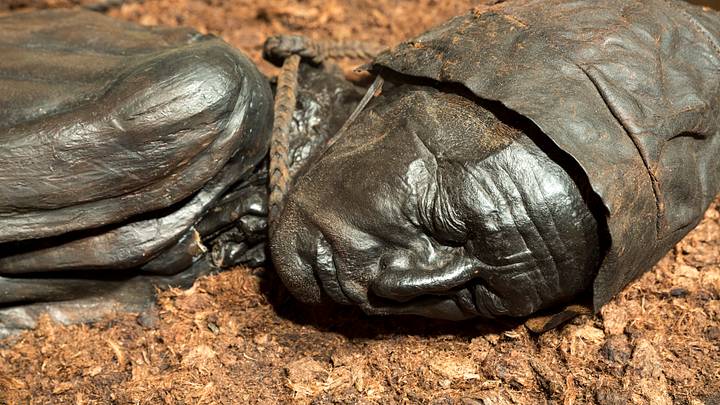
Preserved Hanged Man - Silkeborg, Denmark

The Silkeborg Museum in central Jutland, Denmark, is home to the Tollund Man—a staggeringly well-preserved example of an Iron Age “bog body.” Discovered by peat cutters in 1950, the Tollund Man dates back some 2,400 years; despite his immense age, however, the peaty earth in which he was found has preserved his corpse to an astonishing degree, making even the stubble on his face still clearly visible.
Creepier still, though, is the fact that the man was found with a noose around his neck, while a later autopsy determined the man was killed by hanging. Whether he was a criminal or the victim of some manner of human sacrifice, however, remains unclear.