%20%20--%3E%0A%3Csvg%20version%3D%221.1%22%20id%3D%22Layer_1%22%20xmlns%3D%22http%3A%2F%2Fwww.w3.org%2F2000%2Fsvg%22%20xmlns%3Axlink%3D%22http%3A%2F%2Fwww.w3.org%2F1999%2Fxlink%22%20x%3D%220px%22%20y%3D%220px%22%0A%09%20viewBox%3D%220%200%20684.6%2068.1%22%20style%3D%22enable-background%3Anew%200%200%20684.6%2068.1%3B%22%20xml%3Aspace%3D%22preserve%22%3E%0A%3Cg%3E%0A%09%3Cpath%20d%3D%22M444.1%2C29.3h-17.4v14.5h17.4V29.3z%20M36.4%2C68.1l29.3-50.8V0H50.4L32.9%2C36.8L15.5%2C0H0v68.1h16.7V45.8l12.4%2C22.3H36.4z%0A%09%09%20M49.1%2C68.1h16.6V23.4L49.1%2C52.1V68.1z%20M76.6%2C68.1h45V53.8H93.3V41.6h21V27.1h-21V14.8h28.3V0.1h-45V68.1z%20M175.6%2C68.1h17.3v-68%0A%09%09h-16.5v40.3L150%2C0.1h-17.6v68h16.7V27.7L175.6%2C68.1z%20M235.8%2C14.8h15.4V0.1h-47.4v14.7H219v53.2h16.8V14.8z%20M290.3%2C45.9h-17.1%0A%09%09l7.5-15.6h2L290.3%2C45.9z%20M298.7%2C68.1h18l-32.2-68h-5.7l-32%2C68h18l3.3-7.1h27.1L298.7%2C68.1z%20M325.2%2C68.1h46.2V53.8h-29.6V0.1h-16.7%0A%09%09V68.1z%20M423.7%2C14.8h27.2V0.1H407v68h16.7V14.8z%20M462%2C68.1h46.2V53.8h-29.6V0.1H462V68.1z%20M564.8%2C34.1c0%2C10.7-7.2%2C19.2-18.5%2C19.2%0A%09%09c-11.4%2C0-18.5-8.5-18.5-19.2s7.1-19.2%2C18.5-19.2C557.6%2C14.9%2C564.8%2C23.4%2C564.8%2C34.1%20M580.6%2C34.1c0-19-14.2-34-34.3-34%0A%09%09c-20.2%2C0-34.3%2C15-34.3%2C34c0%2C19%2C14.1%2C34%2C34.3%2C34C566.4%2C68.1%2C580.6%2C53.1%2C580.6%2C34.1%20M604.8%2C20.5c0-4.1%2C3.3-6.2%2C6.7-6.2%0A%09%09c4.4%2C0%2C6.6%2C3%2C6.6%2C6.6h14.7C631.8%2C9.1%2C625.1%2C0.1%2C611%2C0.1c-12%2C0-21.7%2C9.3-21.7%2C20.6c0%2C10.9%2C5.9%2C15.9%2C16.7%2C19.8%0A%09%09c5.2%2C1.8%2C11.5%2C3.2%2C11.5%2C8c0%2C3.3-2.4%2C5.5-6.4%2C5.5c-3.6%2C0-6.6-3-6.6-6.7h-15.2c0%2C11.5%2C7.9%2C20.8%2C21.8%2C20.8c12%2C0%2C21.6-9.3%2C21.6-20.6%0A%09%09c0-10-5.3-16.4-16.7-19.8C610.6%2C26.1%2C604.8%2C25.3%2C604.8%2C20.5%20M670%2C20.9h14.7C683.8%2C9.1%2C677.1%2C0.1%2C663%2C0.1c-12%2C0-21.7%2C9.3-21.7%2C20.6%0A%09%09c0%2C10.9%2C5.9%2C15.9%2C16.7%2C19.8c5.2%2C1.8%2C11.5%2C3.2%2C11.5%2C8c0%2C3.3-2.4%2C5.5-6.4%2C5.5c-3.6%2C0-6.6-3-6.6-6.7h-15.2c0%2C11.5%2C7.9%2C20.8%2C21.8%2C20.8%0A%09%09c12%2C0%2C21.6-9.3%2C21.6-20.6c0-10-5.3-16.4-16.7-19.8c-5.4-1.6-11.3-2.4-11.3-7.2c0-4.1%2C3.3-6.2%2C6.7-6.2C667.7%2C14.4%2C670%2C17.3%2C670%2C20.9%0A%09%09%22%2F%3E%0A%3C%2Fg%3E%0A%3C%2Fsvg%3E%0A)

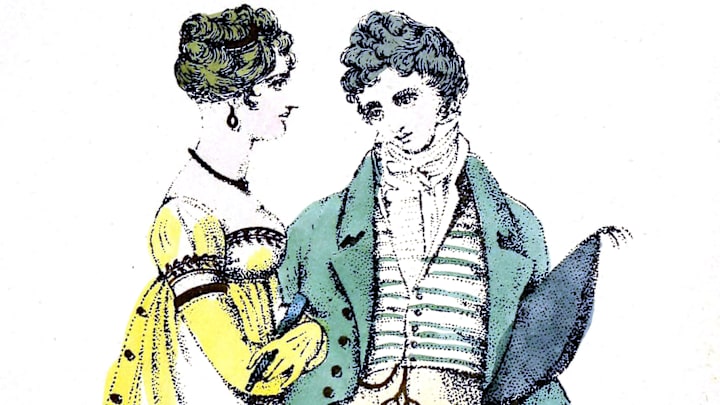
Dating apps might make you nostalgic for the charm of Regency-era courtship, but shows like Bridgerton make it look far more romantic than it actually was. In reality, every move was monitored, with family and friends shaping how—and even if—couples could see each other. Courtship wasn’t just about love; it was a carefully orchestrated social performance, governed by etiquette, status, and reputation. From arranged introductions to letters, gifts, and ever-present chaperones, every step followed strict rules—and breaking them could spell scandal.
Family Matters

Historically, marriage was as much a business as a love affair, and the Regency era was no exception. Matches were strategic, arranged to boost wealth, status, or family connections, and couples usually needed relatives’ approval before courting. Families often handled introductions at social gatherings or private visits, making sure a match suited the household’s interests. Even after the first meeting, continued courtship depended on family consent—one disapproving nod could end a match before it began.
Keeping it in the family had a double meaning: not only did relatives have to approve of suitors, but sometimes they were the suitors themselves. Shared lineage and social background were considered ideal, which often led to marriages between cousins.
The Original Third Wheel
While Bridgerton shows lovers stealing secret moments, real Regency courtship was almost entirely supervised. While an older male relative would typically perform introductions, female relatives or friends would accompany women on succeeding dates, which often took place in public spaces like gardens, assemblies, or galleries. The chaperone’s job was essentially to keep the young woman under watch, making sure she maintained a good reputation and stayed on track toward a socially acceptable match. That said, couples sometimes found ways to slip away for a few private moments, with families turning a blind eye.
Tokens of Affection

As far as love languages went in the Regency era, gift giving and words of affirmation ranked high. Presents and letters were common parts of courtship, with the latter offering a rare bit of privacy beyond public promenades. Gifts could be simple, like gloves or flowers, or more meaningful, like a lock of hair—though such intimate offerings usually appeared in the later stages of courtship.
With literacy on the rise, love letters were all the rage, letting couples whisper private thoughts beyond the prying eyes of chaperones. Some letters were perfumed or decorated, adding flair and a personal touch. A gentleman couldn’t just start writing—he had to formally ask permission, and saying yes was basically a green light that the relationship was serious and possibly headed for engagement. Every gift and letter, no matter how small, was carefully chosen to show interest while keeping within the strict rules of Regency etiquette.
Parting With Politeness
In the Regency era, ghosting wasn’t an option. Courtships could last months or even years, but ending one required strict etiquette. Whether it was the man or the woman calling it off, letters and gifts were returned—or sometimes destroyed—to signal the relationship was officially over. Even breakups were public affairs, carefully managed to protect reputations and avoid scandal.