%20%20--%3E%0A%3Csvg%20version%3D%221.1%22%20id%3D%22Layer_1%22%20xmlns%3D%22http%3A%2F%2Fwww.w3.org%2F2000%2Fsvg%22%20xmlns%3Axlink%3D%22http%3A%2F%2Fwww.w3.org%2F1999%2Fxlink%22%20x%3D%220px%22%20y%3D%220px%22%0A%09%20viewBox%3D%220%200%20684.6%2068.1%22%20style%3D%22enable-background%3Anew%200%200%20684.6%2068.1%3B%22%20xml%3Aspace%3D%22preserve%22%3E%0A%3Cg%3E%0A%09%3Cpath%20d%3D%22M444.1%2C29.3h-17.4v14.5h17.4V29.3z%20M36.4%2C68.1l29.3-50.8V0H50.4L32.9%2C36.8L15.5%2C0H0v68.1h16.7V45.8l12.4%2C22.3H36.4z%0A%09%09%20M49.1%2C68.1h16.6V23.4L49.1%2C52.1V68.1z%20M76.6%2C68.1h45V53.8H93.3V41.6h21V27.1h-21V14.8h28.3V0.1h-45V68.1z%20M175.6%2C68.1h17.3v-68%0A%09%09h-16.5v40.3L150%2C0.1h-17.6v68h16.7V27.7L175.6%2C68.1z%20M235.8%2C14.8h15.4V0.1h-47.4v14.7H219v53.2h16.8V14.8z%20M290.3%2C45.9h-17.1%0A%09%09l7.5-15.6h2L290.3%2C45.9z%20M298.7%2C68.1h18l-32.2-68h-5.7l-32%2C68h18l3.3-7.1h27.1L298.7%2C68.1z%20M325.2%2C68.1h46.2V53.8h-29.6V0.1h-16.7%0A%09%09V68.1z%20M423.7%2C14.8h27.2V0.1H407v68h16.7V14.8z%20M462%2C68.1h46.2V53.8h-29.6V0.1H462V68.1z%20M564.8%2C34.1c0%2C10.7-7.2%2C19.2-18.5%2C19.2%0A%09%09c-11.4%2C0-18.5-8.5-18.5-19.2s7.1-19.2%2C18.5-19.2C557.6%2C14.9%2C564.8%2C23.4%2C564.8%2C34.1%20M580.6%2C34.1c0-19-14.2-34-34.3-34%0A%09%09c-20.2%2C0-34.3%2C15-34.3%2C34c0%2C19%2C14.1%2C34%2C34.3%2C34C566.4%2C68.1%2C580.6%2C53.1%2C580.6%2C34.1%20M604.8%2C20.5c0-4.1%2C3.3-6.2%2C6.7-6.2%0A%09%09c4.4%2C0%2C6.6%2C3%2C6.6%2C6.6h14.7C631.8%2C9.1%2C625.1%2C0.1%2C611%2C0.1c-12%2C0-21.7%2C9.3-21.7%2C20.6c0%2C10.9%2C5.9%2C15.9%2C16.7%2C19.8%0A%09%09c5.2%2C1.8%2C11.5%2C3.2%2C11.5%2C8c0%2C3.3-2.4%2C5.5-6.4%2C5.5c-3.6%2C0-6.6-3-6.6-6.7h-15.2c0%2C11.5%2C7.9%2C20.8%2C21.8%2C20.8c12%2C0%2C21.6-9.3%2C21.6-20.6%0A%09%09c0-10-5.3-16.4-16.7-19.8C610.6%2C26.1%2C604.8%2C25.3%2C604.8%2C20.5%20M670%2C20.9h14.7C683.8%2C9.1%2C677.1%2C0.1%2C663%2C0.1c-12%2C0-21.7%2C9.3-21.7%2C20.6%0A%09%09c0%2C10.9%2C5.9%2C15.9%2C16.7%2C19.8c5.2%2C1.8%2C11.5%2C3.2%2C11.5%2C8c0%2C3.3-2.4%2C5.5-6.4%2C5.5c-3.6%2C0-6.6-3-6.6-6.7h-15.2c0%2C11.5%2C7.9%2C20.8%2C21.8%2C20.8%0A%09%09c12%2C0%2C21.6-9.3%2C21.6-20.6c0-10-5.3-16.4-16.7-19.8c-5.4-1.6-11.3-2.4-11.3-7.2c0-4.1%2C3.3-6.2%2C6.7-6.2C667.7%2C14.4%2C670%2C17.3%2C670%2C20.9%0A%09%09%22%2F%3E%0A%3C%2Fg%3E%0A%3C%2Fsvg%3E%0A)

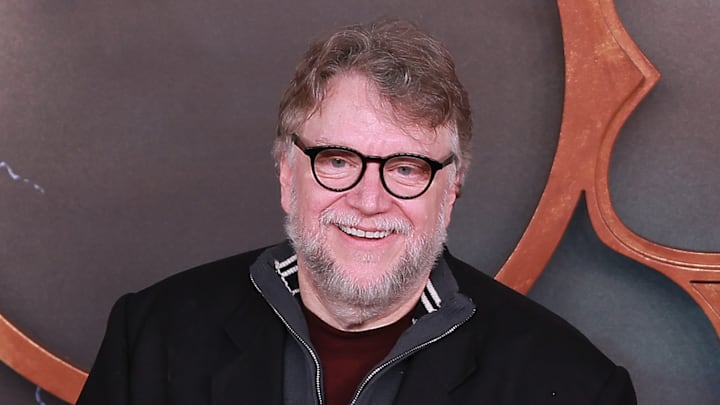
What inspires a master of the macabre and the fantastical? In Guillermo del Toro’s case, it was a combination of a fascination with monstrosity and many all-too-real experiences with the monstrous nature of humanity, some of which happened within his own family.
Del Toro’s name is well known to those who love the blurred realms of fantasy and horror, where fairy tale concepts are cast with horrific characters and monsters get happy endings. His best-known films include the 2006 dark fantasy epic Pan's Labyrinth and his Academy Award-winning 2017 romance The Shape of Water.
Guillermo del Toro’s Family Didn’t Understand His Interests
Over his roughly 30-year career in the entertainment industry, del Toro has frequently discussed how personal his projects are to him, representing themes of loneliness, fear, and being an outcast that he experienced in his own life. This was particularly true in his childhood, where he was tormented by both real and fictional horrors. His way of coping with them was through embracing the monstrous, a perspective that clashed with his grandmother’s strict religiosity.

At its most innocent, del Toro frequently felt like an outsider in his own society and his own family. But as his fascination with the macabre grew, he found himself being considered more than just unusual, but deviant and even dangerous. That was what led his grandmother to actually attempt to exorcise him, a concept usually considered too extreme for people.
A Troubled Childhood
Del Toro was born and raised in Guadalajara, Mexico, where the contradictions of strict adherence to Catholic ideology and casual violence and cruelty surrounded him. When he was five, his father won the lottery, drastically changing his lifestyle. He no longer had to worry about having his physical needs met, but he instead found himself in a world with little security and less emotional support.
Shortly after his father won the lottery, del Toro’s parents began traveling a lot, leaving him to be raised by his grandmother, who he has frequently compared to Piper Laurie’s character in Carrie. She was devout, firmly believing in a form of Catholicism del Toro has described as “very, very brutal and very, very gory.”
Speaking with Elijah Wood and Daniel Noah on their podcast Visitations in 2019, the filmmaker admitted: “I didn't feel safe most anywhere.” His grandmother would talk to him about hell and purgatory, warning him, “You’re gonna be in a fire. Your flesh is going to burn to a crisp, and then you’re gonna heal in the fire and then burn again.” Meanwhile, his father was paranoid about people breaking in to rob them, which proved prescient when a night watchman shot a man trespassing on their property when del Toro was around 10.

It’s no wonder that del Toro turned to horror when two of his key parental figures instilled such fear and paranoia into him. He would watch horror movies on television after church, and an uncle frequently indulged his interests by taking him to watch horror films in theaters. These gave him a new perspective on the cruel world he was living in, one where a cousin had been kidnapped and murdered when he was young and where he witnessed death in his day-to-day life.
But while he felt kinship with some monsters, he was tormented by others. Despite making a deal with his uncle that whichever of them died first would attempt to contact the other, he was terrified when he seemingly encountered his uncle’s presence after his death. Worse still, his most frightening ruminations followed him into his sleep.
His nights were plagued by waking nightmares, where he would seemingly wake up in bed, only to see horrific visions in his room that he could not prevent. He told The Hollywood Reporter about one such occasion, where he witnessed “a hand and the face of a goat and the leg of a goat” emerging from his armoire, a figure which influenced his creatures in Pan’s Labyrinth. He also told the Visitations podcast hosts about seeing “a burning figure at the foot of my bed... and that figure extended its arms and said, ‘I live.’”
Despite del Toro’s kinship with monsters, those images would terrify him, causing him to wake up screaming at night. He turned to artistry to express his pain and fear, freeing himself from being fully tormented by them through drawing and producing short films. But while that path may be celebrated now, it was a source of concern for his grandmother.

The Exorcisms of Guillermo Del Toro
While some might have seen his art as a product of profound creativity and resourcefulness, del Toro’s grandmother saw it as a sign of something deeply wrong. Though he believes that she enjoyed hearing about his creative endeavors, the blurred lines between reality and fiction, the sacred and the profane, prompted her to seek a religious solution to the perceived problem.
Del Toro recalled to The Sun in 2018: “She exorcised me twice with holy water, literally. The more holy water she threw at me, the more ridiculous I thought it was.” She may not have gone to the lengths depicted in The Exorcist, but there aren’t many horror aficionados who can claim that they’ve experienced an exorcism, especially not in such good humor.
But while the exorcisms themselves are often discussed jokingly, her other attempts to cleanse his soul are far less amusing. One such incident involved putting bottle caps in his shoes, sharp side up, to cut his feet. She saw this as a kindness, because “this will amortize your time in purgatory,” he recalled. While his mother quickly put a stop to this, del Toro told THR that “there were many bottle caps, metaphorically,” in their relationship, which did not cease.
However, it’s important to note that del Toro does not see this event as an intentionally malicious act. While he certainly acknowledges it as part of his troubling childhood, he emphasized on NPR that “my grandmother was in great pain that I would draw monsters all day, I would talk about the Bible, asking questions that were maybe too poignant, but we loved each other.” Just like the juxtaposition of wealth and poverty he experienced growing up, he sees the love behind his grandmother’s cruelest actions.
You May Also Like:
Add Mental Floss as a preferred news source!

Del Toro’s Childhood Continues to Haunt Him
Those who have seen multiple del Toro films will know that childhood is an intrinsic part of them. As he has said on multiple occasions, his philosophy on life and art is that “You spend 40 years trying to solve your first seven ... where you were cracked at your foundation.”
It is with this in mind that it is no great surprise that he was interested in creating an installment of The Exorcist franchise. In his proposed film, Father Merrin would be tasked with investigating a murder in the Vatican, where the Devil would warn him, “You and I will face each other again. I will attempt to take three children in your lifetime.” Alas, the studio wanted to remove the actual exorcism from the film, a change del Toro was unwilling to make.
Even as he jokes about his childhood, teasing Deadline’s Joe Utichi in 2017 that his childhood exorcisms “definitely didn’t take,” it’s clear that the event stayed with him. One of his last memories with his grandmother was trying to show her his work, only to have her cry, “Why couldn’t you ever do nice things? Why were you always creating these horrible things?” She couldn’t see the beauty he saw in the monstrous, an insurmountable divide that the pair could never fully transcend.
In his film The Devil’s Backbone, del defined a ghost as:
A terrible event that is doomed to be repeated over and over again. It is a moment of pain, perhaps something that is dead but that sometimes seems to be alive, a feeling floating in time, like a blurry photograph, like an insect trapped in amber.
Perhaps his encounters with his grandmother, from the exorcisms to the more mundane clashes, are some of the most profound ghosts still haunting him and his work to this day.
Del Toro’s latest film, Frankenstein, is now streaming on Netflix.