%20%20--%3E%0A%3Csvg%20version%3D%221.1%22%20id%3D%22Layer_1%22%20xmlns%3D%22http%3A%2F%2Fwww.w3.org%2F2000%2Fsvg%22%20xmlns%3Axlink%3D%22http%3A%2F%2Fwww.w3.org%2F1999%2Fxlink%22%20x%3D%220px%22%20y%3D%220px%22%0A%09%20viewBox%3D%220%200%20684.6%2068.1%22%20style%3D%22enable-background%3Anew%200%200%20684.6%2068.1%3B%22%20xml%3Aspace%3D%22preserve%22%3E%0A%3Cg%3E%0A%09%3Cpath%20d%3D%22M444.1%2C29.3h-17.4v14.5h17.4V29.3z%20M36.4%2C68.1l29.3-50.8V0H50.4L32.9%2C36.8L15.5%2C0H0v68.1h16.7V45.8l12.4%2C22.3H36.4z%0A%09%09%20M49.1%2C68.1h16.6V23.4L49.1%2C52.1V68.1z%20M76.6%2C68.1h45V53.8H93.3V41.6h21V27.1h-21V14.8h28.3V0.1h-45V68.1z%20M175.6%2C68.1h17.3v-68%0A%09%09h-16.5v40.3L150%2C0.1h-17.6v68h16.7V27.7L175.6%2C68.1z%20M235.8%2C14.8h15.4V0.1h-47.4v14.7H219v53.2h16.8V14.8z%20M290.3%2C45.9h-17.1%0A%09%09l7.5-15.6h2L290.3%2C45.9z%20M298.7%2C68.1h18l-32.2-68h-5.7l-32%2C68h18l3.3-7.1h27.1L298.7%2C68.1z%20M325.2%2C68.1h46.2V53.8h-29.6V0.1h-16.7%0A%09%09V68.1z%20M423.7%2C14.8h27.2V0.1H407v68h16.7V14.8z%20M462%2C68.1h46.2V53.8h-29.6V0.1H462V68.1z%20M564.8%2C34.1c0%2C10.7-7.2%2C19.2-18.5%2C19.2%0A%09%09c-11.4%2C0-18.5-8.5-18.5-19.2s7.1-19.2%2C18.5-19.2C557.6%2C14.9%2C564.8%2C23.4%2C564.8%2C34.1%20M580.6%2C34.1c0-19-14.2-34-34.3-34%0A%09%09c-20.2%2C0-34.3%2C15-34.3%2C34c0%2C19%2C14.1%2C34%2C34.3%2C34C566.4%2C68.1%2C580.6%2C53.1%2C580.6%2C34.1%20M604.8%2C20.5c0-4.1%2C3.3-6.2%2C6.7-6.2%0A%09%09c4.4%2C0%2C6.6%2C3%2C6.6%2C6.6h14.7C631.8%2C9.1%2C625.1%2C0.1%2C611%2C0.1c-12%2C0-21.7%2C9.3-21.7%2C20.6c0%2C10.9%2C5.9%2C15.9%2C16.7%2C19.8%0A%09%09c5.2%2C1.8%2C11.5%2C3.2%2C11.5%2C8c0%2C3.3-2.4%2C5.5-6.4%2C5.5c-3.6%2C0-6.6-3-6.6-6.7h-15.2c0%2C11.5%2C7.9%2C20.8%2C21.8%2C20.8c12%2C0%2C21.6-9.3%2C21.6-20.6%0A%09%09c0-10-5.3-16.4-16.7-19.8C610.6%2C26.1%2C604.8%2C25.3%2C604.8%2C20.5%20M670%2C20.9h14.7C683.8%2C9.1%2C677.1%2C0.1%2C663%2C0.1c-12%2C0-21.7%2C9.3-21.7%2C20.6%0A%09%09c0%2C10.9%2C5.9%2C15.9%2C16.7%2C19.8c5.2%2C1.8%2C11.5%2C3.2%2C11.5%2C8c0%2C3.3-2.4%2C5.5-6.4%2C5.5c-3.6%2C0-6.6-3-6.6-6.7h-15.2c0%2C11.5%2C7.9%2C20.8%2C21.8%2C20.8%0A%09%09c12%2C0%2C21.6-9.3%2C21.6-20.6c0-10-5.3-16.4-16.7-19.8c-5.4-1.6-11.3-2.4-11.3-7.2c0-4.1%2C3.3-6.2%2C6.7-6.2C667.7%2C14.4%2C670%2C17.3%2C670%2C20.9%0A%09%09%22%2F%3E%0A%3C%2Fg%3E%0A%3C%2Fsvg%3E%0A)

Considering how popular her work is today, it’s nice to know that Jane Austen was, for all intents and purposes, also a huge fan of her own writing. In Emma, Austen wrote, she wanted to create a character that “no one but myself will much like.” On receiving her first published copies of Pride and Prejudice in 1813, she called the novel “my own darling Child.” Wanting to dive deeper into darker moral issues in her next book, Mansfield Park, Austen wrote that she was pleased with her brother’s “approbation,” and was relieved to hear that he had found it “extremely interesting.”
Unfortunately, other authors aren’t quite so enamored of their own writing, nor quite so pleased to see their work so well received. Instead, for one reason or another, some writers choose to distance themselves from even some of their most popular books, and grow to resent the characters and the worlds they created. Six well-known names who did precisely that—with six well-known works of fiction—are explored here.
LOUISA MAY ALCOTT

It might come as a surprise to hear that Louisa May Alcott grew a little tired of Meg, Jo, Beth, Amy, and the success of their 1868 coming-of-age novel Little Women, but in truth, she wasn’t all that fond of them in the first place.
Alcott was already a fairly established writer by the time her publisher, Thomas Niles, pressed her to write a “girls’ story” in the late 1860s. With her family’s finances strained at the time, Alcott grudgingly took on the job and completed Little Women in just 10 weeks. “I begin ‘Little Women,’” she wrote in her journal. “So I plod away, though I don’t enjoy this sort of thing. Never liked girls or knew many.” Nonetheless, the book’s immense success (it sold out within just a matter of weeks after publication) led to three more titles, and Alcott was admittedly pleased with the “pleasant notices and letters” that she received off the back of it. But over time, the constant fan mail and pressure to continue writing books in a similar vein began to prove tiresome, and so by the time she wrote the final book in the unofficial Little Women series, Jo’s Boys, and How They Turned Out in 1886, she was in no mood to hide her disdain.
“It is a strong temptation … to close the present tale with an earthquake which should engulf Plumfield and its environs so deeply in the bowels of the earth that no youthful Schliemann could ever find a vestige of it,” she wrote in Chapter 22. “But as that somewhat melodramatic conclusion might shock my gentle readers, I will refrain.”
AGATHA CHRISTIE

One of the world’s bestselling authors, with around two to four billion copies sold in more than 100 languages, Agatha Christie didn’t exactly hate her most popular book as much as her most popular character.
In her debut novel The Mysterious Affair at Styles in 1920, Christie introduced the world to the fastidious and eccentric Belgian sleuth Hercule Poirot, who would go on to solve the cases in more than thirty of her books (including the famous Murder on the Orient Express). Towards the end of her career, however, Christie grew to hate him; Poirot was, in her words, a “detestable, bombastic, tiresome, ego-centric little creep.”
Her animosity seems to have less to do with Poirot himself, however, and more to do with his unending popularity among her millions of readers (and ultimately, her publishers and agents), which Christie felt hampered opportunities to come up with new characters and material. She reportedly wished to “exorcise herself of him,” and so in her last Poirot case—the 1975 novel Curtain—she rather unceremoniously killed him off. (Showing just how long she had been feeling this way about Poirot, Christie wrote Curtain sometime during World War II, but kept the manuscript locked in a safe for over 30 years.)
ARTHUR CONAN DOYLE

Another author who ended up feeling a little hamstrung by his most famous creation was Arthur Conan Doyle. Although it’s perhaps overstating it to say that Doyle hated Sherlock Holmes, he was at least somewhat ambivalent about him, and found that concocting such complex cases for him to crack left him short on time to dedicate to “better things.”
In an attempt to discourage his publishers from requesting more Holmes cases from him, Doyle began asking ever larger sums for his work; the ploy failed, alas, as not only did his publishers meet his demands, but the new stories Doyle was consequently obliged to publish only furthered his readers’ love for them. Even after Doyle ostensibly killed Holmes off in the 1893 short story “The Final Problem,” the public outcry was so great that he was forced to bring him back almost a decade later in The Hound of the Baskervilles.
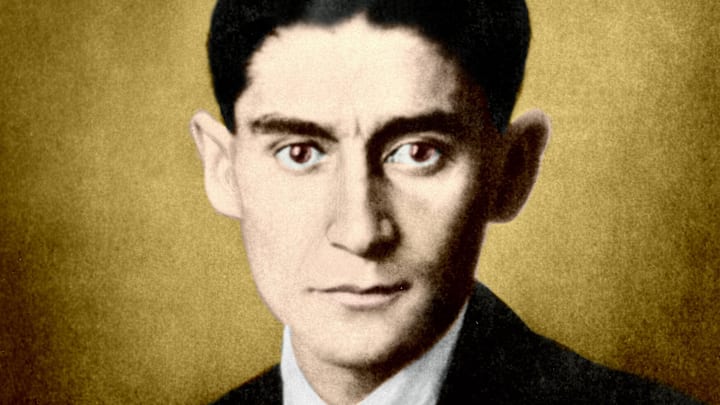
FRANZ KAFKA

The author of the likes of The Trial and The Metamorphosis didn’t so much hate his most popular book, but rather despised practically all of his own writing. Riddled with self-doubt and constantly questioning his talent, Kafka burned many of his works-in-progress and noted time and again in his diaries that he had thrown these “old disgusting papers” on the fire. “How many doubts have I meanwhile had about my writing?” he once wrote. “At bottom, I am an incapable, ignorant person who, if he had not been compelled … to go to school, would be fit only to crouch in a kennel, to leap out when food is offered him, and to leap back when he has swallowed it.”
Tragically, Kafka contracted tuberculosis and died at the age of just 40, having never achieved much success nor recognition during his lifetime. Despite requesting his friend and fellow author Max Brod burn the last of his unpublished work on his death, Brod instead published his friend’s remaining works posthumously, and to considerable acclaim. Kafka has since gone on to be recognized as one of the greatest authors of the 20th century.
A. A. MILNE

Sorry, Pooh fans, but A. A. Milne was not all that enamored of his most famous creation either. Milne began his writing career while at Cambridge University and went on to join the staff of the satirical London magazine Punch in 1906, contributing comic verses and essays. After service in World War I, he switched to writing plays and enjoyed a string of successful stage comedies in the 1920s. In 1926, he published Winnie the Pooh—the enduring global success of which would eventually go on to eclipse all his other work.
Ultimately, although Milne certainly seems to have appreciated everything that Pooh gave him, he grew rather resentful of the fact that his other seven novels, five works of nonfiction, three dozen-plus stage plays, and countless other poems, essays, and articles all now go largely overlooked. “It seems to me now that if I write anything less realistic, less straightforward than ‘The cat sat on the mat’, I am ‘indulging in a whimsy,’” Milne wrote in 1928. “Indeed, if I did say that the cat sat on the mat … I should be accused of being whimsical about cats … such as the author of Winnie-the-Pooh invents so charmingly for our delectation.”
ANNIE PROULX

“Brokeback Mountain” was one of Annie Proulx’s Wyoming Stories, and was first published in The New Yorker and then in her 1999 collection Close Range. The immense success of the 2005 movie adaptation, however, overshadowed the other stories in the anthology (as well as many of her other works), and led to readers and movie-goers writing their own follow-ups and fan fiction—taking her tragic characters in directions Proulx was far from happy with. “I wish I’d never written the story,” she later told The Paris Review. “It’s just been the cause of hassle and problems and irritation since the film came out.”
Love trivia? Order Mental Floss’s new game, Brain Brawl, to test your knowledge in a head-to-head tournament style.