%20%20--%3E%0A%3Csvg%20version%3D%221.1%22%20id%3D%22Layer_1%22%20xmlns%3D%22http%3A%2F%2Fwww.w3.org%2F2000%2Fsvg%22%20xmlns%3Axlink%3D%22http%3A%2F%2Fwww.w3.org%2F1999%2Fxlink%22%20x%3D%220px%22%20y%3D%220px%22%0A%09%20viewBox%3D%220%200%20684.6%2068.1%22%20style%3D%22enable-background%3Anew%200%200%20684.6%2068.1%3B%22%20xml%3Aspace%3D%22preserve%22%3E%0A%3Cg%3E%0A%09%3Cpath%20d%3D%22M444.1%2C29.3h-17.4v14.5h17.4V29.3z%20M36.4%2C68.1l29.3-50.8V0H50.4L32.9%2C36.8L15.5%2C0H0v68.1h16.7V45.8l12.4%2C22.3H36.4z%0A%09%09%20M49.1%2C68.1h16.6V23.4L49.1%2C52.1V68.1z%20M76.6%2C68.1h45V53.8H93.3V41.6h21V27.1h-21V14.8h28.3V0.1h-45V68.1z%20M175.6%2C68.1h17.3v-68%0A%09%09h-16.5v40.3L150%2C0.1h-17.6v68h16.7V27.7L175.6%2C68.1z%20M235.8%2C14.8h15.4V0.1h-47.4v14.7H219v53.2h16.8V14.8z%20M290.3%2C45.9h-17.1%0A%09%09l7.5-15.6h2L290.3%2C45.9z%20M298.7%2C68.1h18l-32.2-68h-5.7l-32%2C68h18l3.3-7.1h27.1L298.7%2C68.1z%20M325.2%2C68.1h46.2V53.8h-29.6V0.1h-16.7%0A%09%09V68.1z%20M423.7%2C14.8h27.2V0.1H407v68h16.7V14.8z%20M462%2C68.1h46.2V53.8h-29.6V0.1H462V68.1z%20M564.8%2C34.1c0%2C10.7-7.2%2C19.2-18.5%2C19.2%0A%09%09c-11.4%2C0-18.5-8.5-18.5-19.2s7.1-19.2%2C18.5-19.2C557.6%2C14.9%2C564.8%2C23.4%2C564.8%2C34.1%20M580.6%2C34.1c0-19-14.2-34-34.3-34%0A%09%09c-20.2%2C0-34.3%2C15-34.3%2C34c0%2C19%2C14.1%2C34%2C34.3%2C34C566.4%2C68.1%2C580.6%2C53.1%2C580.6%2C34.1%20M604.8%2C20.5c0-4.1%2C3.3-6.2%2C6.7-6.2%0A%09%09c4.4%2C0%2C6.6%2C3%2C6.6%2C6.6h14.7C631.8%2C9.1%2C625.1%2C0.1%2C611%2C0.1c-12%2C0-21.7%2C9.3-21.7%2C20.6c0%2C10.9%2C5.9%2C15.9%2C16.7%2C19.8%0A%09%09c5.2%2C1.8%2C11.5%2C3.2%2C11.5%2C8c0%2C3.3-2.4%2C5.5-6.4%2C5.5c-3.6%2C0-6.6-3-6.6-6.7h-15.2c0%2C11.5%2C7.9%2C20.8%2C21.8%2C20.8c12%2C0%2C21.6-9.3%2C21.6-20.6%0A%09%09c0-10-5.3-16.4-16.7-19.8C610.6%2C26.1%2C604.8%2C25.3%2C604.8%2C20.5%20M670%2C20.9h14.7C683.8%2C9.1%2C677.1%2C0.1%2C663%2C0.1c-12%2C0-21.7%2C9.3-21.7%2C20.6%0A%09%09c0%2C10.9%2C5.9%2C15.9%2C16.7%2C19.8c5.2%2C1.8%2C11.5%2C3.2%2C11.5%2C8c0%2C3.3-2.4%2C5.5-6.4%2C5.5c-3.6%2C0-6.6-3-6.6-6.7h-15.2c0%2C11.5%2C7.9%2C20.8%2C21.8%2C20.8%0A%09%09c12%2C0%2C21.6-9.3%2C21.6-20.6c0-10-5.3-16.4-16.7-19.8c-5.4-1.6-11.3-2.4-11.3-7.2c0-4.1%2C3.3-6.2%2C6.7-6.2C667.7%2C14.4%2C670%2C17.3%2C670%2C20.9%0A%09%09%22%2F%3E%0A%3C%2Fg%3E%0A%3C%2Fsvg%3E%0A)

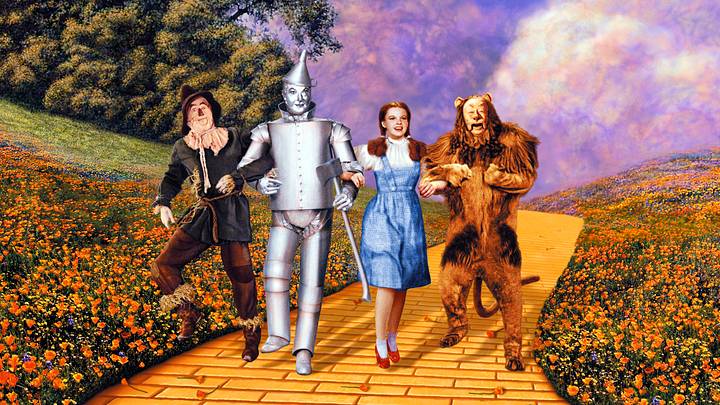
It's pretty common to hear about eerie and gruesome happenings during the filming of horror movies. From Poltergeist to The Exorcist, the idea of an on-set curse has long been used to add mystique to these haunting tales. It's far less common to hear about similarly frightening behind-the-scenes activities on the set of family-friendly films like The Wizard of Oz.
The Wizard of Oz was a technological marvel of its time, taking advantage of the newly created Technicolor process to welcome audiences into the magical world of Oz. The world portrayed in the film was larger-than-life, which forced the crew to get creative with stunts, costumes, and props. While many of these effects were successful, some of them were also dangerous, making the film set unbearable for some cast members.
While sensationalized stories like the tale of the hanging Munchkin have been debunked, there were plenty of genuine horror stories that took place on the set. Below are five true stories of chaos and tragedy that took place during and after the production of The Wizard of Oz.
The Revolving Door of Cast and Crew

The number of changes required before and during the filming of The Wizard of Oz should have been an omen of some of the chaos to come. At least ten screenwriters were hired to work on the script between January and October 1938, with some scripts being fully rejected and only small portions of others used in the final product.
Casting was similarly chaotic. MGM wanted Shirley Temple to star as Dorothy, but they couldn't negotiate a loan from her contract studio, so they settled for Judy Garland. At least three other actors were seriously considered for the role of the Wizard before Frank Morgan was cast, with most leaving the project due to salary and contract conflicts.
The Wicked Witch seemed to be in good hands with Gale Sondergaard, but she chose to leave the project due to script changes that drastically changed the way the witch was presented, and the role ultimately went to Margaret Hamilton.
The last major change came in the form of the film's directors. Richard Thorpe was originally set to direct the film, but he was quickly dismissed by producer Mervyn LeRoy for rushing through filming. George Cukor was then brought in, changing the design of both Dorothy and the Wicked Witch and requiring major reshoots.
However, Cukor had to leave to direct Gone with the Wind before any filming could begin. He was replaced by Victor Fleming, who filmed nearly all of the Oz-based scenes before also being called away to work on Gone with the Wind. King Vidor took over for the last several days of filming, which primarily involved the film's Kansas-based scenes.
Dangerous Working Conditions

Before diving into some of the specific incidents that occurred on set, it's worth setting the scene with a look at some of the dangerous materials and systems that were part of the everyday work experience for this film's cast and crew.
The scenes set in Oz took around six months to film, with many cast and crew members working 15-hour days. In order to properly capture the vivid colors needed in Oz, up to 150 lamps were added to the set, which raised temperatures to over 100 degrees. There were multiple incidents of cast and crew members falling unconscious from the heat and complaining about vision problems from the lights.
In addition to the brutal heat, the makeup and special effects were largely made out of hazardous materials. The book The Making of The Wizard of Oz by Aljean Harmetz highlighted several of these problems, including the heavy-handed use of asbestos in both costumes and the snow from the poppy field.
Some of the actors were also endangered by their makeup. The Wicked Witch's green skin was created using copper, and the Tin Man's silver face was made using aluminum. Both were used in dangerous concentrations, and Ray Bolger, who played the Scarecrow, later revealed that many actors were unable to safely eat due to their costumes. Though Bolger's mask was safer than many of his co-stars' makeup, his mask left him with deep lines on his face that lasted over a year after filming concluded.
The Poisoned Tin Man

The most famous example of the set's dangerous makeup comes from the original Tin Man, Buddy Ebsen. His makeup involved a full face of clown-white paint, with heavy amounts of aluminum dust added throughout filming.
After only ten days of filming, Ebsen was unable to breathe and had to go to the hospital. The aluminum powder had fully coated his lungs, which forced him to stay in the hospital for two weeks and stay at a hotel recovering for another month. In addition to breathing troubles, Ebsen suffered from intense muscle cramping and pain.
"I wondered if I was dying. No one seemed to know what was wrong or what the outcome was going to be. Tests revealed that my lungs were coated with the aluminum dust with which they'd been powdering my face."Buddy Ebsen
Such a long delay was unacceptable for the studio, so Jack Haley was brought in to play the role. Although the studio claimed that Ebsen had suffered from an allergic reaction, they did change the makeup process.
Rather than adding powder on top of cream makeup, the aluminum was mixed in to make a paste that was less likely to poison the actor. Even so, Haley developed an eye infection from the makeup that took him off the project for several days.
Burn The Witch

While the Wicked Witch of the West was defeated by water, the poor women playing the role were plagued by the film's fiery special effects. In the Witch's first appearance in Oz, she was supposed to disappear in a cloud of smoke. However, during one take, the crew did not wait for Margaret Hamilton to get away before setting the fire. She ended up with second-degree burns across her face and third-degree burns on her hand. Afterwards, the studio immediately wanted to know when she could come back to set.
Hamilton returned after six weeks, though her burns had not fully healed, and agreed not to pursue legal action as long as she didn't have to do any more scenes with fire. Begrudgingly agreeing, the studio brought in stunt double Betty Danko to film the "Surrender Dorothy" scene, where the witch's broomstick would shoot out smoking fireworks.
On the third take, the broom exploded, hospitalizing Danko and leaving her with permanent scars. Either the role of the Witch was cursed, or the studio simply didn't care enough to put safety measures in place to protect their actresses.
Dorothy's Fraught Future

Perhaps the person harmed the most in the making of The Wizard of Oz was its star, Judy Garland. She was not the studio's first choice for the role, and they made that clear in their treatment of the 16-year-old.
Garland was forced to bind her breasts, wear false teeth, shape her nose with rubber disks, and take medication to keep her weight down. When that didn't work well enough, they restricted her to a diet of chicken soup, black coffee, and cigarettes.
The stimulants she was given for weight loss and for enduring the long days on set came with their own side effects. Garland would occasionally fall into fits of giggles. On one such occasion, director Victor Fleming slapped her. At night, she would take large doses of sleeping pills. Only 30 years after The Wizard of Oz debuted, Judy Garland would be found dead from an overdose of the very barbiturates she had become addicted to as a teen.
For someone who brought to life such an optimistic, heartwarming character, Judy Garland was horribly mistreated. Garland's third husband even claimed that the actors playing Munchkins repeatedly molested Garland during the film's production. While this claim has been contested, Garland's own unpublished autobiography documented being sexually assaulted by MGM co-founder Louis B. Mayer for years, starting around the time that she was filming The Wizard of Oz.
The horrors that took place during and after The Wizard of Oz are far too real to be attributed to a simple curse. The cast and crew were subjected to frequent abuse, toxic substances, and a blatant disregard for their safety.
The movie has been celebrated for nearly a century, but its cutting-edge effects came at the expense of the people who poured literal blood, sweat, and tears into the Technicolor masterpiece.