%20%20--%3E%0A%3Csvg%20version%3D%221.1%22%20id%3D%22Layer_1%22%20xmlns%3D%22http%3A%2F%2Fwww.w3.org%2F2000%2Fsvg%22%20xmlns%3Axlink%3D%22http%3A%2F%2Fwww.w3.org%2F1999%2Fxlink%22%20x%3D%220px%22%20y%3D%220px%22%0A%09%20viewBox%3D%220%200%20684.6%2068.1%22%20style%3D%22enable-background%3Anew%200%200%20684.6%2068.1%3B%22%20xml%3Aspace%3D%22preserve%22%3E%0A%3Cg%3E%0A%09%3Cpath%20d%3D%22M444.1%2C29.3h-17.4v14.5h17.4V29.3z%20M36.4%2C68.1l29.3-50.8V0H50.4L32.9%2C36.8L15.5%2C0H0v68.1h16.7V45.8l12.4%2C22.3H36.4z%0A%09%09%20M49.1%2C68.1h16.6V23.4L49.1%2C52.1V68.1z%20M76.6%2C68.1h45V53.8H93.3V41.6h21V27.1h-21V14.8h28.3V0.1h-45V68.1z%20M175.6%2C68.1h17.3v-68%0A%09%09h-16.5v40.3L150%2C0.1h-17.6v68h16.7V27.7L175.6%2C68.1z%20M235.8%2C14.8h15.4V0.1h-47.4v14.7H219v53.2h16.8V14.8z%20M290.3%2C45.9h-17.1%0A%09%09l7.5-15.6h2L290.3%2C45.9z%20M298.7%2C68.1h18l-32.2-68h-5.7l-32%2C68h18l3.3-7.1h27.1L298.7%2C68.1z%20M325.2%2C68.1h46.2V53.8h-29.6V0.1h-16.7%0A%09%09V68.1z%20M423.7%2C14.8h27.2V0.1H407v68h16.7V14.8z%20M462%2C68.1h46.2V53.8h-29.6V0.1H462V68.1z%20M564.8%2C34.1c0%2C10.7-7.2%2C19.2-18.5%2C19.2%0A%09%09c-11.4%2C0-18.5-8.5-18.5-19.2s7.1-19.2%2C18.5-19.2C557.6%2C14.9%2C564.8%2C23.4%2C564.8%2C34.1%20M580.6%2C34.1c0-19-14.2-34-34.3-34%0A%09%09c-20.2%2C0-34.3%2C15-34.3%2C34c0%2C19%2C14.1%2C34%2C34.3%2C34C566.4%2C68.1%2C580.6%2C53.1%2C580.6%2C34.1%20M604.8%2C20.5c0-4.1%2C3.3-6.2%2C6.7-6.2%0A%09%09c4.4%2C0%2C6.6%2C3%2C6.6%2C6.6h14.7C631.8%2C9.1%2C625.1%2C0.1%2C611%2C0.1c-12%2C0-21.7%2C9.3-21.7%2C20.6c0%2C10.9%2C5.9%2C15.9%2C16.7%2C19.8%0A%09%09c5.2%2C1.8%2C11.5%2C3.2%2C11.5%2C8c0%2C3.3-2.4%2C5.5-6.4%2C5.5c-3.6%2C0-6.6-3-6.6-6.7h-15.2c0%2C11.5%2C7.9%2C20.8%2C21.8%2C20.8c12%2C0%2C21.6-9.3%2C21.6-20.6%0A%09%09c0-10-5.3-16.4-16.7-19.8C610.6%2C26.1%2C604.8%2C25.3%2C604.8%2C20.5%20M670%2C20.9h14.7C683.8%2C9.1%2C677.1%2C0.1%2C663%2C0.1c-12%2C0-21.7%2C9.3-21.7%2C20.6%0A%09%09c0%2C10.9%2C5.9%2C15.9%2C16.7%2C19.8c5.2%2C1.8%2C11.5%2C3.2%2C11.5%2C8c0%2C3.3-2.4%2C5.5-6.4%2C5.5c-3.6%2C0-6.6-3-6.6-6.7h-15.2c0%2C11.5%2C7.9%2C20.8%2C21.8%2C20.8%0A%09%09c12%2C0%2C21.6-9.3%2C21.6-20.6c0-10-5.3-16.4-16.7-19.8c-5.4-1.6-11.3-2.4-11.3-7.2c0-4.1%2C3.3-6.2%2C6.7-6.2C667.7%2C14.4%2C670%2C17.3%2C670%2C20.9%0A%09%09%22%2F%3E%0A%3C%2Fg%3E%0A%3C%2Fsvg%3E%0A)

Much like earlier decades, the 2000s had plenty of movies and characters that became household names and defined genres. The differentiator for the action genre here, though, came down to certain movies that didn’t want to be as “actiony” as the others, but were more grounded and had a greater focus on thrilling storytelling.
But that doesn't mean this decade lacked your usual blockbusters. The Lord of the Rings, Pirates of the Caribbean, and Mission: Impossible all became major franchises. But alongside those movies came a noticeable push toward grittier action.
The variety of great action movies makes the 2000s particularly fun to revisit. These are the movies that best represented just how great the genre could be during the decade.
- Gladiator (2000)
- Black Hawk Down (2001)
- The Bourne Identity (2002)
- Oldboy (2003)
- Collateral (2004)
- Sin City (2005)
- Children of Men (2006)
- Transformers (2007)
- The Dark Knight (2008)
- The Hurt Locker (2009)
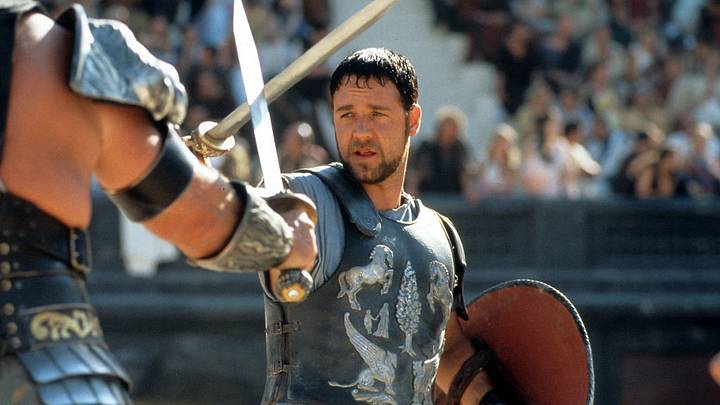
Gladiator (2000)
Ridley Scott’s Oscar-winning epic Gladiator was released at the turn of the millennium, and its massive success helped start a wave of more historical action movies throughout this decade.
In the film, Maximus (Russell Crowe) starts off as one of Rome's most respected generals before Commodus (Joaquin Phoenix) murders his father and destroys his life.
He ends up enslaved and eventually fighting in the arena, where his military experience makes him a great gladiator. The revenge story is pretty straightforward, but it helps that Maximus has enough character development after that big event, and it never feels like he's simply waiting around for his inevitable showdown with Commodus.
The movie also benefited enormously from Scott's eye for scale, thanks to real locations and grand sets which all contributed to making it feel like an actual ancient world.
Black Hawk Down (2001)
There aren't many war movies where the situation goes from bad to considerably worse almost immediately, but Black Hawk Down has that as its entire premise. Ridley Scott’s next movie after Gladiator followed the 1993 Battle of Mogadishu (in Somalia), where U.S. soldiers had expected a quick operation and instead found themselves trapped in an urban firefight over two days.
The movie follows a large ensemble of characters instead of one main hero. Josh Hartnett, Ewan McGregor, Eric Bana, Orlando Bloom, and Tom Hardy (in his feature debut) play soldiers who become increasingly boxed in after two Black Hawk helicopters are shot down.
The film's politics and historical framing have been rightfully debated over the years, but as a piece of action filmmaking, it's really good. It can feel exhausting in certain places, and deliberately so!
The Bourne Identity (2002)
After action movies like Saving Private Ryan (1999) and Ocean’s Eleven (2001), Matt Damon went on to star in The Bourne Identity directed by Doug Liman, which gave us all a new kind of spy hero (and franchise): Jason Bourne.
The action is also noticeably different from the Bond movies, which could be considered its competitor, especially later on when the Bourne sequels were released. Bourne doesn't have a lot of gadgets at his disposal, and improvisation becomes his winning edge. Who would have thought that amnesia comes with excellent improvisational skills?
The franchise would get even more frantic under Paul Greengrass, who directed the second, third, and fifth movies in this series, but the first movie did establish the winning formula.
Oldboy (2003)
What happens when a revenge movie decides that simply getting revenge isn't nearly (complicated) enough? Park Chan-wook's Oldboy has an answer, and it happens to involve one of the most famous hallway fights.
But Oldboy would be a bit less interesting if it were only a good action movie. Without spoiling anything, the revenge story becomes uncomfortably darker and more psychologically complicated as it goes on. The film was adapted from a Japanese manga and became a major part of the Korean New Wave's growing international reputation.
Collateral (2004)
A taxi driver picking up a passenger shouldn't be as exciting or dangerous as it is in Michael Mann’s Collateral. In the movie, Max (Jamie Foxx) discovers that his passenger, Vincent (Tom Cruise), is a professional hitman, and that he's expected to drive Vincent around Los Angeles while he kills five people in one night.
The movie is a tense nighttime thriller. Max is a nervous cab driver who spends most of the movie trying to survive this situation. Vincent, meanwhile, is calm and comfortable with what he does. And it also remains one of Cruise’s best roles, as he usually leans towards playing the hero far more often than not.
And when the action does happen, it’s usually quick and brutal. During all of Max’s desperate attempts to outsmart Vincent, it feels like the relatable actions of an ordinary person improvising under pressure.
Sin City (2005)
Sin City brings several of Frank Miller's comic stories together in the fictional Basin City, following several characters but with a focus on three protagonists of three intertwined stories: Marv (Mickey Rourke), Dwight (Clive Owen), and Detective Hartigan (Bruce Willis). Miller co-directed alongside Robert Rodriguez.
Their stories overlap, but each has its own vibe and explores a little corner of the city's endless corruption.
The visual style is the absolute highlight of this movie. Almost everything is black and white, with some splashes of color used to draw attention to certain characters or objects. The environments were largely created digitally, which helped the movie accurately reproduce the look of Miller's artwork in the comics.
Children of Men (2006)
Alfonso Cuarón’s Children of Men is not the type of action movie that often reminds viewers that they're watching an action movie. For long stretches of it, it’s more so a bleak science fiction drama. But the action sequences are executed with such technical skill that they’re some of the best examples of what cinematic tension can be like.
Leading the movie is Clive Owen as Theo. Humanity has become infertile, and the youngest person alive is 18 years old. Then Theo discovers that a young refugee is pregnant (the first known pregnancy in years). After this, though, just keeping her alive becomes much more complicated than it sounds.
It’s not a traditional action movie, but it’s absolutely one of the decade's best movies in general.
Transformers (2007)
It shouldn’t be a hot take to call the first Transformers one of the best action movies of its time. Aside from the giant Autobots and Decepticons, the movie is relatively grounded, especially when it comes to the action sequences. It also has a solid narrative with interesting characters (both human and otherwise), something the rest of the movies in the franchise increasingly lost grasp of.
All of the Transformers themselves feel like real and physical objects with massive weight. The movie, directed by Michael Bay, works hard to sell their size and presence. The Decepticons are never as scary and threatening again as they are in this first movie.
The Dark Knight (2008)
Even with how oversaturated the comic book/superhero movie genre has become, The Dark Knight keeps appearing on best-of lists that aren't even specifically about superhero movies—and for good reason.
In the critically acclaimed Christopher Nolan film, Bruce Wayne wants Gotham to reach a point where Batman isn't necessary, while the Joker wants to prove that the city's rules have double standards. Harvey Dent becomes the unfortunate middle ground between those two ideas.
And yes, the action is excellent, too. The opening heist, the Hong Kong sequence, the armored-car chase, the Hospital scene, and the final confrontation with the Joker are all major highlights.
The Hurt Locker (2009)
Kathryn Bigelow's The Hurt Locker is an Iraq War thriller that follows a bomb-disposal unit in Baghdad, with its main members being characters played by Jeremy Renner and Anthony Mackie.
The movie has some amazing direction, as effective as it can be. A bomb disposal sequence can take several minutes, and the movie is perfectly happy to spend that time watching the soldiers approach a device, check the wires, scan the street, and wonder whether someone is watching from a nearby building. There doesn't need to be an explosion every now and then, and just the possibility of one is enough to set the tensions high.
The film's best sequence isn't even a fancy or explosive one, but rather a slow desert sniper duel where the characters are stuck behind a rock under a burning sun, running out of water while trying to spot an enemy shooter far away.