%20%20--%3E%0A%3Csvg%20version%3D%221.1%22%20id%3D%22Layer_1%22%20xmlns%3D%22http%3A%2F%2Fwww.w3.org%2F2000%2Fsvg%22%20xmlns%3Axlink%3D%22http%3A%2F%2Fwww.w3.org%2F1999%2Fxlink%22%20x%3D%220px%22%20y%3D%220px%22%0A%09%20viewBox%3D%220%200%20684.6%2068.1%22%20style%3D%22enable-background%3Anew%200%200%20684.6%2068.1%3B%22%20xml%3Aspace%3D%22preserve%22%3E%0A%3Cg%3E%0A%09%3Cpath%20d%3D%22M444.1%2C29.3h-17.4v14.5h17.4V29.3z%20M36.4%2C68.1l29.3-50.8V0H50.4L32.9%2C36.8L15.5%2C0H0v68.1h16.7V45.8l12.4%2C22.3H36.4z%0A%09%09%20M49.1%2C68.1h16.6V23.4L49.1%2C52.1V68.1z%20M76.6%2C68.1h45V53.8H93.3V41.6h21V27.1h-21V14.8h28.3V0.1h-45V68.1z%20M175.6%2C68.1h17.3v-68%0A%09%09h-16.5v40.3L150%2C0.1h-17.6v68h16.7V27.7L175.6%2C68.1z%20M235.8%2C14.8h15.4V0.1h-47.4v14.7H219v53.2h16.8V14.8z%20M290.3%2C45.9h-17.1%0A%09%09l7.5-15.6h2L290.3%2C45.9z%20M298.7%2C68.1h18l-32.2-68h-5.7l-32%2C68h18l3.3-7.1h27.1L298.7%2C68.1z%20M325.2%2C68.1h46.2V53.8h-29.6V0.1h-16.7%0A%09%09V68.1z%20M423.7%2C14.8h27.2V0.1H407v68h16.7V14.8z%20M462%2C68.1h46.2V53.8h-29.6V0.1H462V68.1z%20M564.8%2C34.1c0%2C10.7-7.2%2C19.2-18.5%2C19.2%0A%09%09c-11.4%2C0-18.5-8.5-18.5-19.2s7.1-19.2%2C18.5-19.2C557.6%2C14.9%2C564.8%2C23.4%2C564.8%2C34.1%20M580.6%2C34.1c0-19-14.2-34-34.3-34%0A%09%09c-20.2%2C0-34.3%2C15-34.3%2C34c0%2C19%2C14.1%2C34%2C34.3%2C34C566.4%2C68.1%2C580.6%2C53.1%2C580.6%2C34.1%20M604.8%2C20.5c0-4.1%2C3.3-6.2%2C6.7-6.2%0A%09%09c4.4%2C0%2C6.6%2C3%2C6.6%2C6.6h14.7C631.8%2C9.1%2C625.1%2C0.1%2C611%2C0.1c-12%2C0-21.7%2C9.3-21.7%2C20.6c0%2C10.9%2C5.9%2C15.9%2C16.7%2C19.8%0A%09%09c5.2%2C1.8%2C11.5%2C3.2%2C11.5%2C8c0%2C3.3-2.4%2C5.5-6.4%2C5.5c-3.6%2C0-6.6-3-6.6-6.7h-15.2c0%2C11.5%2C7.9%2C20.8%2C21.8%2C20.8c12%2C0%2C21.6-9.3%2C21.6-20.6%0A%09%09c0-10-5.3-16.4-16.7-19.8C610.6%2C26.1%2C604.8%2C25.3%2C604.8%2C20.5%20M670%2C20.9h14.7C683.8%2C9.1%2C677.1%2C0.1%2C663%2C0.1c-12%2C0-21.7%2C9.3-21.7%2C20.6%0A%09%09c0%2C10.9%2C5.9%2C15.9%2C16.7%2C19.8c5.2%2C1.8%2C11.5%2C3.2%2C11.5%2C8c0%2C3.3-2.4%2C5.5-6.4%2C5.5c-3.6%2C0-6.6-3-6.6-6.7h-15.2c0%2C11.5%2C7.9%2C20.8%2C21.8%2C20.8%0A%09%09c12%2C0%2C21.6-9.3%2C21.6-20.6c0-10-5.3-16.4-16.7-19.8c-5.4-1.6-11.3-2.4-11.3-7.2c0-4.1%2C3.3-6.2%2C6.7-6.2C667.7%2C14.4%2C670%2C17.3%2C670%2C20.9%0A%09%09%22%2F%3E%0A%3C%2Fg%3E%0A%3C%2Fsvg%3E%0A)

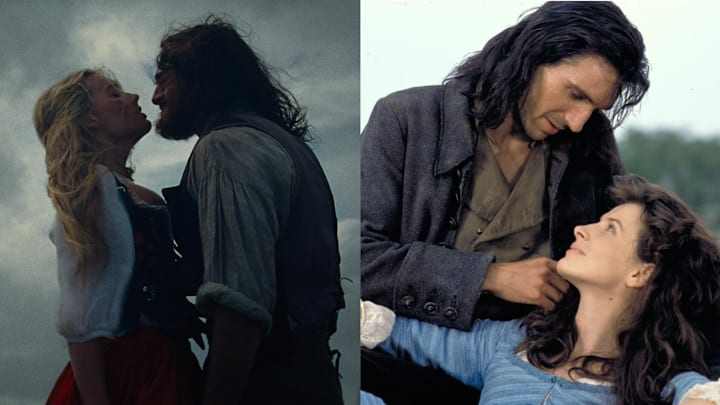
Catherine and Heathcliff may be said to haunt the moors, but they truly live on by haunting the silver screen. Nearly a century after Emily Brontë’s 1847 gothic novel first made its way to Hollywood, the latest sensual, rain-soaked retelling has some viewers wondering whether the original plot has been lost. But this isn’t the first time a director has taken creative liberties with Wuthering Heights.
With more than 35 adaptations across film and television, Brontë’s tale of obsessive love and destruction has taken many twists and turns—and not all have been admired equally. To spare you a multi-week movie marathon, we turned to Rotten Tomatoes to rank the five best Wuthering Heights adaptations with Tomatometer scores, from highest to lowest. Read on to see which versions critics think rise above the rest.
- 1. Wuthering Heights (1939)
- 2. Wuthering Heights (2011)
- 3. Wuthering Heights (2026)
- 4. Wuthering Heights (1970)
- 5. Wuthering Heights (1992)
1. Wuthering Heights (1939)
Looks like the saying “first is the worst” isn’t always true: the first Hollywood adaptation of Wuthering Heights takes the No. 1 spot on Rotten Tomatoes. Directed by William Wyler and starring Merle Oberon as Catherine and Laurence Olivier as Heathcliff, the film focuses mainly on the first half of Brontë’s novel, delivering plenty of Old Hollywood flair.
Interestingly, the actors were replaced by doubles during the characters’ final ghostly scenes. But it wasn’t the swap that changed how audiences interpreted the ending—it was the ghosts walking off into the clouds, which transformed the story from one of revenge into a tale of eternal love for adaptations to come.
Almost 90 years later, the film still holds up, scoring 96 percent on the Tomatometer and earning a "Certified Fresh" rating. Critics from the era would likely agree: the 1939 adaptation was nominated for eight Oscars at the 12th Academy Awards, including Best Picture, Best Actress, Best Art Direction, Best Supporting Actress, Best Screenplay, and Best Score. It’s also one of the few black-and-white adaptations, a distinction that helped it win its only Oscar for Best Cinematography. An oldie, but a true classic.
2. Wuthering Heights (2011)
The second-newest Wuthering Heights adaptation is also the second-highest ranked, scoring 69 percent on Rotten Tomatoes —and for good reason. Director Andrea Arnold’s raw, cinematic style, paired with minimal music, captures the melancholic atmosphere of the moors, reflecting Catherine and Heathcliff’s tumultuous relationship rather than turning it into a steamy romance.
Arnold’s version also features a black Heathcliff, played by James Howson, in contrast to many previous adaptations with white actors. This casting choice aligns with Brontë’s original description of Heathcliff as a “dark-skinned gipsy,” emphasizing the discrimination he faces in Yorkshire—a detail many critics and viewers praise for its authenticity. While the film doesn’t cover the entire novel, focusing largely on their childhood and ending shortly after Catherine’s death, its haunting tone and emotional intensity render the presence of ghosts unnecessary.
3. Wuthering Heights (2026)
This star-studded period drama brought Brontë’s novel back into the pop culture spotlight, but what do critics really think? Marketed as a steamy romance between Jacob Elordi’s Heathcliff and Margot Robbie’s Catherine, the 2026 Wuthering Heights leans more into aesthetics than strict plot accuracy. Director Emerald Fennell (of Saltburn) glosses over the destructive, obsessive nature of the pair’s relationship, instead glamorizing the toxic “dark romance” trope.
While many viewers have praised the film’s striking visuals and glossy style, critics have pushed back, arguing that casting a white actor as Heathcliff erases key themes of classism and racism central to the novel. As of its U.S. and U.K. theatrical release, the controversial adaptation holds a 65 percent score on the Tomatometer—still in "Fresh" territory, at least for now.
4. Wuthering Heights (1970)
The 1970 British adaptation of Wuthering Heights is all fire and fury. Timothy Dalton and Anna Calder-Marshall bring Heathcliff and Catherine’s obsessive, tempestuous love to life with raw intensity, capturing every spark of passion and inner turmoil. Unlike softer adaptations, this version doesn’t sugarcoat their flaws—or their doomed ending—making the romance as thrilling as it is tragic. Again, covering only the first half of the novel, the film teeters more toward the psychological than the supernatural.
Set to a Golden Globe-nominated score by Michel Legrand, it’s an unflinching portrayal of Brontë’s classic that has resonated with fans for more than 50 years—so much so that it nearly got a sequel. Robert Fuest’s version ranks just below the modern remake, earning a 64 percent score.
5. Wuthering Heights (1992)
If you’ve ever wondered why most versions of Wuthering Heights only cover the first half of the novel, just watch the lowest-ranked adaptation on this list. Peter Kosminsky’s 1992 take tries to cram the full story into just an hour and 45 minutes, from Lockwood’s arrival to Heathcliff’s death. Scoring only 31 percent on Rotten Tomatoes, this ‘90s adaptation is officially "Rotten."
The haunting soundtrack, composed by the renowned Ryuichi Sakamoto, and the authentic Yorkshire moors locations set the scene beautifully, but critics and viewers alike found the film lacking. Even Ralph Fiennes’ smoldering Heathcliff can’t fully make up for Juliette Binoche’s distracting French accent, which colors her portrayal of both Cathy and Catherine.