%20%20--%3E%0A%3Csvg%20version%3D%221.1%22%20id%3D%22Layer_1%22%20xmlns%3D%22http%3A%2F%2Fwww.w3.org%2F2000%2Fsvg%22%20xmlns%3Axlink%3D%22http%3A%2F%2Fwww.w3.org%2F1999%2Fxlink%22%20x%3D%220px%22%20y%3D%220px%22%0A%09%20viewBox%3D%220%200%20684.6%2068.1%22%20style%3D%22enable-background%3Anew%200%200%20684.6%2068.1%3B%22%20xml%3Aspace%3D%22preserve%22%3E%0A%3Cg%3E%0A%09%3Cpath%20d%3D%22M444.1%2C29.3h-17.4v14.5h17.4V29.3z%20M36.4%2C68.1l29.3-50.8V0H50.4L32.9%2C36.8L15.5%2C0H0v68.1h16.7V45.8l12.4%2C22.3H36.4z%0A%09%09%20M49.1%2C68.1h16.6V23.4L49.1%2C52.1V68.1z%20M76.6%2C68.1h45V53.8H93.3V41.6h21V27.1h-21V14.8h28.3V0.1h-45V68.1z%20M175.6%2C68.1h17.3v-68%0A%09%09h-16.5v40.3L150%2C0.1h-17.6v68h16.7V27.7L175.6%2C68.1z%20M235.8%2C14.8h15.4V0.1h-47.4v14.7H219v53.2h16.8V14.8z%20M290.3%2C45.9h-17.1%0A%09%09l7.5-15.6h2L290.3%2C45.9z%20M298.7%2C68.1h18l-32.2-68h-5.7l-32%2C68h18l3.3-7.1h27.1L298.7%2C68.1z%20M325.2%2C68.1h46.2V53.8h-29.6V0.1h-16.7%0A%09%09V68.1z%20M423.7%2C14.8h27.2V0.1H407v68h16.7V14.8z%20M462%2C68.1h46.2V53.8h-29.6V0.1H462V68.1z%20M564.8%2C34.1c0%2C10.7-7.2%2C19.2-18.5%2C19.2%0A%09%09c-11.4%2C0-18.5-8.5-18.5-19.2s7.1-19.2%2C18.5-19.2C557.6%2C14.9%2C564.8%2C23.4%2C564.8%2C34.1%20M580.6%2C34.1c0-19-14.2-34-34.3-34%0A%09%09c-20.2%2C0-34.3%2C15-34.3%2C34c0%2C19%2C14.1%2C34%2C34.3%2C34C566.4%2C68.1%2C580.6%2C53.1%2C580.6%2C34.1%20M604.8%2C20.5c0-4.1%2C3.3-6.2%2C6.7-6.2%0A%09%09c4.4%2C0%2C6.6%2C3%2C6.6%2C6.6h14.7C631.8%2C9.1%2C625.1%2C0.1%2C611%2C0.1c-12%2C0-21.7%2C9.3-21.7%2C20.6c0%2C10.9%2C5.9%2C15.9%2C16.7%2C19.8%0A%09%09c5.2%2C1.8%2C11.5%2C3.2%2C11.5%2C8c0%2C3.3-2.4%2C5.5-6.4%2C5.5c-3.6%2C0-6.6-3-6.6-6.7h-15.2c0%2C11.5%2C7.9%2C20.8%2C21.8%2C20.8c12%2C0%2C21.6-9.3%2C21.6-20.6%0A%09%09c0-10-5.3-16.4-16.7-19.8C610.6%2C26.1%2C604.8%2C25.3%2C604.8%2C20.5%20M670%2C20.9h14.7C683.8%2C9.1%2C677.1%2C0.1%2C663%2C0.1c-12%2C0-21.7%2C9.3-21.7%2C20.6%0A%09%09c0%2C10.9%2C5.9%2C15.9%2C16.7%2C19.8c5.2%2C1.8%2C11.5%2C3.2%2C11.5%2C8c0%2C3.3-2.4%2C5.5-6.4%2C5.5c-3.6%2C0-6.6-3-6.6-6.7h-15.2c0%2C11.5%2C7.9%2C20.8%2C21.8%2C20.8%0A%09%09c12%2C0%2C21.6-9.3%2C21.6-20.6c0-10-5.3-16.4-16.7-19.8c-5.4-1.6-11.3-2.4-11.3-7.2c0-4.1%2C3.3-6.2%2C6.7-6.2C667.7%2C14.4%2C670%2C17.3%2C670%2C20.9%0A%09%09%22%2F%3E%0A%3C%2Fg%3E%0A%3C%2Fsvg%3E%0A)

Heathcliff has haunted the Yorkshire moors for nearly two centuries, but readers still debate one basic question: who, exactly, is he? While film and TV adaptations have often portrayed him as white, Emily Brontë’s "Wuthering Heights" leaves behind a trail of clues that suggest something far more complicated.
Although the gothic romance novel was published in the Victorian era, its story is set in the late eighteenth century—a distinction that matters when considering how Heathcliff is introduced and understood. From the moment he appears, he's framed as an outsider, not just socially, but physically, leaving readers to piece together the hints about his mysterious origins.
The Clues Brontë Leaves Behind

The first description of Heathcliff appears early on in the book. In Chapter 1, narrator Mr. Lockwood calls Heathcliff a "dark-skinned gipsy," immediately marking him as different from the residents of the moors.
Things get more pointed in Chapter 4, when Heathcliff’s origins are explained. Mr. Earnshaw brings home "a dirty, ragged, black-haired child" from Liverpool, claiming he "picked him up" in the streets and even asking whether the boy had an owner. Mrs. Earnshaw’s reaction is blunt: she calls him a "gipsy brat."
Heathcliff doesn’t appear to speak English at first, either. Nelly Dean, the family’s housekeeper and a secondary narrator, recalls that he repeated "some gibberish that nobody could understand"—a term often used at the time to dismiss non-European languages. She also describes him as “dark, almost as if it came from the devil” and an “imp of Satan,” linking his appearance to fear and moral suspicion.
The novel keeps piling on. In Chapter 6, Mr. Linton refers to Heathcliff as "a little Lascar, or an American or Spanish castaway." At the time, "lascar" was a term used for Indian and Southeast Asian sailors—and sometimes their children—employed or trafficked by the East India Company. Being labeled a castaway from the Americas or Spain (including the Caribbean) only reinforces the idea that Heathcliff is not meant to be read as a white English boy.
The Liverpool Link
Heathcliff’s arrival point isn’t random. "Wuthering Heights" is set decades before its publication, during a period when Liverpool was one of Britain’s busiest slave-trading ports. In the 18th and early 19th centuries, ships from Liverpool transported an estimated 1.5 million Africans across the Atlantic under brutal conditions.
Seen in that historical context, Brontë’s description of a dark-skinned, foreign-speaking child who may have had an "owner" feels less like a coincidence and more like a reflection of the world her readers would have recognized.
The Great Heathcliff Debate

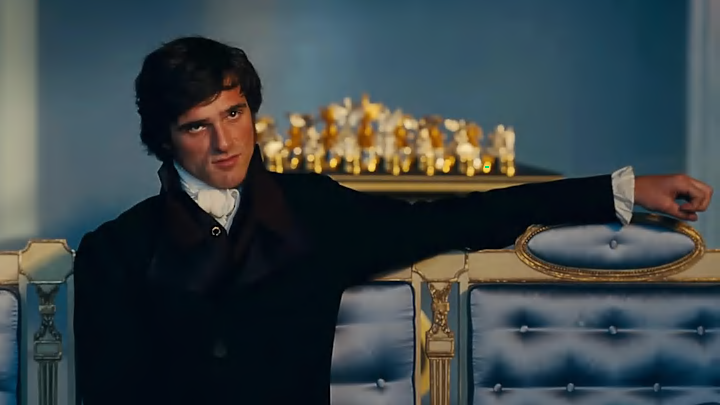
Despite all this, adaptations have never agreed on how to portray Heathcliff. Andrea Arnold’s 2011 film made history by casting James Howson, the first Black actor to play the role on screen. Other versions, like ITV’s 2009 adaptation starring Tom Hardy, opted for a white Heathcliff. Emerald Fennell’s upcoming adaptation starring white actor Jacob Elordi has reignited discussion once again.
In a BBC interview, Fennell said she cast Elordi because he "looked exactly like the illustration of Heathcliff in the first book that I read," a reminder that how people imagine Heathcliff has often mattered more than what the novel actually says. Even the Brontë Parsonage Museum has weighed in, acknowledging that Heathcliff may have been of "black African descent" and that later interpretations reflect changing cultural comfort more than textual certainty. The museum also notes that some scholars have suggested Brontë may have been inspired by figures like the abolitionist Frederick Douglass when imagining Heathcliff’s resilience and outsider status.
Brontë never spells out Heathcliff’s origins, but she doesn’t leave readers empty-handed, either. Between the language, the setting, and the historical context, "Wuthering Heights" offers a version of Heathcliff that’s far more racially charged than many adaptations suggest, and that tension is part of why we’re still talking about him today.