%20%20--%3E%0A%3Csvg%20version%3D%221.1%22%20id%3D%22Layer_1%22%20xmlns%3D%22http%3A%2F%2Fwww.w3.org%2F2000%2Fsvg%22%20xmlns%3Axlink%3D%22http%3A%2F%2Fwww.w3.org%2F1999%2Fxlink%22%20x%3D%220px%22%20y%3D%220px%22%0A%09%20viewBox%3D%220%200%20684.6%2068.1%22%20style%3D%22enable-background%3Anew%200%200%20684.6%2068.1%3B%22%20xml%3Aspace%3D%22preserve%22%3E%0A%3Cg%3E%0A%09%3Cpath%20d%3D%22M444.1%2C29.3h-17.4v14.5h17.4V29.3z%20M36.4%2C68.1l29.3-50.8V0H50.4L32.9%2C36.8L15.5%2C0H0v68.1h16.7V45.8l12.4%2C22.3H36.4z%0A%09%09%20M49.1%2C68.1h16.6V23.4L49.1%2C52.1V68.1z%20M76.6%2C68.1h45V53.8H93.3V41.6h21V27.1h-21V14.8h28.3V0.1h-45V68.1z%20M175.6%2C68.1h17.3v-68%0A%09%09h-16.5v40.3L150%2C0.1h-17.6v68h16.7V27.7L175.6%2C68.1z%20M235.8%2C14.8h15.4V0.1h-47.4v14.7H219v53.2h16.8V14.8z%20M290.3%2C45.9h-17.1%0A%09%09l7.5-15.6h2L290.3%2C45.9z%20M298.7%2C68.1h18l-32.2-68h-5.7l-32%2C68h18l3.3-7.1h27.1L298.7%2C68.1z%20M325.2%2C68.1h46.2V53.8h-29.6V0.1h-16.7%0A%09%09V68.1z%20M423.7%2C14.8h27.2V0.1H407v68h16.7V14.8z%20M462%2C68.1h46.2V53.8h-29.6V0.1H462V68.1z%20M564.8%2C34.1c0%2C10.7-7.2%2C19.2-18.5%2C19.2%0A%09%09c-11.4%2C0-18.5-8.5-18.5-19.2s7.1-19.2%2C18.5-19.2C557.6%2C14.9%2C564.8%2C23.4%2C564.8%2C34.1%20M580.6%2C34.1c0-19-14.2-34-34.3-34%0A%09%09c-20.2%2C0-34.3%2C15-34.3%2C34c0%2C19%2C14.1%2C34%2C34.3%2C34C566.4%2C68.1%2C580.6%2C53.1%2C580.6%2C34.1%20M604.8%2C20.5c0-4.1%2C3.3-6.2%2C6.7-6.2%0A%09%09c4.4%2C0%2C6.6%2C3%2C6.6%2C6.6h14.7C631.8%2C9.1%2C625.1%2C0.1%2C611%2C0.1c-12%2C0-21.7%2C9.3-21.7%2C20.6c0%2C10.9%2C5.9%2C15.9%2C16.7%2C19.8%0A%09%09c5.2%2C1.8%2C11.5%2C3.2%2C11.5%2C8c0%2C3.3-2.4%2C5.5-6.4%2C5.5c-3.6%2C0-6.6-3-6.6-6.7h-15.2c0%2C11.5%2C7.9%2C20.8%2C21.8%2C20.8c12%2C0%2C21.6-9.3%2C21.6-20.6%0A%09%09c0-10-5.3-16.4-16.7-19.8C610.6%2C26.1%2C604.8%2C25.3%2C604.8%2C20.5%20M670%2C20.9h14.7C683.8%2C9.1%2C677.1%2C0.1%2C663%2C0.1c-12%2C0-21.7%2C9.3-21.7%2C20.6%0A%09%09c0%2C10.9%2C5.9%2C15.9%2C16.7%2C19.8c5.2%2C1.8%2C11.5%2C3.2%2C11.5%2C8c0%2C3.3-2.4%2C5.5-6.4%2C5.5c-3.6%2C0-6.6-3-6.6-6.7h-15.2c0%2C11.5%2C7.9%2C20.8%2C21.8%2C20.8%0A%09%09c12%2C0%2C21.6-9.3%2C21.6-20.6c0-10-5.3-16.4-16.7-19.8c-5.4-1.6-11.3-2.4-11.3-7.2c0-4.1%2C3.3-6.2%2C6.7-6.2C667.7%2C14.4%2C670%2C17.3%2C670%2C20.9%0A%09%09%22%2F%3E%0A%3C%2Fg%3E%0A%3C%2Fsvg%3E%0A)

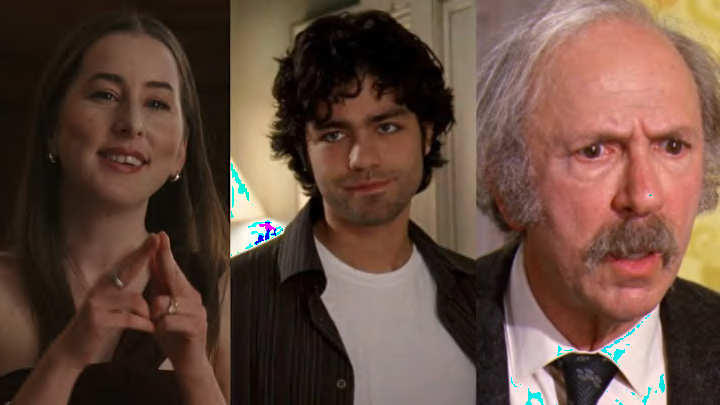
The line between good and evil doesn’t always involve an underground lair or a menacing mug. Sometimes, the worst villains of all are those hiding in plain sight—whether under the covers of a creaky bed like Willy Wonka’s Grandpa Joe, or behind a shaggy mop of hair and a perpetual scowl, like Nate in The Devil Wears Prada.
And once you start looking, they’re everywhere. Movie history is full of "heroes" who were framed as charming, helpful, or misunderstood, but whose behavior looks much different under modern scrutiny. From chaos-loving leads with no consequences to self-absorbed partners who support everything except their significant other’s success, these are the opps who make you rethink the original story.
Starting with Nate—everyone’s favorite character to hate—here are a few familiar faces who might not be villains on paper, but definitely act like it in practice.
- Nate in The Devil Wears Prada (2006)
- Grandpa Joe in Willy Wonka & the Chocolate Factory (1971)
- Ferris in Ferris Bueller's Day Off (1986)
- Glinda in The Wizard of Oz (1939)
- Rose in Titanic (1997)
- Rachel in The Drama (2026)
Nate in The Devil Wears Prada (2006)

Under the guise of a goofy, good-hearted chef who’s "neglected" by his overambitious girlfriend, Nate has long been spared the villain label in The Devil Wears Prada. But throughout the years—from the original film to its sequel, The Devil Wears Prada 2—audiences have taken a closer look at his increasingly selfish, whiny behavior, especially in contrast to Andy’s rise.
When Andy gets the opportunity of a lifetime (along with enough new stress to last one), the glorified line cook's support quickly turns into guilt-tripping over her lack of free time and shifting priorities. Sure, she may have missed one birthday party—but at the height of a career-defining moment, and after months of passive-aggressive comments from an unsupportive partner, what exactly is she supposed to do? God forbid a girl gets a blowout and starts earning a livable wage as a journalist.
By the end, Andy moves on from both the job and the relationship, shedding the dead weight that's Nate. Unfortunately for viewers, his exemplification of the fragile male ego will never be forgotten—even though he was seemingly forgotten by the casting directors of the sequel.
Grandpa Joe in Willy Wonka & the Chocolate Factory (1971)

Between Wonka’s sugar-induced mania, Violet’s arrogance, and Augustus’ gluttony, the deceptively harmless Grandpa Joe easily slips through the cracks when it comes to villainy in Willy Wonka & the Chocolate Factory. But his true character is revealed within the first 30 minutes, when the so-called bedridden man miraculously hops out of bed at the mention of the Golden Ticket.
Singing, dancing, and feigning disability aside, Grandpa Joe’s behavior only becomes more questionable from there, starting with his freeloading and extending to his manipulation of Charlie into not selling the ticket and instead bringing him along as a plus-one. Everyone deserves a last wish, right? Not when it involves coercing a pre-teen into stealing Fizzy Lifting Drinks from a lucrative candy factory, nearly getting them both kicked out for good.
Ferris in Ferris Bueller's Day Off (1986)

Square or certified rebel, we all need that adventurous friend to pull us out of our comfort zone and get us into sticky, but ultimately stimulating, situations we wouldn’t usually be in—or at least that’s what the glorification of Ferris Bueller in his namesake comedy leads you to believe. We’ve all faked an illness or two, but stealing a priceless Ferrari, hacking into a school computer system, and dragging a reluctant, depressed friend along for the ride is another story.
Meanwhile, Principal Rooney and Ferris’ sister Jeanie spend the day at their wits’ end trying to catch him in the act, only for him to repeatedly slip away with ease. Maybe they’re not snitches, but an exasperated educator and cynical older sister just trying to get some version of the truth.
Cameron’s dad’s Ferrari gets wrecked, Jeanie is left covering the fallout, and Ferris gets the girl and endless gloating privileges without the consequences. Clear villainy, if we’ve ever seen it.
Glinda in The Wizard of Oz (1939)

It may be part of her alliterative nickname, but that’s about as "good" as Glinda gets in The Wizard of Oz. No amount of sparkles and smiles can fully mask her calculated nature, revealed from the moment she sends Dorothy off with those fated ruby slippers, setting her straight down the risky Yellow Brick Road. Oh, and those slippers? Stolen property, taken from their rightful heir, the Wicked Witch of the West, no less.
While Glinda is all giggles and reassurance, she relies on malleable characters like Dorothy to do the dirty work for her, guiding events from the sidelines rather than stepping into danger herself. By the time the Wicked Witch of the West is defeated, Glinda reappears not as a bystander but as the unrivaled ruler of Oz, neatly closing the story once everything has already played out.
Rose in Titanic (1997)

"She's just a girl" barely suffices as an excuse for young Rose in Titanic, but it definitely doesn’t hold up for the withering, older Rose, who seems to repeat questionable decisions across every chapter of her life. Cheating is hard to defend, but some cut 17-year-old Rose slack for doing what she could in the face of a controlling fiancé and an unsupportive mother.
Now for the undeniably indefensible: distracting the lookout on deck prior to the crash, abandoning her mother for a fling, and then leaving that fling to die in piercingly cold waters when there was clearly enough room on that door for both of them. And that's not to mention the worst of her wrongdoings that she didn't even bother to remedy almost a century later regarding the "Heart of the Ocean." Not only did Rose steal and keep the multi-million-dollar diamond necklace, but she refused to sell it for her family, dropping it into the depths of the deep blue for a moment of fleeting dramatic flair.
Rachel in The Drama (2026)

Many of the characters on this list have been subjected to years of reevaluation and reclassification as certified villains, thanks to their films becoming modern or historical classics. But one of the more immediate villains on that spectrum is Rachel, from the modern A24 romance The Drama, who practically personifies manipulation under a façade of friendship.
When bride-to-be Emma is tricked into revealing her darkest secret by her so-called best friend, the playful atmosphere dissipates and the pitchforks come out, much in thanks to Rachel. From her initiation of the confession game that starts it all, to her constant judgment leading up to Emma’s wedding, Rachel operates less like a maid of honor and more like a maid of horror.
The worst part? While Emma’s confession is framed as morally complicated but hypothetical, Rachel’s own secret involves a far more disturbing past—one she shields with moral superiority and manipulation at every turn. In comparison, Emma starts to look less like the problem and more like the target.