%20%20--%3E%0A%3Csvg%20version%3D%221.1%22%20id%3D%22Layer_1%22%20xmlns%3D%22http%3A%2F%2Fwww.w3.org%2F2000%2Fsvg%22%20xmlns%3Axlink%3D%22http%3A%2F%2Fwww.w3.org%2F1999%2Fxlink%22%20x%3D%220px%22%20y%3D%220px%22%0A%09%20viewBox%3D%220%200%20684.6%2068.1%22%20style%3D%22enable-background%3Anew%200%200%20684.6%2068.1%3B%22%20xml%3Aspace%3D%22preserve%22%3E%0A%3Cg%3E%0A%09%3Cpath%20d%3D%22M444.1%2C29.3h-17.4v14.5h17.4V29.3z%20M36.4%2C68.1l29.3-50.8V0H50.4L32.9%2C36.8L15.5%2C0H0v68.1h16.7V45.8l12.4%2C22.3H36.4z%0A%09%09%20M49.1%2C68.1h16.6V23.4L49.1%2C52.1V68.1z%20M76.6%2C68.1h45V53.8H93.3V41.6h21V27.1h-21V14.8h28.3V0.1h-45V68.1z%20M175.6%2C68.1h17.3v-68%0A%09%09h-16.5v40.3L150%2C0.1h-17.6v68h16.7V27.7L175.6%2C68.1z%20M235.8%2C14.8h15.4V0.1h-47.4v14.7H219v53.2h16.8V14.8z%20M290.3%2C45.9h-17.1%0A%09%09l7.5-15.6h2L290.3%2C45.9z%20M298.7%2C68.1h18l-32.2-68h-5.7l-32%2C68h18l3.3-7.1h27.1L298.7%2C68.1z%20M325.2%2C68.1h46.2V53.8h-29.6V0.1h-16.7%0A%09%09V68.1z%20M423.7%2C14.8h27.2V0.1H407v68h16.7V14.8z%20M462%2C68.1h46.2V53.8h-29.6V0.1H462V68.1z%20M564.8%2C34.1c0%2C10.7-7.2%2C19.2-18.5%2C19.2%0A%09%09c-11.4%2C0-18.5-8.5-18.5-19.2s7.1-19.2%2C18.5-19.2C557.6%2C14.9%2C564.8%2C23.4%2C564.8%2C34.1%20M580.6%2C34.1c0-19-14.2-34-34.3-34%0A%09%09c-20.2%2C0-34.3%2C15-34.3%2C34c0%2C19%2C14.1%2C34%2C34.3%2C34C566.4%2C68.1%2C580.6%2C53.1%2C580.6%2C34.1%20M604.8%2C20.5c0-4.1%2C3.3-6.2%2C6.7-6.2%0A%09%09c4.4%2C0%2C6.6%2C3%2C6.6%2C6.6h14.7C631.8%2C9.1%2C625.1%2C0.1%2C611%2C0.1c-12%2C0-21.7%2C9.3-21.7%2C20.6c0%2C10.9%2C5.9%2C15.9%2C16.7%2C19.8%0A%09%09c5.2%2C1.8%2C11.5%2C3.2%2C11.5%2C8c0%2C3.3-2.4%2C5.5-6.4%2C5.5c-3.6%2C0-6.6-3-6.6-6.7h-15.2c0%2C11.5%2C7.9%2C20.8%2C21.8%2C20.8c12%2C0%2C21.6-9.3%2C21.6-20.6%0A%09%09c0-10-5.3-16.4-16.7-19.8C610.6%2C26.1%2C604.8%2C25.3%2C604.8%2C20.5%20M670%2C20.9h14.7C683.8%2C9.1%2C677.1%2C0.1%2C663%2C0.1c-12%2C0-21.7%2C9.3-21.7%2C20.6%0A%09%09c0%2C10.9%2C5.9%2C15.9%2C16.7%2C19.8c5.2%2C1.8%2C11.5%2C3.2%2C11.5%2C8c0%2C3.3-2.4%2C5.5-6.4%2C5.5c-3.6%2C0-6.6-3-6.6-6.7h-15.2c0%2C11.5%2C7.9%2C20.8%2C21.8%2C20.8%0A%09%09c12%2C0%2C21.6-9.3%2C21.6-20.6c0-10-5.3-16.4-16.7-19.8c-5.4-1.6-11.3-2.4-11.3-7.2c0-4.1%2C3.3-6.2%2C6.7-6.2C667.7%2C14.4%2C670%2C17.3%2C670%2C20.9%0A%09%09%22%2F%3E%0A%3C%2Fg%3E%0A%3C%2Fsvg%3E%0A)

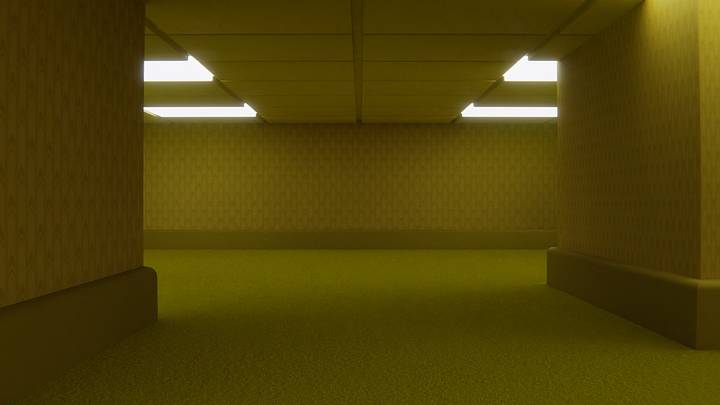
It all began with a single picture. The image was of a slightly grainy shot of a series of empty rooms with yellow wallpaper that seemed to stretch endlessly into the distance.
The image, shared on the site 4chan in 2019, was accompanied by a caption written by an anonymous poster. “If you’re not careful and you noclip out of reality in the wrong areas, you’ll end up in the Backrooms, where it’s nothing but the stink of old moist carpet, the madness of mono-yellow, the endless background noise of fluorescent lights at maximum hum-buzz, and approximately six hundred million square miles of randomly segmented empty rooms to be trapped in,” it read. “God save you if you hear something wandering around nearby, because it sure as hell has heard you.”
Since then, this single post has spawned video games, countless pages of Internet lore, and even a full-fledged A24 movie. But what exactly are the Backrooms, and why have they captured the imaginations of so many?
Where Are the Backrooms in Real Life, and How Did They Become a Movie?
No one knows who posted the original Backrooms image, but users spent years trying to track down its real-world counterpart. At last, a team of online investigators traced the original photo back to an archived version of a website owned by a hobby store in Oshkosh, Wisconsin in 2024. Today, the store has been turned into an RC racetrack that has become somewhat of a pilgrimage destination for fans of the phenomenon.
While some thought that the discovery of the Backrooms’ actual location would mark the end of the internet’s obsession with the trend, the Backrooms have maintained their hold on many creators’ imaginations, with Reddit threads, Discord groups, and other forums constantly building and adding lore to the Backrooms extended universe.
In 2022, a teenager named Kane Parsons began posting short, digitally generated films on YouTube about the Backrooms, which he labeled as “found footage.” The videos sparked their own Backrooms extended universe, and several years later, Parsons was tapped to direct A24’s feature film The Backrooms, which was released in theaters in the United States on May 29, 2026.
Why Are the Backrooms So Creepy?
The Backrooms are, quite simply, a new, digitally generated form of a scary story. Just like ghosts and vampires, they tap into collectively shared human fears and keep us fascinated for the same reasons that we began telling creepy tales around campfires in the first place.
Many fans and critics attribute the Backrooms’ hold on people’s imaginations today to the fact that they are, in essence, the quintessential liminal spaces. These are generally defined as places in transition—spaces that exist in the no-man's land between an old reality and a new one, and that often evoke feelings of discomfort thanks to their uncanny nature.
A 2022 study from Cardiff University that explored liminal spaces linked their spookiness directly to the uncanny valley effect, a phenomenon that also explains why dolls, robots, and other slightly humanoid creatures tend to creep us out. These things occupy a space that is adjacent to humanness and familiarity, but our brains also register them as profoundly wrong. “Uncanniness,” the study concluded, “is a general reaction to deviations from familiar patterns.”
This, perhaps, is why the Backrooms image resonated with so many. The rooms in the image look almost exactly like the supply rooms behind an average store, or a basement you might have spent time in as a child. Yet their emptiness and size, and the stark brightness of the lights above, trigger a sense of ominousness that is hard to shake. Something is clearly off there.
There are many other ways to analyze the Backrooms’ popularity. They tap into the existential horror of a lifetime spent mostly in cloistered office spaces, some say, or personify the apocalypse-tinged spookiness of empty malls, schools, and buildings. Some argue that they explore the melancholic side of nostalgia, tapping into the darker side of a longing for bygone decades like the 1990s—their emptiness embodying the sadness of longing for a time which, of course, we can never really return to.
According to other theorists, the Backrooms may tap into a chronic sense of disappointment in modernity and the pain of disconnection from the natural world. “The reason why we are fascinated with these images of vacant, abandoned, and eerie locations is that, for the most part, they represent the false promises of the modern era,” the writer Ramcpu writes on Sabukaru. “Sometimes, these claustrophobic images help us understand the loneliness and futility of modern architectural achievements. Without the distraction of living subjects in the photos, the sometimes absurd spaciousness helps us realize that even in the comfort of our own home, neighborhood, or city…we are in nothing more than an artificial desert, one made to distract us from the reality and spontaneity of our natural world.”
One thing is clear—the influence of the Backrooms isn’t going away. It seems that maybe we’ve all collectively no-clipped into their yellow-tinged, fluorescently lit dimension. According to most Backrooms lore, though, escaping is generally very difficult, but not entirely impossible. The main theory says that to escape, you just have to accidentally no-clip back into this reality. In some games, there are secret levels you have to find or challenges you have to beat in order to return to the world. Maybe there’s still hope for us yet.