%20%20--%3E%0A%3Csvg%20version%3D%221.1%22%20id%3D%22Layer_1%22%20xmlns%3D%22http%3A%2F%2Fwww.w3.org%2F2000%2Fsvg%22%20xmlns%3Axlink%3D%22http%3A%2F%2Fwww.w3.org%2F1999%2Fxlink%22%20x%3D%220px%22%20y%3D%220px%22%0A%09%20viewBox%3D%220%200%20684.6%2068.1%22%20style%3D%22enable-background%3Anew%200%200%20684.6%2068.1%3B%22%20xml%3Aspace%3D%22preserve%22%3E%0A%3Cg%3E%0A%09%3Cpath%20d%3D%22M444.1%2C29.3h-17.4v14.5h17.4V29.3z%20M36.4%2C68.1l29.3-50.8V0H50.4L32.9%2C36.8L15.5%2C0H0v68.1h16.7V45.8l12.4%2C22.3H36.4z%0A%09%09%20M49.1%2C68.1h16.6V23.4L49.1%2C52.1V68.1z%20M76.6%2C68.1h45V53.8H93.3V41.6h21V27.1h-21V14.8h28.3V0.1h-45V68.1z%20M175.6%2C68.1h17.3v-68%0A%09%09h-16.5v40.3L150%2C0.1h-17.6v68h16.7V27.7L175.6%2C68.1z%20M235.8%2C14.8h15.4V0.1h-47.4v14.7H219v53.2h16.8V14.8z%20M290.3%2C45.9h-17.1%0A%09%09l7.5-15.6h2L290.3%2C45.9z%20M298.7%2C68.1h18l-32.2-68h-5.7l-32%2C68h18l3.3-7.1h27.1L298.7%2C68.1z%20M325.2%2C68.1h46.2V53.8h-29.6V0.1h-16.7%0A%09%09V68.1z%20M423.7%2C14.8h27.2V0.1H407v68h16.7V14.8z%20M462%2C68.1h46.2V53.8h-29.6V0.1H462V68.1z%20M564.8%2C34.1c0%2C10.7-7.2%2C19.2-18.5%2C19.2%0A%09%09c-11.4%2C0-18.5-8.5-18.5-19.2s7.1-19.2%2C18.5-19.2C557.6%2C14.9%2C564.8%2C23.4%2C564.8%2C34.1%20M580.6%2C34.1c0-19-14.2-34-34.3-34%0A%09%09c-20.2%2C0-34.3%2C15-34.3%2C34c0%2C19%2C14.1%2C34%2C34.3%2C34C566.4%2C68.1%2C580.6%2C53.1%2C580.6%2C34.1%20M604.8%2C20.5c0-4.1%2C3.3-6.2%2C6.7-6.2%0A%09%09c4.4%2C0%2C6.6%2C3%2C6.6%2C6.6h14.7C631.8%2C9.1%2C625.1%2C0.1%2C611%2C0.1c-12%2C0-21.7%2C9.3-21.7%2C20.6c0%2C10.9%2C5.9%2C15.9%2C16.7%2C19.8%0A%09%09c5.2%2C1.8%2C11.5%2C3.2%2C11.5%2C8c0%2C3.3-2.4%2C5.5-6.4%2C5.5c-3.6%2C0-6.6-3-6.6-6.7h-15.2c0%2C11.5%2C7.9%2C20.8%2C21.8%2C20.8c12%2C0%2C21.6-9.3%2C21.6-20.6%0A%09%09c0-10-5.3-16.4-16.7-19.8C610.6%2C26.1%2C604.8%2C25.3%2C604.8%2C20.5%20M670%2C20.9h14.7C683.8%2C9.1%2C677.1%2C0.1%2C663%2C0.1c-12%2C0-21.7%2C9.3-21.7%2C20.6%0A%09%09c0%2C10.9%2C5.9%2C15.9%2C16.7%2C19.8c5.2%2C1.8%2C11.5%2C3.2%2C11.5%2C8c0%2C3.3-2.4%2C5.5-6.4%2C5.5c-3.6%2C0-6.6-3-6.6-6.7h-15.2c0%2C11.5%2C7.9%2C20.8%2C21.8%2C20.8%0A%09%09c12%2C0%2C21.6-9.3%2C21.6-20.6c0-10-5.3-16.4-16.7-19.8c-5.4-1.6-11.3-2.4-11.3-7.2c0-4.1%2C3.3-6.2%2C6.7-6.2C667.7%2C14.4%2C670%2C17.3%2C670%2C20.9%0A%09%09%22%2F%3E%0A%3C%2Fg%3E%0A%3C%2Fsvg%3E%0A)

For some musicians and listeners, an album isn’t just about the music. It’s an experience, with great thought put into everything from the cover and beyond.
Even an album’s format can impact the listening experience, especially when it comes to some of the tricks used on vinyl. One of the most fun examples is a locked run-out groove. The run-out groove is typically silent, designed to keep a record player’s needle and tone arm from drifting to the label, but some musicians have recorded audio in the groove.
Because the run-out groove is locked, these sounds will repeat endlessly—or until a listener turns it off, whichever comes first.
- The Beatles’ Sgt. Pepper’s Lonely Hearts Club Band
- Jack White’s Lazaretto Ultra LP
- Def Leppard’s High ’n' Dry
- Monty Python’s Another Monty Python Record
- 500 Artists LP’s Various 500 Lock Grooves
- ABBA’s Super Trouper
- Rush’s Fly by Night
- Radiohead’s Kid A
- Pink Floyd’s Atom Heart Mother
- The Who’s The Who Sell Out
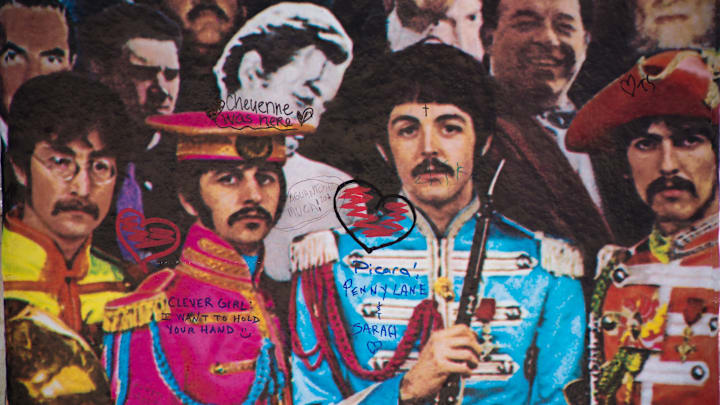
The Beatles’ Sgt. Pepper’s Lonely Hearts Club Band
One of the most famous examples of a locked groove unsurprisingly comes from one of the biggest bands of all time. UK releases of The Beatles’ 1967 album Sgt. Pepper’s Lonely Hearts Club Band features music and noise in the run-out groove, as well as a high-pitched tone which can only be heard by dogs.
Jack White’s Lazaretto Ultra LP
Jack White packed his Lazaretto Ultra LP with tons of cool features to thrill vinyl lovers, including locked grooves on both sides—Side B plays normally and ends with a locked groove, while Side A plays from the inside out, with a locked groove on the outside of the record. It’s thought to be the only record with this feature.
Def Leppard’s High ’n' Dry
Rock band Def Leppard’s 1981 album, High ’n’ Dry, ends with the song “No No No,” and on the original vinyl release of the album, the track ends in a locked groove with frontman Joe Elliott yelling, “No!” infinitely. On cassette releases, the final “no” is repeated 46 times, while more recent releases, including those on streaming services, have it fade into silence.
Monty Python’s Another Monty Python Record
British comedy troupe Monty Python released some of their material on vinyl—their second release, Another Monty Python Record, was released in 1971 and features a locked groove at the end of Side One. As a sketch ends, one of the characters, voiced by Michael Palin, declares, “Sorry, squire, I scratched the record,” and the phrase “scratched the record” repeats infinitely.
500 Artists LP’s Various 500 Lock Grooves
The Various 500 Lock Grooves compilation takes the concept of a locked groove even further with an album entirely made up of them. The nature of the album means you can drop the needle wherever you want and listen as long as you want, and it features a variety of different sounds contributed by a vast number of different artists.
ABBA’s Super Trouper
Ending a record with the sound of a crowd cheering and applauding is pretty fitting—those are the last sounds heard on ABBA’s Super Trouper, after the final track, a live recording of "The Way Old Friends Do.” CD versions of the album feature a fadeout instead. ABBA also used a locked groove at the end of some releases of The Visitors.
Rush’s Fly by Night
At the end of the first side of Fly by Night by Rush, after the song “By-Tor and the Snow Dog,” tinkling bells can be heard, and because they’re in a locked groove, they continue indefinitely. The feature is only included on certain pressings, however, and on other releases, such as CD and streaming, the bells are heard for only a few seconds.
Radiohead’s Kid A
Radiohead has a history of cool Easter eggs for fans, including making use of a locked groove. At the end of Side A of the album Kid A, some tones play—and they’re the same ones heard at the beginning of the song “The National Anthem.” Some versions also include an untitled hidden track halfway through the runout groove, which can only be heard by bypassing the locked groove.
Pink Floyd’s Atom Heart Mother
Pink Floyd album Atom Heart Mother ends with "Alan's Psychedelic Breakfast,” which is followed by the sound of water dripping—in some versions, this sound repeats infinitely in a locked groove. The sound is also included on other formats, such as CD and streaming, but, of course, due to the unique nature of the locked groove, the sound only lasts a few seconds.
The Who’s The Who Sell Out
English rock band The Who poked fun at the work they’d been doing in advertising on their third album, The Who Sell Out, interspersing tracks with fake commercials and public-service announcements. They wrapped it all up with a locked groove promoting their record label—the album ends with the words “Track Records,” the label’s name, repeated over and over.