%20%20--%3E%0A%3Csvg%20version%3D%221.1%22%20id%3D%22Layer_1%22%20xmlns%3D%22http%3A%2F%2Fwww.w3.org%2F2000%2Fsvg%22%20xmlns%3Axlink%3D%22http%3A%2F%2Fwww.w3.org%2F1999%2Fxlink%22%20x%3D%220px%22%20y%3D%220px%22%0A%09%20viewBox%3D%220%200%20684.6%2068.1%22%20style%3D%22enable-background%3Anew%200%200%20684.6%2068.1%3B%22%20xml%3Aspace%3D%22preserve%22%3E%0A%3Cg%3E%0A%09%3Cpath%20d%3D%22M444.1%2C29.3h-17.4v14.5h17.4V29.3z%20M36.4%2C68.1l29.3-50.8V0H50.4L32.9%2C36.8L15.5%2C0H0v68.1h16.7V45.8l12.4%2C22.3H36.4z%0A%09%09%20M49.1%2C68.1h16.6V23.4L49.1%2C52.1V68.1z%20M76.6%2C68.1h45V53.8H93.3V41.6h21V27.1h-21V14.8h28.3V0.1h-45V68.1z%20M175.6%2C68.1h17.3v-68%0A%09%09h-16.5v40.3L150%2C0.1h-17.6v68h16.7V27.7L175.6%2C68.1z%20M235.8%2C14.8h15.4V0.1h-47.4v14.7H219v53.2h16.8V14.8z%20M290.3%2C45.9h-17.1%0A%09%09l7.5-15.6h2L290.3%2C45.9z%20M298.7%2C68.1h18l-32.2-68h-5.7l-32%2C68h18l3.3-7.1h27.1L298.7%2C68.1z%20M325.2%2C68.1h46.2V53.8h-29.6V0.1h-16.7%0A%09%09V68.1z%20M423.7%2C14.8h27.2V0.1H407v68h16.7V14.8z%20M462%2C68.1h46.2V53.8h-29.6V0.1H462V68.1z%20M564.8%2C34.1c0%2C10.7-7.2%2C19.2-18.5%2C19.2%0A%09%09c-11.4%2C0-18.5-8.5-18.5-19.2s7.1-19.2%2C18.5-19.2C557.6%2C14.9%2C564.8%2C23.4%2C564.8%2C34.1%20M580.6%2C34.1c0-19-14.2-34-34.3-34%0A%09%09c-20.2%2C0-34.3%2C15-34.3%2C34c0%2C19%2C14.1%2C34%2C34.3%2C34C566.4%2C68.1%2C580.6%2C53.1%2C580.6%2C34.1%20M604.8%2C20.5c0-4.1%2C3.3-6.2%2C6.7-6.2%0A%09%09c4.4%2C0%2C6.6%2C3%2C6.6%2C6.6h14.7C631.8%2C9.1%2C625.1%2C0.1%2C611%2C0.1c-12%2C0-21.7%2C9.3-21.7%2C20.6c0%2C10.9%2C5.9%2C15.9%2C16.7%2C19.8%0A%09%09c5.2%2C1.8%2C11.5%2C3.2%2C11.5%2C8c0%2C3.3-2.4%2C5.5-6.4%2C5.5c-3.6%2C0-6.6-3-6.6-6.7h-15.2c0%2C11.5%2C7.9%2C20.8%2C21.8%2C20.8c12%2C0%2C21.6-9.3%2C21.6-20.6%0A%09%09c0-10-5.3-16.4-16.7-19.8C610.6%2C26.1%2C604.8%2C25.3%2C604.8%2C20.5%20M670%2C20.9h14.7C683.8%2C9.1%2C677.1%2C0.1%2C663%2C0.1c-12%2C0-21.7%2C9.3-21.7%2C20.6%0A%09%09c0%2C10.9%2C5.9%2C15.9%2C16.7%2C19.8c5.2%2C1.8%2C11.5%2C3.2%2C11.5%2C8c0%2C3.3-2.4%2C5.5-6.4%2C5.5c-3.6%2C0-6.6-3-6.6-6.7h-15.2c0%2C11.5%2C7.9%2C20.8%2C21.8%2C20.8%0A%09%09c12%2C0%2C21.6-9.3%2C21.6-20.6c0-10-5.3-16.4-16.7-19.8c-5.4-1.6-11.3-2.4-11.3-7.2c0-4.1%2C3.3-6.2%2C6.7-6.2C667.7%2C14.4%2C670%2C17.3%2C670%2C20.9%0A%09%09%22%2F%3E%0A%3C%2Fg%3E%0A%3C%2Fsvg%3E%0A)

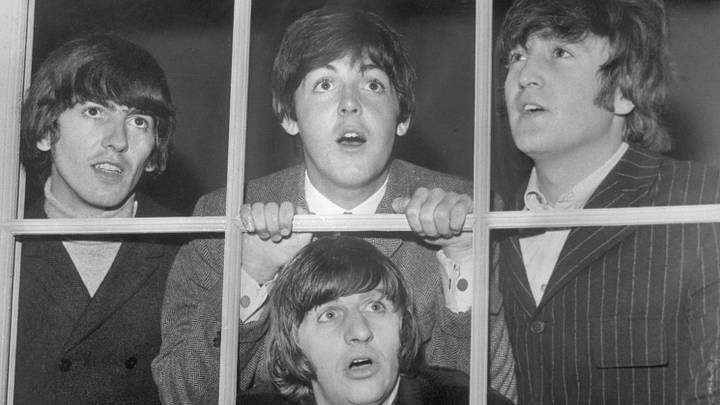
In 1967, the Beatles were focused on experimenting with their music. Beatlemania had become overwhelming, so the band decided to stop touring in 1966. Instead, they tried out new styles and created music that didn't need to work in a concert setting. This was the heart of the so-called Studio Years, when the band put out increasingly diverse music.
One product of this period was the Magical Mystery Tour album, which was officially released as the soundtrack for a television film of the same name. The film itself turned out to be the band's first major failure, but the album was well received, and many of its songs became central to the Beatles' discography. The collection caused contention within the band when it came time to decide on the album's first single.
John Lennon fought for his LSD-inspired song "I Am the Walrus" to front the new project, while Paul McCartney pushed for his song, "Hello, Goodbye." McCartney won out, with "I Am the Walrus" having to settle for the B-side. Time would prove Lennon right, with his song substantially beating McCartney's on Beatles ranking lists from Rolling Stone, NME, and Ultimate Classic Rock.
"Hello, Goodbye"
While the Lennon-McCartney writing partnership was credited for both 1967 tracks, the song "Hello, Goodbye" was almost entirely McCartney's. According to the man himself in The Lyrics, 1956 To The Present, "the song was being written at a time when we had just lost our manager and guiding star Brian Epstein to an accidental overdose. There was suddenly a lot of uncertainty in our lives." The song was his way of creating new certainties with black-and-white dualities.
According to Epstein's assistant, Alistair Taylor, he had been talking with McCartney about how to write a song. McCartney decided they would create one together.
Paul marched me into the dining room, where he had a marvellous old hand-carved harmonium. ‘Come and sit at the other end of the harmonium. You hit any note you like on the keyboard. Just hit it and I’ll do the same. Now, whenever I shout out a word, you shout the opposite, and I’ll make up a tune. You watch, it’ll make music’.Alistair Taylor
The duo continued their game of word association until the random notes and words became a song, which McCartney tentatively titled "Hello, Hello." McCartney explained in his book Many Years From Now that the song was all about duality, with him choosing the more positive versions (hello, go) while the unnamed "you" chose the negatives (goodbye, stop).
While McCartney saw the song as a masterpiece, Lennon frequently derided it over the years. In 1980, he told David Sheff that "Hello, Goodbye" was just "an attempt to write a single." In his opinion, the best part was the end, where the band was just ad-libbing in the studio. Over the years, Lennon added that he found the song to be nothing more than “three minutes of contradictions and meaningless juxtapositions.”
Despite Lennon's opinion, the song won out as the primary single due to its commercial appeal—and was an unquestionable success. "Hello, Goodbye" was at the top of the UK Singles Chart for seven weeks, and went on to top the charts in Australia, Canada, Denmark, France, the Netherlands, New Zealand, Norway, Sweden, the United States, and West Germany.
"I Am The Walrus"
Like "Hello, Goodbye," "I Am the Walrus" was credited to both Lennon and McCartney, despite being purely Lennon's composition. John Lennon had heard that his former high school was having students analyze Beatles lyrics like they were high literature. Thinking it was ridiculous, he wrote the song at least in part to make it harder for the students to "work that one out."
The writing process was far more chaotic than McCartney's had been. Lennon told Playboy in 1980 that "the first line was written on one acid trip one weekend. The second line was written on the next acid trip the next weekend, and it was filled in after I met Yoko." While some might argue that the song is meaningless, Lennon consistently argued that it was rich with meaning, despite seeming nonsensical on first listen.
Beatles biographer Hunter Davies explained that the final version was made up of multiple song fragments. Inspiration came from police sirens, Lennon sitting in his garden, and a misheard lyric that Lennon preferred to the original. Lennon's long-time friend, Pete Shotton, added in his book John Lennon in My Life that the fourth verse was inspired by a song they used to sing in school.
While many today appreciate the song for its surrealism, it suffered from poor timing. "I Am the Walrus" was the first song the band attempted to record after the death of Brian Epstein, and they struggled to get the spirit right. On top of that, producer George Martin hated the track. They worked and reworked it, developing different versions for different contexts. Ultimately, "Hello, Goodbye" just felt like the safer bet.
"I Am The Walrus" didn't achieve nearly as much popular attention as "Hello, Goodbye" did on first release. However, it was celebrated as one of the best entries from the subsequent Magical Mystery Tour album. The song then appeared on numerous compilations, including the Blue Album (1973), Rarities (1980), and Reel Music (1982). Today, it is better-known than the McCartney track Lennon felt stole its spot.
Foreshadowing the Band's Breakup

While this might have been a minor disagreement in another time, many have theorized that the choice between "Hello, Goodbye" and "I Am the Walrus" was the beginning of the end for the Beatles.
Ian MacDonald, music critic and author of Revolution in the Head: The Beatles' Records and the Sixties, argued that this period of time was especially critical for the band's survival. Having just lost Brian Epstein, they needed a new direction. Unfortunately, McCartney and Lennon had very different ideas of what that direction should be. By choosing "Hello, Goodbye," Lennon felt that the band had chosen McCartney's vision.
Walter Everett theorized in The Beatles as Musicians: Revolver through the Anthology that, that if the band had chosen "I Am the Walrus" as the single, it would have likely "encouraged Lennon to lead the Beatles to new heights." Instead, Lennon felt that he was being left behind. Steven Stark's Meet the Beatles quoted Lennon as saying that the decision led him to "submerge." He and McCartney began to drift apart until Lennon decided to leave the band in 1969.