%20%20--%3E%0A%3Csvg%20version%3D%221.1%22%20id%3D%22Layer_1%22%20xmlns%3D%22http%3A%2F%2Fwww.w3.org%2F2000%2Fsvg%22%20xmlns%3Axlink%3D%22http%3A%2F%2Fwww.w3.org%2F1999%2Fxlink%22%20x%3D%220px%22%20y%3D%220px%22%0A%09%20viewBox%3D%220%200%20684.6%2068.1%22%20style%3D%22enable-background%3Anew%200%200%20684.6%2068.1%3B%22%20xml%3Aspace%3D%22preserve%22%3E%0A%3Cg%3E%0A%09%3Cpath%20d%3D%22M444.1%2C29.3h-17.4v14.5h17.4V29.3z%20M36.4%2C68.1l29.3-50.8V0H50.4L32.9%2C36.8L15.5%2C0H0v68.1h16.7V45.8l12.4%2C22.3H36.4z%0A%09%09%20M49.1%2C68.1h16.6V23.4L49.1%2C52.1V68.1z%20M76.6%2C68.1h45V53.8H93.3V41.6h21V27.1h-21V14.8h28.3V0.1h-45V68.1z%20M175.6%2C68.1h17.3v-68%0A%09%09h-16.5v40.3L150%2C0.1h-17.6v68h16.7V27.7L175.6%2C68.1z%20M235.8%2C14.8h15.4V0.1h-47.4v14.7H219v53.2h16.8V14.8z%20M290.3%2C45.9h-17.1%0A%09%09l7.5-15.6h2L290.3%2C45.9z%20M298.7%2C68.1h18l-32.2-68h-5.7l-32%2C68h18l3.3-7.1h27.1L298.7%2C68.1z%20M325.2%2C68.1h46.2V53.8h-29.6V0.1h-16.7%0A%09%09V68.1z%20M423.7%2C14.8h27.2V0.1H407v68h16.7V14.8z%20M462%2C68.1h46.2V53.8h-29.6V0.1H462V68.1z%20M564.8%2C34.1c0%2C10.7-7.2%2C19.2-18.5%2C19.2%0A%09%09c-11.4%2C0-18.5-8.5-18.5-19.2s7.1-19.2%2C18.5-19.2C557.6%2C14.9%2C564.8%2C23.4%2C564.8%2C34.1%20M580.6%2C34.1c0-19-14.2-34-34.3-34%0A%09%09c-20.2%2C0-34.3%2C15-34.3%2C34c0%2C19%2C14.1%2C34%2C34.3%2C34C566.4%2C68.1%2C580.6%2C53.1%2C580.6%2C34.1%20M604.8%2C20.5c0-4.1%2C3.3-6.2%2C6.7-6.2%0A%09%09c4.4%2C0%2C6.6%2C3%2C6.6%2C6.6h14.7C631.8%2C9.1%2C625.1%2C0.1%2C611%2C0.1c-12%2C0-21.7%2C9.3-21.7%2C20.6c0%2C10.9%2C5.9%2C15.9%2C16.7%2C19.8%0A%09%09c5.2%2C1.8%2C11.5%2C3.2%2C11.5%2C8c0%2C3.3-2.4%2C5.5-6.4%2C5.5c-3.6%2C0-6.6-3-6.6-6.7h-15.2c0%2C11.5%2C7.9%2C20.8%2C21.8%2C20.8c12%2C0%2C21.6-9.3%2C21.6-20.6%0A%09%09c0-10-5.3-16.4-16.7-19.8C610.6%2C26.1%2C604.8%2C25.3%2C604.8%2C20.5%20M670%2C20.9h14.7C683.8%2C9.1%2C677.1%2C0.1%2C663%2C0.1c-12%2C0-21.7%2C9.3-21.7%2C20.6%0A%09%09c0%2C10.9%2C5.9%2C15.9%2C16.7%2C19.8c5.2%2C1.8%2C11.5%2C3.2%2C11.5%2C8c0%2C3.3-2.4%2C5.5-6.4%2C5.5c-3.6%2C0-6.6-3-6.6-6.7h-15.2c0%2C11.5%2C7.9%2C20.8%2C21.8%2C20.8%0A%09%09c12%2C0%2C21.6-9.3%2C21.6-20.6c0-10-5.3-16.4-16.7-19.8c-5.4-1.6-11.3-2.4-11.3-7.2c0-4.1%2C3.3-6.2%2C6.7-6.2C667.7%2C14.4%2C670%2C17.3%2C670%2C20.9%0A%09%09%22%2F%3E%0A%3C%2Fg%3E%0A%3C%2Fsvg%3E%0A)

Perhaps best remembered for athleisure-clad pop divas and synthesizer-heavy pop hits set to booming artificial drums, the 1980s saw a wide array of genres come to the fore, from hair metal to hip hop. Major events in the music world included the dawn of MTV in 1981, which led to music videos becoming more popular and influential than ever, and large events like Live Aid that brought legendary artists together for a cause.
The songs that topped the U.S. charts at this time, unsurprisingly, were largely crowd-pleasing, easy-listening pop hits perfect for regular radio play. Of course, there were some exceptions. Each of the tunes below has its own unique backstory, ranging from a chance encounter in a grocery store to George Michael coming up with the idea for the famous saxophone line on “Careless Whisper” while on a bus.
These were the biggest hits of every year in the 1980s in the U.S., according to Billboard magazine’s end-of-year rankings.
- 1980 - “Call Me” // Blondie
- 1981 - “Bette Davis Eyes” // Kim Carnes
- 1982 - “Every Breath You Take” // The Police
- 1983 - “When Doves Cry” // Prince
- 1985 - “Careless Whisper” // George Michael
- 1986 - “That’s What Friends Are For” // by Dionne Warwick and Friends, Elton John, Gladys Knight, and Stevie Wonder
- 1987 - “Walk Like an Egyptian” // The Bangles
- 1988 - “Faith” // George Michael
- 1989 - “Look Away” // Chicago
1980 - “Call Me” // Blondie
Billboard magazine’s list of the top 100 songs of 1980 is topped by Blondie’s “Call Me,” the resounding hit that served as the theme song of the film American Gigolo. Written specifically for the movie, the song remained at No. 1 on the Billboard Hot 100 for six weeks.
Giorgio Moroder, known as the “father of disco,” composed most of the music for “Call Me” and enlisted Harry to write the lyrics and melody. Moroder had initially asked Stevie Nicks of Fleetwood Mac to do the job, but she declined—and Harry’s take on “Call Me” became an enduring hit. She wrote the lyrics and melody quickly, inspired by the film's opening scene. “When I was writing it, I pictured the opening scene, driving on the coast of California,” she later recalled.
1981 - “Bette Davis Eyes” // Kim Carnes
1981 had a lot of great songs at the top of the charts, including “Endless Love” by Diana Ross and Lionel Richie and Dolly Parton’s “9 to 5.” But “Bette Davis Eyes” was the top hit of this year. The song was written by Donna Weiss and Jackie DeShannon and was initially released by DeShannon, but became a smash hit when Carnes put her own spin on it. DeShannon was inspired to write the song after watching a scene where actor Paul Henreid lights a cigarette for Bette Davis in the film Now Voyager. Carnes’ version remained at the top of the Billboard Hot 100 chart for nine weeks.
1982 - “Every Breath You Take” // The Police
This romantic-sounding-but-actually-extremely-creepy song gets a lot of radio play to this day. It was the biggest hit of 1983, a year that saw music become more experimental and innovative in ways that continue to reverberate. From “Karma Chameleon” by Culture Club to Bonnie Tyler’s “Total Eclipse of the Heart,” this year's biggest hits broke the rules, blending rock, new wave, and many other genres. But “Every Breath You Take” was the biggest hit of them all, at least based on Billboard’s year-end rankings. Written by Sting, the tune has remained immortal; in 2019, BMI recognized it as the most-played song in the history of radio.
Sting wrote it after he separated from Frances Tomelty following an affair with her best friend, Trudie Styler. “I woke up in the middle of the night with that line in my head, sat down at the piano and had written it in half an hour,” Sting recalled. “The tune itself is generic, an aggregate of hundreds of others, but the words are interesting. “It sounds like a comforting love song. I didn't realize at the time how sinister it is. I think I was thinking of Big Brother, surveillance and control.”
1983 - “When Doves Cry” // Prince
“When Doves Cry” was the lead single from Prince’s sixth album, Purple Rain. Penned for the semi-autobiographical film Purple Rain, the song plays in a scene where Prince’s character loses his love to a rival. It stayed at the top of the charts for five weeks in the summer of 1982, keeping Bruce Springsteen’s “Dancing in the Dark” in the number two spot. The song’s distinct sound is owed in part to Prince’s decision to remove the bass during the mixing process, a difficult decision at the time. “Sometimes your brain kind of splits in two—your ego tells you one thing, and the rest of you says something else,” Prince told Bass Player magazine. “You have to go with what you know is right.”
1985 - “Careless Whisper” // George Michael
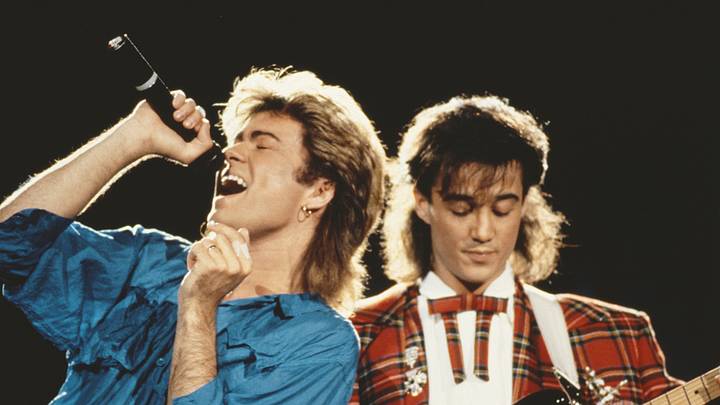
Long before the saxophone solo at the start of “Careless Whisper” became a classic social media soundbite, it was the start of a smash hit in 1985. Written by Michael and his Wham! Bandmate Andrew Ridgeley when the two were just 17 years old, the song catapulted Michael to stardom. It was inspired by Michael’s real-life experience of secretly dating two girls at the same time when he was 16 years old. The famous saxophone line came to the artist in a rather quotidian setting: on a bus. “I remember I was handing the money over to the guy on the bus and I got this line, the sax line: der-der-der-der, der-der-der-der,” he wrote in his autobiography, Bare. “Then he moved away and I continued writing it in my head. I wrote it totally in my head. I worked on it for about three months in my head.”
1986 - “That’s What Friends Are For” // by Dionne Warwick and Friends, Elton John, Gladys Knight, and Stevie Wonder
Spontaneous collaboration and a good cause helped “That’s What Friends Are For” skyrocket to the very top of the charts in 1986. The night before Dionne Warwick was set to record the song, she happened to cross paths with Elton John at a Beverly Hills grocery store. “I said, ‘I’m recording tomorrow and I need you.’ That’s how simple it was,” Warwick told People. John complied, joining Gladys Knight, Stevie Wonder, and Warwick herself on this track, which became a huge hit.
The song reached Warwick thanks to the actress Elizabeth Taylor, whose friends Burt Bacharach and his then-wife, Carole Bayer Sager, penned the tune. It was Taylor’s idea to donate proceeds from it to AIDS research.
The song raised over $3 million for the cause. Warwick was subsequently appointed an honorary ambassador of public health by Ronald Reagan in 1987, which led to her famously getting the then-president to say the word AIDS out loud for the first time. “He would not say the word AIDS,” Warwick recalled. “He evaded it in every fashion that he could. I didn’t understand why. [At the press conference], I said our president was benevolent enough to make me an Ambassador of Health,” she continued. “And I asked him ‘President Reagan, what is that disease you’re talking about?’ He had no choice but to say AIDS.”
1987 - “Walk Like an Egyptian” // The Bangles
This song was the Bangles’ first number one hit. The idea came to songwriter Liam Sternberg when he saw passengers on a ferry crossing the English Channel moving their arms strangely while trying to keep their balance, which reminded him of images he had seen on Egyptian tomb paintings. He scribbled the words “Walk Like an Egyptian” in a notebook, and later penned the tune. The song was later banned by the BBC twice: first in 1991 during the Persian Gulf War, and then 2001 after the 9/11 attacks. Both times, the ban was intended to avoid worsening relations with the Middle East.
1988 - “Faith” // George Michael
This song was written, arranged, and produced by Michael, who had a big year in 1988. It was the debut single from Michael’s debut album of the same name. The release made Michael the first British male solo artist with four number-one singles in a row on the Billboard Hot 100.
“It represents the way I feel at the moment,” the artist said of the song’s meaning. “It’s another word for my hope and optimism. Faith to me is really such a strong word and the more I got into the idea of the song being the single, the more I liked the idea of using it as the title track.” When asked about his own religious beliefs, Michael said, “I do not have a religion, but I believe that one can influence one’s life, one’s future, through faith and decency towards others.”
“Faith” was released along with a famous music video in which Michael can be seen strutting around holding a guitar. “I was so overly conscious of my image at that age and so insecure that I had developed a costume for real life, which was that,” he reflected in 2009.
1989 - “Look Away” // Chicago
Written by Dianne Warren, this song appeared on Chicago’s second album, Chicago 19, and became Billboard’s top song in the U.S. in the last year of the 1980s. It was initially offered to the bands Cheap Trick and Europe, who both turned it down.
Bill Champlin, who sang the vocals on the song, was apparently somewhat unaware of its success at the time. “Everybody said, ‘I hear your song every day. I go, ‘What song?’ I was kind of oblivious to the whole thing, busy working on new stuff. That’s what happens: As everybody else gets aware of what you’re doing, you’re usually about five or six tunes past it.”