%20%20--%3E%0A%3Csvg%20version%3D%221.1%22%20id%3D%22Layer_1%22%20xmlns%3D%22http%3A%2F%2Fwww.w3.org%2F2000%2Fsvg%22%20xmlns%3Axlink%3D%22http%3A%2F%2Fwww.w3.org%2F1999%2Fxlink%22%20x%3D%220px%22%20y%3D%220px%22%0A%09%20viewBox%3D%220%200%20684.6%2068.1%22%20style%3D%22enable-background%3Anew%200%200%20684.6%2068.1%3B%22%20xml%3Aspace%3D%22preserve%22%3E%0A%3Cg%3E%0A%09%3Cpath%20d%3D%22M444.1%2C29.3h-17.4v14.5h17.4V29.3z%20M36.4%2C68.1l29.3-50.8V0H50.4L32.9%2C36.8L15.5%2C0H0v68.1h16.7V45.8l12.4%2C22.3H36.4z%0A%09%09%20M49.1%2C68.1h16.6V23.4L49.1%2C52.1V68.1z%20M76.6%2C68.1h45V53.8H93.3V41.6h21V27.1h-21V14.8h28.3V0.1h-45V68.1z%20M175.6%2C68.1h17.3v-68%0A%09%09h-16.5v40.3L150%2C0.1h-17.6v68h16.7V27.7L175.6%2C68.1z%20M235.8%2C14.8h15.4V0.1h-47.4v14.7H219v53.2h16.8V14.8z%20M290.3%2C45.9h-17.1%0A%09%09l7.5-15.6h2L290.3%2C45.9z%20M298.7%2C68.1h18l-32.2-68h-5.7l-32%2C68h18l3.3-7.1h27.1L298.7%2C68.1z%20M325.2%2C68.1h46.2V53.8h-29.6V0.1h-16.7%0A%09%09V68.1z%20M423.7%2C14.8h27.2V0.1H407v68h16.7V14.8z%20M462%2C68.1h46.2V53.8h-29.6V0.1H462V68.1z%20M564.8%2C34.1c0%2C10.7-7.2%2C19.2-18.5%2C19.2%0A%09%09c-11.4%2C0-18.5-8.5-18.5-19.2s7.1-19.2%2C18.5-19.2C557.6%2C14.9%2C564.8%2C23.4%2C564.8%2C34.1%20M580.6%2C34.1c0-19-14.2-34-34.3-34%0A%09%09c-20.2%2C0-34.3%2C15-34.3%2C34c0%2C19%2C14.1%2C34%2C34.3%2C34C566.4%2C68.1%2C580.6%2C53.1%2C580.6%2C34.1%20M604.8%2C20.5c0-4.1%2C3.3-6.2%2C6.7-6.2%0A%09%09c4.4%2C0%2C6.6%2C3%2C6.6%2C6.6h14.7C631.8%2C9.1%2C625.1%2C0.1%2C611%2C0.1c-12%2C0-21.7%2C9.3-21.7%2C20.6c0%2C10.9%2C5.9%2C15.9%2C16.7%2C19.8%0A%09%09c5.2%2C1.8%2C11.5%2C3.2%2C11.5%2C8c0%2C3.3-2.4%2C5.5-6.4%2C5.5c-3.6%2C0-6.6-3-6.6-6.7h-15.2c0%2C11.5%2C7.9%2C20.8%2C21.8%2C20.8c12%2C0%2C21.6-9.3%2C21.6-20.6%0A%09%09c0-10-5.3-16.4-16.7-19.8C610.6%2C26.1%2C604.8%2C25.3%2C604.8%2C20.5%20M670%2C20.9h14.7C683.8%2C9.1%2C677.1%2C0.1%2C663%2C0.1c-12%2C0-21.7%2C9.3-21.7%2C20.6%0A%09%09c0%2C10.9%2C5.9%2C15.9%2C16.7%2C19.8c5.2%2C1.8%2C11.5%2C3.2%2C11.5%2C8c0%2C3.3-2.4%2C5.5-6.4%2C5.5c-3.6%2C0-6.6-3-6.6-6.7h-15.2c0%2C11.5%2C7.9%2C20.8%2C21.8%2C20.8%0A%09%09c12%2C0%2C21.6-9.3%2C21.6-20.6c0-10-5.3-16.4-16.7-19.8c-5.4-1.6-11.3-2.4-11.3-7.2c0-4.1%2C3.3-6.2%2C6.7-6.2C667.7%2C14.4%2C670%2C17.3%2C670%2C20.9%0A%09%09%22%2F%3E%0A%3C%2Fg%3E%0A%3C%2Fsvg%3E%0A)

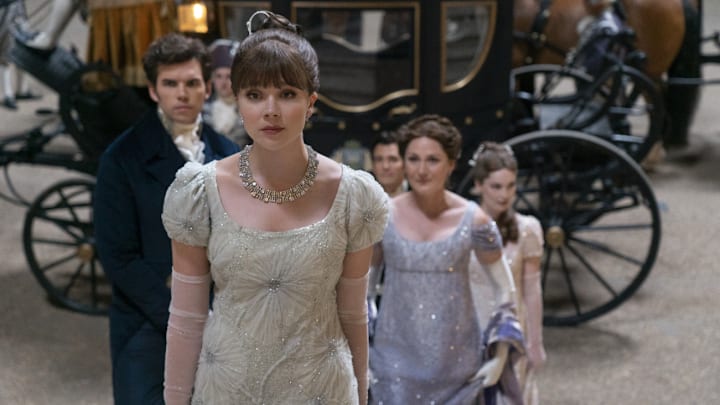
If you've binged Bridgerton, you've probably heard the phrase "the ton" passed around like sugar cubes at tea time. But what does it actually mean? Was the ton real? And why is it central to the drama of London's most fashionable families? The answer is both a history lesson and a social trend, and it's far more interesting than a fancy way to say "high society."
During the Regency era, the "ton" was London’s most exclusive social circle; specifically, aristocrats, titled individuals, and influential families who set the standards for fashion, behavior, and social standing. Its origin comes from the French “bon ton,” literally meaning "good manners" or "good style," perfectly capturing a social world obsessed with etiquette and appearances. On screen, the ton is where scandal unfolds, romances blossom, and Lady Whistledown sharpens her quill with suspense. But in real life, the ton's power extended far beyond gossip; it shaped fashion, marriage prospects, and everyday interactions.
THE MEANING OF THE TON

The ton wasn't just a social club for the rich. Memberships required lineage, polished expressions, and a deep understanding of social rules that could make or break a reputation. Wealth alone wasn’t enough; a family needed a pedigree and the poise to survive London's most unforgiving social spotlight. Ladies honed their dancing and conversational skills, while gentlemen mastered etiquette and good impressions.
The ton was Regency England’s social hierarchy. Fashion signaled rank, invitations had double meaning, and being accepted into the right circles could open doors or slam them shut. Even the smallest mistake could ruin a person’s prospects forever, like the Duke of Hastings having an unchaperoned chat with Daphne, the diamond of the season, in the ball garden in Season 1 of Bridgerton.
THE HISTORY OF THE TON

The ton flourished during the Regency era, starting in 1811 when the Prince Regent ruled on behalf of his sick father, King George III. This period saw a surge in cultural refinement and public spectacle. Aristocratic families migrated to London each spring for the social season (as depicted in Bridgerton), filling townhouses with elaborate soirees. These gatherings weren't simple parties; they were assemblies of status and strategy.
The ton dictated the rules. Your dance partner, your attire, and even your carriage communicated social rank. So, if you think Lady Featherington is just being dramatic, think again. Mothers monitored every interaction to secure advantageous marriages for their daughters, and any social slip-up could jeopardize a family's entire reputation. While Bridgerton embellishes scandal with modern charisma, the underlying structure of hierarchy, etiquette, and social scheming was real.
THE TON TODAY

So, what is it about "the ton" that draws fascination nearly two centuries later? Part of it is the glamour: intricate gowns, sparkling ballrooms, and whimsical-looking carriages winding through quaint London streets. But, in many ways, the real allure is the drama of it all. The ton is a world where ambition, desire, rivalry, and reputation cross paths with high stakes and public consequences.
Bridgerton revives this world, existing as a window into a historical society where every move was scrutinized, and belonging was deeper than a dollar sign.
The ton reminds us that societies, both past and present, are defined as much by unspoken rules as they are status and fortune.