%20%20--%3E%0A%3Csvg%20version%3D%221.1%22%20id%3D%22Layer_1%22%20xmlns%3D%22http%3A%2F%2Fwww.w3.org%2F2000%2Fsvg%22%20xmlns%3Axlink%3D%22http%3A%2F%2Fwww.w3.org%2F1999%2Fxlink%22%20x%3D%220px%22%20y%3D%220px%22%0A%09%20viewBox%3D%220%200%20684.6%2068.1%22%20style%3D%22enable-background%3Anew%200%200%20684.6%2068.1%3B%22%20xml%3Aspace%3D%22preserve%22%3E%0A%3Cg%3E%0A%09%3Cpath%20d%3D%22M444.1%2C29.3h-17.4v14.5h17.4V29.3z%20M36.4%2C68.1l29.3-50.8V0H50.4L32.9%2C36.8L15.5%2C0H0v68.1h16.7V45.8l12.4%2C22.3H36.4z%0A%09%09%20M49.1%2C68.1h16.6V23.4L49.1%2C52.1V68.1z%20M76.6%2C68.1h45V53.8H93.3V41.6h21V27.1h-21V14.8h28.3V0.1h-45V68.1z%20M175.6%2C68.1h17.3v-68%0A%09%09h-16.5v40.3L150%2C0.1h-17.6v68h16.7V27.7L175.6%2C68.1z%20M235.8%2C14.8h15.4V0.1h-47.4v14.7H219v53.2h16.8V14.8z%20M290.3%2C45.9h-17.1%0A%09%09l7.5-15.6h2L290.3%2C45.9z%20M298.7%2C68.1h18l-32.2-68h-5.7l-32%2C68h18l3.3-7.1h27.1L298.7%2C68.1z%20M325.2%2C68.1h46.2V53.8h-29.6V0.1h-16.7%0A%09%09V68.1z%20M423.7%2C14.8h27.2V0.1H407v68h16.7V14.8z%20M462%2C68.1h46.2V53.8h-29.6V0.1H462V68.1z%20M564.8%2C34.1c0%2C10.7-7.2%2C19.2-18.5%2C19.2%0A%09%09c-11.4%2C0-18.5-8.5-18.5-19.2s7.1-19.2%2C18.5-19.2C557.6%2C14.9%2C564.8%2C23.4%2C564.8%2C34.1%20M580.6%2C34.1c0-19-14.2-34-34.3-34%0A%09%09c-20.2%2C0-34.3%2C15-34.3%2C34c0%2C19%2C14.1%2C34%2C34.3%2C34C566.4%2C68.1%2C580.6%2C53.1%2C580.6%2C34.1%20M604.8%2C20.5c0-4.1%2C3.3-6.2%2C6.7-6.2%0A%09%09c4.4%2C0%2C6.6%2C3%2C6.6%2C6.6h14.7C631.8%2C9.1%2C625.1%2C0.1%2C611%2C0.1c-12%2C0-21.7%2C9.3-21.7%2C20.6c0%2C10.9%2C5.9%2C15.9%2C16.7%2C19.8%0A%09%09c5.2%2C1.8%2C11.5%2C3.2%2C11.5%2C8c0%2C3.3-2.4%2C5.5-6.4%2C5.5c-3.6%2C0-6.6-3-6.6-6.7h-15.2c0%2C11.5%2C7.9%2C20.8%2C21.8%2C20.8c12%2C0%2C21.6-9.3%2C21.6-20.6%0A%09%09c0-10-5.3-16.4-16.7-19.8C610.6%2C26.1%2C604.8%2C25.3%2C604.8%2C20.5%20M670%2C20.9h14.7C683.8%2C9.1%2C677.1%2C0.1%2C663%2C0.1c-12%2C0-21.7%2C9.3-21.7%2C20.6%0A%09%09c0%2C10.9%2C5.9%2C15.9%2C16.7%2C19.8c5.2%2C1.8%2C11.5%2C3.2%2C11.5%2C8c0%2C3.3-2.4%2C5.5-6.4%2C5.5c-3.6%2C0-6.6-3-6.6-6.7h-15.2c0%2C11.5%2C7.9%2C20.8%2C21.8%2C20.8%0A%09%09c12%2C0%2C21.6-9.3%2C21.6-20.6c0-10-5.3-16.4-16.7-19.8c-5.4-1.6-11.3-2.4-11.3-7.2c0-4.1%2C3.3-6.2%2C6.7-6.2C667.7%2C14.4%2C670%2C17.3%2C670%2C20.9%0A%09%09%22%2F%3E%0A%3C%2Fg%3E%0A%3C%2Fsvg%3E%0A)

Premiering on October 23, 2026, Kat Sandler's supernatural horror series Yaga delves into the darkest parts of Slavic fairy tales and blends them with the thrills of a true crime story. Noah Reid and Clark Backo play investigators searching for a missing billionaire. During their hunt for the truth, they find that there is more to the witch Baba Yaga than just Russian folklore, and everyone involved in this case risks falling under her enchantments.
But who is Baba Yaga? She doesn't come up in the popular tales of Hans Christian Anderson or the Brothers Grimm, but she plays a vital role in the fairy tales of Russia, Ukraine, and Belarus. She is a fierce and formidable witch who may help you or eat you, depending on her mood. She has become an iconic symbol of womanhood and feminine power.

Baba Yaga's Attributes
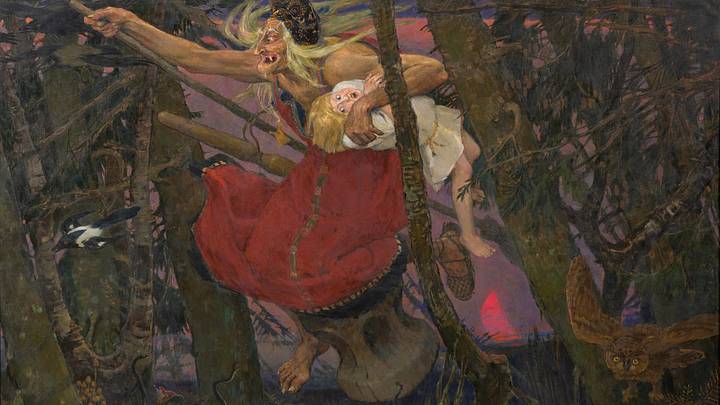
In East Slavic traditions, Baba Yaga is an ugly old woman, or crone, with a nose big enough to rake the coals of her fire. She has one leg that is just bone, earning her the nickname "Baba Yaga Bony Leg," but in some tales it is made of clay, iron, or wood. This represents how she travels between the mortal realm and the underworld and has power in both places.
Baba Yaga can fly or hover in a giant mortar, with the pestle used as an oar. She also has a hut that walks around on chicken legs, and if you want to speak to Baba Yaga, you must ask the hut to turn towards you. She sometimes travels with Death when he retrieves souls, and her fence is lined with the skulls of her victims. Baba Yaga is a hermit witch of the woods, and her power comes from nature and the elements.

Baba Yaga: Villain, Anti-Hero, and Fairy-Godmother
If compared to other mythos around the world, Baba Yaga most closely relates to trickster characters like Loki of Norse mythology and Coyote of Native American mythology. She doesn't fit easily into any definitions of villain or hero. Sometimes she aids the hero in their quest with her magic, and sometimes she eats them or their children. Like the faeries of Celtic lore, Baba Yaga can be mischievous and cunning, asking a high price for her help.
In some tales, there are three Baba Yaga sisters: one who helps, one who harms, and one who remains neutral. Baba Yaga is most likely to help women and girls, and she is always portrayed as a villain if the protagonist is male because she seems to be a symbol for feminine rage and standing against female oppression.

Baba Yaga: A Universal Symbol
The name Baba Yaga may have only spread worldwide in recent history, but her character has been widespread for centuries. Historians and scholars believe her to be analogous to the Greek goddess of nature and death, Persephone. Others see her as an incarnation of Mother Nature, wild and untamable as she is.
One thing is for sure: even as Baba Yaga remains an ambiguous and mysterious figure, she has captured the imaginations of storytellers around the world. She appears in the Studio Ghibli film Spirited Away, Neil Gaiman's The Books of Magic comic series, and many more books, movies, and even music. Now, we get to see how this universal symbol of womanly power takes on the horror genre in Yaga. The question is, how many people will get eaten before the detectives solve the case?