%20%20--%3E%0A%3Csvg%20version%3D%221.1%22%20id%3D%22Layer_1%22%20xmlns%3D%22http%3A%2F%2Fwww.w3.org%2F2000%2Fsvg%22%20xmlns%3Axlink%3D%22http%3A%2F%2Fwww.w3.org%2F1999%2Fxlink%22%20x%3D%220px%22%20y%3D%220px%22%0A%09%20viewBox%3D%220%200%20684.6%2068.1%22%20style%3D%22enable-background%3Anew%200%200%20684.6%2068.1%3B%22%20xml%3Aspace%3D%22preserve%22%3E%0A%3Cg%3E%0A%09%3Cpath%20d%3D%22M444.1%2C29.3h-17.4v14.5h17.4V29.3z%20M36.4%2C68.1l29.3-50.8V0H50.4L32.9%2C36.8L15.5%2C0H0v68.1h16.7V45.8l12.4%2C22.3H36.4z%0A%09%09%20M49.1%2C68.1h16.6V23.4L49.1%2C52.1V68.1z%20M76.6%2C68.1h45V53.8H93.3V41.6h21V27.1h-21V14.8h28.3V0.1h-45V68.1z%20M175.6%2C68.1h17.3v-68%0A%09%09h-16.5v40.3L150%2C0.1h-17.6v68h16.7V27.7L175.6%2C68.1z%20M235.8%2C14.8h15.4V0.1h-47.4v14.7H219v53.2h16.8V14.8z%20M290.3%2C45.9h-17.1%0A%09%09l7.5-15.6h2L290.3%2C45.9z%20M298.7%2C68.1h18l-32.2-68h-5.7l-32%2C68h18l3.3-7.1h27.1L298.7%2C68.1z%20M325.2%2C68.1h46.2V53.8h-29.6V0.1h-16.7%0A%09%09V68.1z%20M423.7%2C14.8h27.2V0.1H407v68h16.7V14.8z%20M462%2C68.1h46.2V53.8h-29.6V0.1H462V68.1z%20M564.8%2C34.1c0%2C10.7-7.2%2C19.2-18.5%2C19.2%0A%09%09c-11.4%2C0-18.5-8.5-18.5-19.2s7.1-19.2%2C18.5-19.2C557.6%2C14.9%2C564.8%2C23.4%2C564.8%2C34.1%20M580.6%2C34.1c0-19-14.2-34-34.3-34%0A%09%09c-20.2%2C0-34.3%2C15-34.3%2C34c0%2C19%2C14.1%2C34%2C34.3%2C34C566.4%2C68.1%2C580.6%2C53.1%2C580.6%2C34.1%20M604.8%2C20.5c0-4.1%2C3.3-6.2%2C6.7-6.2%0A%09%09c4.4%2C0%2C6.6%2C3%2C6.6%2C6.6h14.7C631.8%2C9.1%2C625.1%2C0.1%2C611%2C0.1c-12%2C0-21.7%2C9.3-21.7%2C20.6c0%2C10.9%2C5.9%2C15.9%2C16.7%2C19.8%0A%09%09c5.2%2C1.8%2C11.5%2C3.2%2C11.5%2C8c0%2C3.3-2.4%2C5.5-6.4%2C5.5c-3.6%2C0-6.6-3-6.6-6.7h-15.2c0%2C11.5%2C7.9%2C20.8%2C21.8%2C20.8c12%2C0%2C21.6-9.3%2C21.6-20.6%0A%09%09c0-10-5.3-16.4-16.7-19.8C610.6%2C26.1%2C604.8%2C25.3%2C604.8%2C20.5%20M670%2C20.9h14.7C683.8%2C9.1%2C677.1%2C0.1%2C663%2C0.1c-12%2C0-21.7%2C9.3-21.7%2C20.6%0A%09%09c0%2C10.9%2C5.9%2C15.9%2C16.7%2C19.8c5.2%2C1.8%2C11.5%2C3.2%2C11.5%2C8c0%2C3.3-2.4%2C5.5-6.4%2C5.5c-3.6%2C0-6.6-3-6.6-6.7h-15.2c0%2C11.5%2C7.9%2C20.8%2C21.8%2C20.8%0A%09%09c12%2C0%2C21.6-9.3%2C21.6-20.6c0-10-5.3-16.4-16.7-19.8c-5.4-1.6-11.3-2.4-11.3-7.2c0-4.1%2C3.3-6.2%2C6.7-6.2C667.7%2C14.4%2C670%2C17.3%2C670%2C20.9%0A%09%09%22%2F%3E%0A%3C%2Fg%3E%0A%3C%2Fsvg%3E%0A)

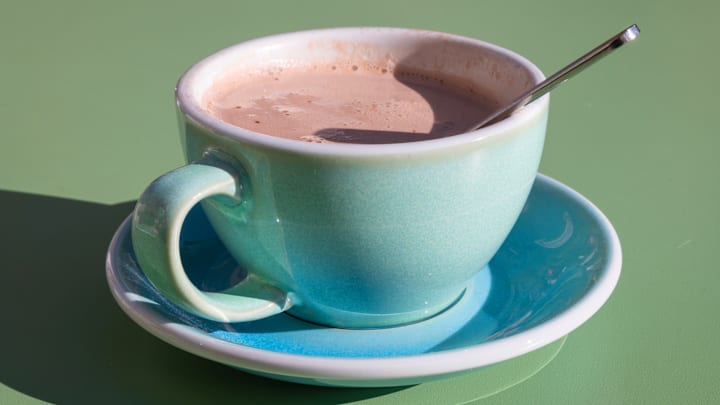
That sweet, chocolaty treat you enjoy on cold days has a lot of history behind it. It’s been on the frontline of wars, stirred up controversy with the Catholic Church, and seen empires rise and fall. Here are a few tasty morsels about hot chocolate.
- It dates back thousands of years.
- Hot chocolate wasn’t always hot—or sweet.
- It was believed to have medicinal properties.
- Hot chocolate was the source of religious controversy.
- The drink was served in fancy pitchers.
- Revolutionary War soldiers had chocolate in their rations.
- Thomas Jefferson was a big fan of the treat.
- There’s a difference between hot chocolate and hot cocoa.
- The drink fueled polar explorers.
- The YMCA served hot cocoa to World War I soldiers.
- It has some surprising health benefits.
- Restaurants have gone gourmet (and boozy) with it.
- The largest cup of hot chocolate ever made was 1272.3 gallons.
It dates back thousands of years.

Long before people nibbled on bars and brownies, chocolate was consumed in liquid form. Historians credit the Olmec civilization of southern Mexico as being the first to roast the fruit from the cacao tree, then grind it down and mix it with water and other ingredients. Archaeologists have discovered Olmec pottery with trace amounts of chocolate dating back to around 1700 BCE.
Hot chocolate wasn’t always hot—or sweet.

The Mayans and Aztecs, who picked up the habit from the Olmecs, drank a bitter brew they called “xocoatl,” typically made with chilies, water, and toasted corn, and served lukewarm and frothy. The Spanish, who were introduced to cacao drinks after conquistadors brought them home, sweetened things up by adding cinnamon, sugar and other spices to the mix. This, however, was still nothing like the sweet concoction that characterizes hot chocolate today.
It was believed to have medicinal properties.

The pure cacao drink that early Mesoamericans crafted was high in calories and antioxidants, and delivered a jolt of caffeine. So naturally, people believed it had restorative properties. Aztec warriors would often drink cacao before going into battle; Montezuma II was rumored to guzzle as many as 50 cups each day. The drink also gained a reputation as an aphrodisiac. After the recipe came to Spain in the 16th century, monks locked it away for a time to prevent widespread philandering.
You May Also Like ...
- 10 Delicious Hot Chocolate Mix-Ins
- 20 Sweet Facts About Chocolate
- How to Make 5 Cozy, Classic Holiday Drinks
Add Mental Floss as a preferred news source!
Hot chocolate was the source of religious controversy.

As chocolate drinks became widely consumed during the 16th and 17th centuries, mainly among the moneyed class, a debate emerged: Was it a drink or was it food? The distinction would dictate whether Europe’s Roman Catholics could imbibe during religious fasting, which occurred numerous times throughout the year. The argument went all the way to Pope Gregory XIII (1572-1588), who decreed that drinkable chocolate was fine to consume while fasting. Future popes would agree. Yet the debate raged on, with many clerics banning chocolate drinks during fasting time.
The drink was served in fancy pitchers.

In 17th-century England, so-called “chocolate houses” became all the rage. Establishments like White’s, which is still in business today, served up hot chocolate to go along with the political banter, gambling and general debauchery. And they served the drink in pitchers made out of gold, silver and porcelain. Limoges porcelain, which was elegantly designed and often featured floral patterns, was a popular choice. Needless to say, these were very elite gatherings.
Revolutionary War soldiers had chocolate in their rations.

The belief in chocolate’s restorative qualities extended well past the reign of the Mayans and the Aztecs. During the Revolutionary War, medics would often dole out cups of hot chocolate to wounded and dying soldiers. Hot chocolate mixes were also given out monthly to soldiers, and sometimes offered in lieu of wages.
Thomas Jefferson was a big fan of the treat.

The diplomat and third U.S. president purchased his first batch of chocolate in 1775, and was immediately hooked. In 1785, Jefferson wrote to John Adams about the future he saw for hot chocolate in America. “The superiority of chocolate, both for health and nourishment, will soon give it the preference over tea and coffee.” Today, visitors to Monticello can sample hot chocolate made the way Jefferson liked: using stone-roasted cacao, sugar and spices.
There’s a difference between hot chocolate and hot cocoa.

In America, “hot chocolate” refers to any hot drink made with chocolate ingredients. What most people are actually drinking, in fact, is hot cocoa. What’s the difference? Cocoa powder is ground up cacao that’s had the fat stripped away, either through a natural process or a “Dutched” process that subjects the powder to potassium carbonate. Dutch chemist Coenraad J. Van Houten invented cocoa powder in 1827, and helped make hot chocolate widely available. Hot chocolate (also called “drinking chocolate”), meanwhile, is made with shaved or ground cacao that still has its full-fat, slightly acidic profile intact.
The drink fueled polar explorers.

British explorer Robert Falcon Scott and his men subsisted off hot cocoa and stew during their yearlong trek to the South Pole. The expedition made it to the pole in January 1912, only to find that a Norwegian team led by Roald Amundsen had gotten there a month prior. Tragically, Scott’s team ran out of provisions on the return journey and perished, while Amundsen, who had packed five times as much cocoa, returned a hero. Decades later, in 1989, the six members of a sled-dog expedition across Antarctica consumed nearly 2100 packets of Swiss Miss hot cocoa.
The YMCA served hot cocoa to World War I soldiers.

To aid morale and keep soldiers energized during the war, the YMCA sent more than 25,000 volunteers to set up comfort stations all along the battlefront. The stations were always stocked with magazines, cigarettes and snacks, along with piping-hot pots of cocoa. They were called the “Red Triangle Men” in reference to the YMCA’s logo, and they could be found from Egypt to Russia, and often quite close to the fighting.
It has some surprising health benefits.

First, it must be said: Most packet mixes, which contain processed chocolate and a lot of filler ingredients, don’t offer much in the way of nutrition. But the closer you can get to real, unadulterated chocolate, the better. Studies have linked antioxidants, which chocolate contains in abundance, to everything from cancer prevention to lower blood pressure. Chocolate also contains theobromine, which is a known mood elevator. Adding milk can also boost the drink’s health benefits by adding calcium and vitamins added to the mix. The claim that chocolate is an aphrodisiac, meanwhile, is false.
Restaurants have gone gourmet (and boozy) with it.

As sales of high-end chocolate have increased over the past few years, restaurants have gone back to hot chocolate’s roots with premium drinks infused with spices. New York City’s RedFarm serves hot cocoa made with honey blossom, Asian ginger, and a dose of ginger liqueur, while Ellie’s Bakery in Providence, Rhode Island serves a spicy hot chocolate made with chili-infused chocolate and steamed milk. DW Bistro in Las Vegas, meanwhile, offers a Caribbean Créme de Hot Chocolate that features spiced rum, coffee liqueur, dark chocolate and crème de menthe topped with frothed milk.
The largest cup of hot chocolate ever made was 1272.3 gallons.

The behemoth beverage was made in Mexico in January 2018; it contained 1272.3 gallons of hot chocolate and created to celebrate Three Kings’ Day.
This story has been updated for 2025.