%20%20--%3E%0A%3Csvg%20version%3D%221.1%22%20id%3D%22Layer_1%22%20xmlns%3D%22http%3A%2F%2Fwww.w3.org%2F2000%2Fsvg%22%20xmlns%3Axlink%3D%22http%3A%2F%2Fwww.w3.org%2F1999%2Fxlink%22%20x%3D%220px%22%20y%3D%220px%22%0A%09%20viewBox%3D%220%200%20684.6%2068.1%22%20style%3D%22enable-background%3Anew%200%200%20684.6%2068.1%3B%22%20xml%3Aspace%3D%22preserve%22%3E%0A%3Cg%3E%0A%09%3Cpath%20d%3D%22M444.1%2C29.3h-17.4v14.5h17.4V29.3z%20M36.4%2C68.1l29.3-50.8V0H50.4L32.9%2C36.8L15.5%2C0H0v68.1h16.7V45.8l12.4%2C22.3H36.4z%0A%09%09%20M49.1%2C68.1h16.6V23.4L49.1%2C52.1V68.1z%20M76.6%2C68.1h45V53.8H93.3V41.6h21V27.1h-21V14.8h28.3V0.1h-45V68.1z%20M175.6%2C68.1h17.3v-68%0A%09%09h-16.5v40.3L150%2C0.1h-17.6v68h16.7V27.7L175.6%2C68.1z%20M235.8%2C14.8h15.4V0.1h-47.4v14.7H219v53.2h16.8V14.8z%20M290.3%2C45.9h-17.1%0A%09%09l7.5-15.6h2L290.3%2C45.9z%20M298.7%2C68.1h18l-32.2-68h-5.7l-32%2C68h18l3.3-7.1h27.1L298.7%2C68.1z%20M325.2%2C68.1h46.2V53.8h-29.6V0.1h-16.7%0A%09%09V68.1z%20M423.7%2C14.8h27.2V0.1H407v68h16.7V14.8z%20M462%2C68.1h46.2V53.8h-29.6V0.1H462V68.1z%20M564.8%2C34.1c0%2C10.7-7.2%2C19.2-18.5%2C19.2%0A%09%09c-11.4%2C0-18.5-8.5-18.5-19.2s7.1-19.2%2C18.5-19.2C557.6%2C14.9%2C564.8%2C23.4%2C564.8%2C34.1%20M580.6%2C34.1c0-19-14.2-34-34.3-34%0A%09%09c-20.2%2C0-34.3%2C15-34.3%2C34c0%2C19%2C14.1%2C34%2C34.3%2C34C566.4%2C68.1%2C580.6%2C53.1%2C580.6%2C34.1%20M604.8%2C20.5c0-4.1%2C3.3-6.2%2C6.7-6.2%0A%09%09c4.4%2C0%2C6.6%2C3%2C6.6%2C6.6h14.7C631.8%2C9.1%2C625.1%2C0.1%2C611%2C0.1c-12%2C0-21.7%2C9.3-21.7%2C20.6c0%2C10.9%2C5.9%2C15.9%2C16.7%2C19.8%0A%09%09c5.2%2C1.8%2C11.5%2C3.2%2C11.5%2C8c0%2C3.3-2.4%2C5.5-6.4%2C5.5c-3.6%2C0-6.6-3-6.6-6.7h-15.2c0%2C11.5%2C7.9%2C20.8%2C21.8%2C20.8c12%2C0%2C21.6-9.3%2C21.6-20.6%0A%09%09c0-10-5.3-16.4-16.7-19.8C610.6%2C26.1%2C604.8%2C25.3%2C604.8%2C20.5%20M670%2C20.9h14.7C683.8%2C9.1%2C677.1%2C0.1%2C663%2C0.1c-12%2C0-21.7%2C9.3-21.7%2C20.6%0A%09%09c0%2C10.9%2C5.9%2C15.9%2C16.7%2C19.8c5.2%2C1.8%2C11.5%2C3.2%2C11.5%2C8c0%2C3.3-2.4%2C5.5-6.4%2C5.5c-3.6%2C0-6.6-3-6.6-6.7h-15.2c0%2C11.5%2C7.9%2C20.8%2C21.8%2C20.8%0A%09%09c12%2C0%2C21.6-9.3%2C21.6-20.6c0-10-5.3-16.4-16.7-19.8c-5.4-1.6-11.3-2.4-11.3-7.2c0-4.1%2C3.3-6.2%2C6.7-6.2C667.7%2C14.4%2C670%2C17.3%2C670%2C20.9%0A%09%09%22%2F%3E%0A%3C%2Fg%3E%0A%3C%2Fsvg%3E%0A)

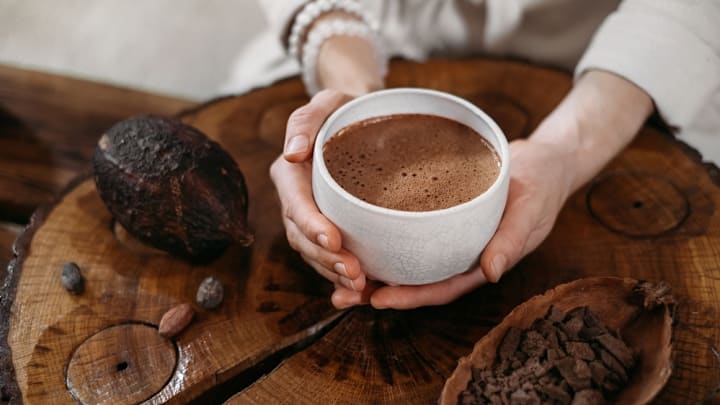
I’m sipping a hot, slightly bitter beverage in a room full of people sitting on cushions. The long-haired man in front of me is speaking about the importance of observing your emotions without judgment. His tone is slow, gentle; it sounds a bit like he’s talking to a spooked horse. I look backwards and lock eyes with my mom, hoping she’s not panicking and thinking I’ve inducted her into some kind of cult.
We’re sitting in a house with white walls and floor-to-ceiling windows that look out over Lake Atitlán, a sprawling blue body of water nestled beneath towering volcanoes. For some reason I can’t quite explain, I’ve brought my mom, my brother, my dad, and my dad's fiancée to a cacao-drinking event. I'd been envisioning a short event—a circle, some cacao, and chatting—and it seemed like a good way to spend an afternoon of our Guatemala vacation.
It’s not the first time I’ve had cacao, but it’s the first time they’ve ever tried this chocolatey and mysterious beverage, which was partly popularized by a man who mentored the people who are now guiding us through a meditation. That man was Keith Wilson, sometimes affectionately known as “The Chocolate Shaman.” Wilson, who died in 2024, was one of the people who helped spread a modern form of the practice of drinking cacao in an intentional way to spiritual communities around the world.
Cacao is a fermented and dried version of raw, unrefined cocoa beans. It has its roots in Olmec, Mayan, Aztec, and Incan civilizations. There are many different opinions on who should serve cacao and how it should be imbibed, but one thing is clear: its popularity is increasing rapidly. Soon enough, if you haven’t already, you might find yourself with a cup of your own in your hands.
What’s In Cacao?

Back in the room, I feel a warmth filling my body, and recall that while cacao’s effects may be subtle, it is not a drink to be underestimated. Cacao is heavy in theobromine, an alkaloid that is also a vasodilator, meaning it opens the blood vessels—or as many who serve and drink cacao love to say, it “opens the heart.”
It is also a muscle relaxant and mild stimulant, though its effects are generally quite mild. Theobromine has been shown to have antioxidant and anti-inflammatory qualities, and preliminary research has even found that it may provide protection against age-related issues in the brain and could be effective in preventing kidney stones.
Cacao also contains flavonoids, which have been shown to lower blood pressure and prevent blood clots. It has also been linked to lower levels of cholesterol, among other health benefits. This chocolatey delicacy is also packed with iron, phosphorus, manganese, magnesium, potassium, and fiber.
Some studies have found that cocoa beans may contain trace amounts of anandamide and serotonin—both neurotransmitters that can trigger feelings of contentment and joy in the brain. Anandamine is sometimes even nicknamed the “bliss molecule.” All this might contribute to why, according to some, chocolate and cacao can generate a sense of compassion and openness. Still, these chemicals appear in very small quantities that are technically unlikely to have any major noticeable effects on mood.
It is important to note that anyone taking blood pressure medication or dealing with heart conditions should consult their doctor and start small when it comes to cacao. Mostly, though, cacao is believed to be safe to drink. It is possible to overdo it, though, and our cacao guide urges us to trust our bodies when it comes to the amount we want to drink today.
How Is Cacao Grown and Harvested?

I’m certainly feeling quite content, but I can’t help but worry about my parents sitting behind me. I hadn’t realized this ceremony would be quite so long; it’s already been about an hour, and we’re just getting started. I take another sip of the cup, and its thick, chocolatey contents seem to buzz on my tongue.
Wilson traveled the world to find the very best cacao, our guide is telling us. He wound up settling on this particular cacao, which grows by the shores of Lake Atitlán in Guatemala. There, he began having gatherings on his porch, where he taught wandering travelers how to make cacao while chatting about life. Out of this, the term “cacao ceremony” was born.
Cacao grows in tropical climates near the equator. It comes from the Theobroma cacao tree, which requires extensive rainfall as well as shade. Trees grow to about 15 to 25 feet tall and take about five years to grow before they begin producing seeds.
Typical cacao trees produce around 30 or 40 bean pods per year. The beans’ flavors and qualities are different depending on where they grow.
Growing and processing cacao is quite a journey. After the bean pods are fully grown, they have to be hand-picked using machetes or knives. It’s impossible to automate this process as the beans mature at different times, and incorrectly slicing the beans can prevent them from growing back anew. The pods must then be opened and examined for quality. After about a week, the pods are opened, and the beans and pulp within them are extracted.
After this, the beans are typically fermented, which is often a highly nuanced, labor-intensive process that differs depending on the farm doing the processing. Following this, the beans must be dried and aged, which can take a month or a year. At last, the cacao must be stored and carefully packaged.
A single cacao seed pod usually contains about 900 to 1600 beans, which comes to about one single cup of cacao. This means that a typical cacao block, which typically contains 500 grams of cacao, requires about 20 to 25 pods—almost the entirety of a single tree’s fruits per year.
The History of Cacao

Given this labor-intensive and slow process, it’s no wonder that cacao was seen as a sacred and valuable thing in ancient civilizations.
There’s archaeological evidence that the Mayo-Chinchipe culture of the Amazon basin used cacao as early as 5300 B.C.E., though little is known about how it was used then. We know a bit more about the cacao used by the Olmec civilization of Mesoamerica, which existed around 2000 B.C.E. and spanned what is Mexico, Belize, Honduras, and El Salvador today. Cacao was adopted by later civilizations, including the Mayans, who still live in modern-day Guatemala, and it weaved its way into various cosmologies and religions along the way.
Mayan cosmology has a story of how humans were created from food, including cacao. Another Mayan creation story posits that humanity was created from a single tree, often called the “World Tree,” and in some regions, this was said to be a cacao tree. Sometimes, cacao and chocolate were used as offerings for the gods or divination tools.
Many carvings of cacao appear in caves in Mesoamerican regions, and some of these carvings are accompanied by archaeological remains of cacao, indicating that people may have left offerings of cacao in these caves—which were believed to be portals to the underworld in many Mesoamerican belief systems.
Some historical accounts say that in Mesoamerica, this beverage was served plain and typically consisted only of water and cacao paste. Sometimes, a little maple syrup or honey would be added, and other additions could include vanilla, zapote seeds, red chili, and other flowers and seasonings. Mesoamerican recipes typically involved frothing the drink by pouring it from one basin to another or stirring it with special tools. Cacao sold for high prices in markets, and some evidence of counterfeit cacao beans has even been found.
In some societies, cacao was also typically reserved for nobles, warriors, or other people in positions of power and wealth. It was also served during weddings, funerals, and other important events. Among the Mayans, however, archaeological evidence has indicated that cacao was widespread among people of all classes.
After the Spanish colonizers came to America, cacao was packaged, brought to Europe, and exported to Africa in the 1800s, where it was often sweetened and became known as “cocoa.” Throughout this process, it was stripped of its spiritual context, and Indigenous cacao-related traditions were also largely lost due to colonization.
Today, according to the U.S. Food and Drug Administration, cacao refers to a food made directly from dried cacao beans. If the beans are ground and processed further, it is often referred to as cocoa—the essence of the delicacy we know as chocolate.
Cacao Today: Cultural Appropriation and Lingering Questions

There is no real historical precedent for cacao ceremonies like the one I sat in with my family that day, a fact that has led to many discussions about cacao and cultural appropriation.
“We make it very clear that we bring up its history,” University of Connecticut PhD candidate Jamilah George told Double Bind magazine regarding how to ethically serve cacao as a person who is not indigenous to the regions it grows in. “The fact that cacao is a stolen plant, that cacao is a spirit that has been cared for by hands that were essentially slave labor, labor or child labor even.” Other people have suggested avoiding the term “cacao ceremony” entirely.
There’s a lot to say about cultural appropriation and plant medicine here, too much for this one article. It is true that Wilson went on to hire and employ many Mayan locals, providing financial stability while ethically sourcing all cacao. It is also true that there is no denying the scars that colonization has left or the fact that non-Indigenous peoples are reaping most of the profits from the current cacao boom.
Wilson said he had felt called by cacao to share it with the world. He also saw cacao as a healing force needed on our planet today. “Indigenous myth tells us whenever the balance between humans and nature becomes threatened, cacao comes from the rainforest to open people’s hearts and return the planet to a state of harmony,” he once said.
As the meditation continued, our host asked us to focus on imagining what it would feel like to embody our wildest dreams. Afterwards, he shared a wide-ranging reflection that involved everything from how to make money doing what you love to the importance of listening without judgment.
He then opened the floor for questions and offered insights to people who asked about things like relationship challenges and inner conflicts. It turned into quite the group therapy session, one that wound up being surprisingly relevant to issues I knew my family members had dealt with for a long time.
Some hours later, I heard a rustling and noticed my family members were leaving. Fair enough, I thought, and followed them out. The sun was setting over the lake. “How was it?” I asked. My dad’s fiancée said she’d tasted true silence during her meditation for the very first time. My brother said he thought the guy was the real deal. My mother shared that she'd struggled with the whole thing.
It had been different for everyone, but to me, it felt like something had shifted among us after that. For the rest of the trip, which was the first time we'd all traveled together, our conversations were more emotional and honest than I felt they’d ever been before.
I wound up staying in Guatemala for longer than planned, and often drank cacao by the lake. Its energy seemed to go well with the lakeside sunshine, with the palm trees and the birds. Now, back in New York City, as I finish my first cup of cacao on this soil—to the tune of sirens and airplanes rolling above—I imagine I can feel my blood vessels expanding, the theobromine working.
I wonder how to feel about how widespread cacao seems to be becoming. I don’t have the answers. But I know that I am grateful for the cup of melted chocolate in my hands, one that somehow helped my family come together in a new way.