%20%20--%3E%0A%3Csvg%20version%3D%221.1%22%20id%3D%22Layer_1%22%20xmlns%3D%22http%3A%2F%2Fwww.w3.org%2F2000%2Fsvg%22%20xmlns%3Axlink%3D%22http%3A%2F%2Fwww.w3.org%2F1999%2Fxlink%22%20x%3D%220px%22%20y%3D%220px%22%0A%09%20viewBox%3D%220%200%20684.6%2068.1%22%20style%3D%22enable-background%3Anew%200%200%20684.6%2068.1%3B%22%20xml%3Aspace%3D%22preserve%22%3E%0A%3Cg%3E%0A%09%3Cpath%20d%3D%22M444.1%2C29.3h-17.4v14.5h17.4V29.3z%20M36.4%2C68.1l29.3-50.8V0H50.4L32.9%2C36.8L15.5%2C0H0v68.1h16.7V45.8l12.4%2C22.3H36.4z%0A%09%09%20M49.1%2C68.1h16.6V23.4L49.1%2C52.1V68.1z%20M76.6%2C68.1h45V53.8H93.3V41.6h21V27.1h-21V14.8h28.3V0.1h-45V68.1z%20M175.6%2C68.1h17.3v-68%0A%09%09h-16.5v40.3L150%2C0.1h-17.6v68h16.7V27.7L175.6%2C68.1z%20M235.8%2C14.8h15.4V0.1h-47.4v14.7H219v53.2h16.8V14.8z%20M290.3%2C45.9h-17.1%0A%09%09l7.5-15.6h2L290.3%2C45.9z%20M298.7%2C68.1h18l-32.2-68h-5.7l-32%2C68h18l3.3-7.1h27.1L298.7%2C68.1z%20M325.2%2C68.1h46.2V53.8h-29.6V0.1h-16.7%0A%09%09V68.1z%20M423.7%2C14.8h27.2V0.1H407v68h16.7V14.8z%20M462%2C68.1h46.2V53.8h-29.6V0.1H462V68.1z%20M564.8%2C34.1c0%2C10.7-7.2%2C19.2-18.5%2C19.2%0A%09%09c-11.4%2C0-18.5-8.5-18.5-19.2s7.1-19.2%2C18.5-19.2C557.6%2C14.9%2C564.8%2C23.4%2C564.8%2C34.1%20M580.6%2C34.1c0-19-14.2-34-34.3-34%0A%09%09c-20.2%2C0-34.3%2C15-34.3%2C34c0%2C19%2C14.1%2C34%2C34.3%2C34C566.4%2C68.1%2C580.6%2C53.1%2C580.6%2C34.1%20M604.8%2C20.5c0-4.1%2C3.3-6.2%2C6.7-6.2%0A%09%09c4.4%2C0%2C6.6%2C3%2C6.6%2C6.6h14.7C631.8%2C9.1%2C625.1%2C0.1%2C611%2C0.1c-12%2C0-21.7%2C9.3-21.7%2C20.6c0%2C10.9%2C5.9%2C15.9%2C16.7%2C19.8%0A%09%09c5.2%2C1.8%2C11.5%2C3.2%2C11.5%2C8c0%2C3.3-2.4%2C5.5-6.4%2C5.5c-3.6%2C0-6.6-3-6.6-6.7h-15.2c0%2C11.5%2C7.9%2C20.8%2C21.8%2C20.8c12%2C0%2C21.6-9.3%2C21.6-20.6%0A%09%09c0-10-5.3-16.4-16.7-19.8C610.6%2C26.1%2C604.8%2C25.3%2C604.8%2C20.5%20M670%2C20.9h14.7C683.8%2C9.1%2C677.1%2C0.1%2C663%2C0.1c-12%2C0-21.7%2C9.3-21.7%2C20.6%0A%09%09c0%2C10.9%2C5.9%2C15.9%2C16.7%2C19.8c5.2%2C1.8%2C11.5%2C3.2%2C11.5%2C8c0%2C3.3-2.4%2C5.5-6.4%2C5.5c-3.6%2C0-6.6-3-6.6-6.7h-15.2c0%2C11.5%2C7.9%2C20.8%2C21.8%2C20.8%0A%09%09c12%2C0%2C21.6-9.3%2C21.6-20.6c0-10-5.3-16.4-16.7-19.8c-5.4-1.6-11.3-2.4-11.3-7.2c0-4.1%2C3.3-6.2%2C6.7-6.2C667.7%2C14.4%2C670%2C17.3%2C670%2C20.9%0A%09%09%22%2F%3E%0A%3C%2Fg%3E%0A%3C%2Fsvg%3E%0A)

It's often said that breakfast is the most important meal of the day, but it turns out that saying was just a successful marketing campaign. In ancient times, people often didn't eat until the afternoon. In our times as well, people tend to skip breakfast or have a simple smoothie before running out the door. But the era that saw a real boom in breakfast was the 1950s.
After decades of scarcity caused by the Great Depression and rationing in World War II, many Americans could finally eat hearty breakfasts again during this time. Fresh eggs and meat were available and marketed as necessary parts of a filling morning meal. But some wartime foods carried over to the '50s because of their convenience. These six foods were typically found on American breakfast tables in the 1950s.
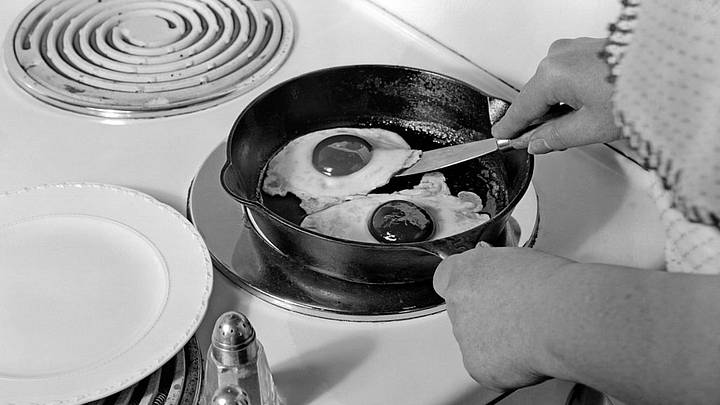
Eggs

Eating eggs for breakfast has been part of daily life for centuries, but during World War II, the price of eggs spiked and many people no longer had access to quite as many as they once had. The 1950s found people with more cash in their pockets following the end of the war, and families were able to eat plenty of eggs in abundance once more. Scrambled, fried, poached, hard-boiled, soft-boiled; people didn't discriminate. A hearty breakfast in the 1950s almost always included eggs, often paired with strips of bacon.
Bacon

Bacon and eggs have gone together as a classic American breakfast combo since the 1920s, when the meat industry persuaded doctors to recommend the two foods. Bacon soon became a breakfast favorite because it was cheaper than other cuts of pork, and it tasted fantastic with all of the saturated fats and sodium. Since there was no longer a need for rations in the 1950s, people happily stocked up on their favorite breakfast meat.
Canned Hash

With the rationing of meat during World War II, families had to get creative with meals. Canned foods became extremely popular during this time, and canned meats were ways to still get protein into American diets despite a lack of fresh food. A "hash" is just any leftover meat that's been chopped into pieces. Canned corned beef hash and roast beef hash were staples during the war, but they continued to show up on breakfast tables throughout the 1950s. Frying the hash and adding an egg made for a quick and tasty meal before work or school.
Toast

Adults in the 1950s often grabbed a piece of toast and a cup of coffee if they needed a quick breakfast before work or getting the kids off to school. However, people have been eating toast since the Middle Ages, as it was a great way to get rid of stale bread. Once the electric toaster was invented in the early 1900s, many families started regularly bringing toast with butter and toast with jam to their breakfast tables.
Cold Cereal

When we think of the 1950s, we often assume that moms across America were filling their tables with whole feasts every morning. But pancakes, waffles, French toast, bacon, and eggs were usually reserved for weekends, when the family had more time to eat. Weekdays, kids typically got cold cereal because it was the quickest and easiest option. The 1950s were when the first sugary cereals began coming out, though most families still kept to trusted relatively healthy cereals like Corn Flakes and Grape-Nuts.
Orange Juice Concentrate

Before fresh, not-from-concentrate orange juice became many people's breakfast drink of choice, many people downed orange juice purchased from the frozen section of the supermarket with their eggs and bacon. During World War II, scientists were able to process orange juice into a frozen, concentrated form, which allowed soldiers an easy way to get Vitamin C. The product became popular after the war, and families would often have a can of orange juice thawing in the refrigerator overnight to have for breakfast the next morning.