%20%20--%3E%0A%3Csvg%20version%3D%221.1%22%20id%3D%22Layer_1%22%20xmlns%3D%22http%3A%2F%2Fwww.w3.org%2F2000%2Fsvg%22%20xmlns%3Axlink%3D%22http%3A%2F%2Fwww.w3.org%2F1999%2Fxlink%22%20x%3D%220px%22%20y%3D%220px%22%0A%09%20viewBox%3D%220%200%20684.6%2068.1%22%20style%3D%22enable-background%3Anew%200%200%20684.6%2068.1%3B%22%20xml%3Aspace%3D%22preserve%22%3E%0A%3Cg%3E%0A%09%3Cpath%20d%3D%22M444.1%2C29.3h-17.4v14.5h17.4V29.3z%20M36.4%2C68.1l29.3-50.8V0H50.4L32.9%2C36.8L15.5%2C0H0v68.1h16.7V45.8l12.4%2C22.3H36.4z%0A%09%09%20M49.1%2C68.1h16.6V23.4L49.1%2C52.1V68.1z%20M76.6%2C68.1h45V53.8H93.3V41.6h21V27.1h-21V14.8h28.3V0.1h-45V68.1z%20M175.6%2C68.1h17.3v-68%0A%09%09h-16.5v40.3L150%2C0.1h-17.6v68h16.7V27.7L175.6%2C68.1z%20M235.8%2C14.8h15.4V0.1h-47.4v14.7H219v53.2h16.8V14.8z%20M290.3%2C45.9h-17.1%0A%09%09l7.5-15.6h2L290.3%2C45.9z%20M298.7%2C68.1h18l-32.2-68h-5.7l-32%2C68h18l3.3-7.1h27.1L298.7%2C68.1z%20M325.2%2C68.1h46.2V53.8h-29.6V0.1h-16.7%0A%09%09V68.1z%20M423.7%2C14.8h27.2V0.1H407v68h16.7V14.8z%20M462%2C68.1h46.2V53.8h-29.6V0.1H462V68.1z%20M564.8%2C34.1c0%2C10.7-7.2%2C19.2-18.5%2C19.2%0A%09%09c-11.4%2C0-18.5-8.5-18.5-19.2s7.1-19.2%2C18.5-19.2C557.6%2C14.9%2C564.8%2C23.4%2C564.8%2C34.1%20M580.6%2C34.1c0-19-14.2-34-34.3-34%0A%09%09c-20.2%2C0-34.3%2C15-34.3%2C34c0%2C19%2C14.1%2C34%2C34.3%2C34C566.4%2C68.1%2C580.6%2C53.1%2C580.6%2C34.1%20M604.8%2C20.5c0-4.1%2C3.3-6.2%2C6.7-6.2%0A%09%09c4.4%2C0%2C6.6%2C3%2C6.6%2C6.6h14.7C631.8%2C9.1%2C625.1%2C0.1%2C611%2C0.1c-12%2C0-21.7%2C9.3-21.7%2C20.6c0%2C10.9%2C5.9%2C15.9%2C16.7%2C19.8%0A%09%09c5.2%2C1.8%2C11.5%2C3.2%2C11.5%2C8c0%2C3.3-2.4%2C5.5-6.4%2C5.5c-3.6%2C0-6.6-3-6.6-6.7h-15.2c0%2C11.5%2C7.9%2C20.8%2C21.8%2C20.8c12%2C0%2C21.6-9.3%2C21.6-20.6%0A%09%09c0-10-5.3-16.4-16.7-19.8C610.6%2C26.1%2C604.8%2C25.3%2C604.8%2C20.5%20M670%2C20.9h14.7C683.8%2C9.1%2C677.1%2C0.1%2C663%2C0.1c-12%2C0-21.7%2C9.3-21.7%2C20.6%0A%09%09c0%2C10.9%2C5.9%2C15.9%2C16.7%2C19.8c5.2%2C1.8%2C11.5%2C3.2%2C11.5%2C8c0%2C3.3-2.4%2C5.5-6.4%2C5.5c-3.6%2C0-6.6-3-6.6-6.7h-15.2c0%2C11.5%2C7.9%2C20.8%2C21.8%2C20.8%0A%09%09c12%2C0%2C21.6-9.3%2C21.6-20.6c0-10-5.3-16.4-16.7-19.8c-5.4-1.6-11.3-2.4-11.3-7.2c0-4.1%2C3.3-6.2%2C6.7-6.2C667.7%2C14.4%2C670%2C17.3%2C670%2C20.9%0A%09%09%22%2F%3E%0A%3C%2Fg%3E%0A%3C%2Fsvg%3E%0A)

Everyone talks about what fueled the Gold Rush—James Marshall's initial finding of gold flakes at Sutter’s Mill in 1848—but not about what fueled the miners themselves. Traveling all the way to the American West to dig for gold certainly built up an appetite, but a miner's diet depended heavily on whether or not they actually struck gold.
From former farmers to immigrant sailors, rock-hard biscuits to beans, and the looming prospect of a fortune on the frontier, the California lifestyle in the late 19th century wasn't all sunshine and avocado toast. But occasionally, it was a rich seafood-stuffed omelette practically worth its weight in gold. Let’s dig into the frontier foods gold miners actually ate in mining camps, saloons, and hotels to sustain themselves while searching for fortune.
Camp Staples and Daily Rations
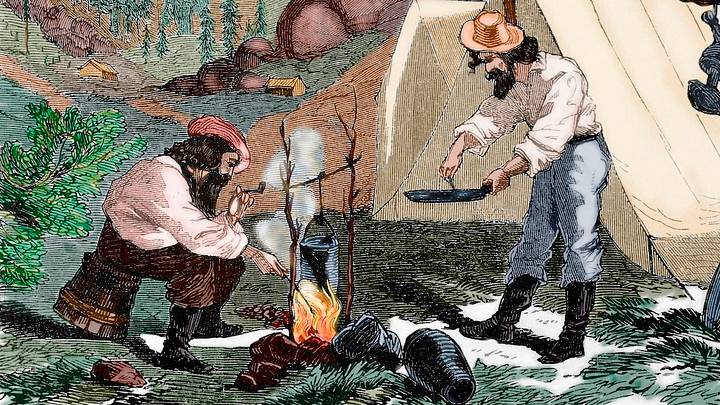
Fortune or fool's gold, every forty-niner had to start somewhere, usually in makeshift mining sites without the cushioning of a woman's cooking or homemaking. Breakfast to fuel a day of backbreaking labor looked like an assortment of simple ingredients heated over a campfire: beans and pork, bread, bacon, and most importantly, strong black coffee.
Aside from the occasional foraged plant, a balanced diet with fresh produce was pretty much off the table for aspiring mineral mongers—but wild game wasn't. When they could tear themselves away from panning for gold in rivers and digging into the hillsides, miners hunted the surrounding wilderness for meat. Alongside their other provisions, deer, elk, rabbits, wildfowl, and fish provided a reliable source of protein.
For miners who couldn't stomach the price of basic staples, desperation sometimes made its way onto the dinner table. Some turned to a meager flour-based mush, mixing in whatever they had available, including sour milk and cornmeal.
The Rise of San Francisco Sourdough

Sourdough has earned a reputation as a superfood and supermarket staple, but back in the Gold Rush days, the tangy, airy bread with a crisp, crackly crust was simply sustenance. Carbs in 19th-century California came in many forms. Gold miners in the Golden State often ate hardtack, a long-lasting cracker, not for taste but for convenience.
Fortunately, even if they didn't strike the fortunes they hoped for, miners could also indulge in San Francisco sourdough. The local environment lends to this famous loaf’s tangy taste, thanks in part to the bacterium Lactobacillus sanfranciscensis. Throughout the many events that colored San Francisco's history, from the Gold Rush to the tech boom, the same sourdough starter from 1849 has survived through it all, thanks to the Boudins. Credited with popularizing San Francisco sourdough, the French family mixed this unique starter with flour and water to create a dough they kneaded and baked into golden-brown loaves that miners could snack on on the go.
Preserved and Pickled Goods Galore
Getting food to California was almost as difficult as finding gold itself. As thousands of prospectors flocked to the state, merchants scrambled to keep them fed. That meant importing goods from around the world and selling them for astronomical prices.
From proteins like dried Atlantic cod and Galápagos tortoises to provisions like jams, honey, and dried fruit, the frontier food scene was surprisingly global. Preserved goods, including common items like salt pork but also novelties like pickled eggs, became staples. Anything that miners could stock up on to sustain themselves in their gritty mining camps got the green light.
The Legend of the Hangtown Fry

When pork and beans inevitably got old, gold miners had the option to pop into town for a meal. Just as hopeful miners saw the opportunity that could come with the California Dream, women saw a chance to cash in by satisfying their appetites.
One settler, Luzena Stanley Wilson, found that she could sell biscuits for hefty sums of gold from desperate and newly rich gold diggers. Other women turned to local restaurants and saloons to whip up flavorful meals sold for a pretty penny to prospectors.
According to legend, one successful miner walked into a restaurant in Placerville, California, formerly known as Hangtown, and asked for the most expensive meal on the menu. The result was the Hangtown Fry, a decadent combination of eggs, bacon, and oysters. Prospectors also treated themselves to another eggy concoction called the English Monkey, a riff on Welsh rarebit made with bread crumbs, eggs, milk, and cheese.