%20%20--%3E%0A%3Csvg%20version%3D%221.1%22%20id%3D%22Layer_1%22%20xmlns%3D%22http%3A%2F%2Fwww.w3.org%2F2000%2Fsvg%22%20xmlns%3Axlink%3D%22http%3A%2F%2Fwww.w3.org%2F1999%2Fxlink%22%20x%3D%220px%22%20y%3D%220px%22%0A%09%20viewBox%3D%220%200%20684.6%2068.1%22%20style%3D%22enable-background%3Anew%200%200%20684.6%2068.1%3B%22%20xml%3Aspace%3D%22preserve%22%3E%0A%3Cg%3E%0A%09%3Cpath%20d%3D%22M444.1%2C29.3h-17.4v14.5h17.4V29.3z%20M36.4%2C68.1l29.3-50.8V0H50.4L32.9%2C36.8L15.5%2C0H0v68.1h16.7V45.8l12.4%2C22.3H36.4z%0A%09%09%20M49.1%2C68.1h16.6V23.4L49.1%2C52.1V68.1z%20M76.6%2C68.1h45V53.8H93.3V41.6h21V27.1h-21V14.8h28.3V0.1h-45V68.1z%20M175.6%2C68.1h17.3v-68%0A%09%09h-16.5v40.3L150%2C0.1h-17.6v68h16.7V27.7L175.6%2C68.1z%20M235.8%2C14.8h15.4V0.1h-47.4v14.7H219v53.2h16.8V14.8z%20M290.3%2C45.9h-17.1%0A%09%09l7.5-15.6h2L290.3%2C45.9z%20M298.7%2C68.1h18l-32.2-68h-5.7l-32%2C68h18l3.3-7.1h27.1L298.7%2C68.1z%20M325.2%2C68.1h46.2V53.8h-29.6V0.1h-16.7%0A%09%09V68.1z%20M423.7%2C14.8h27.2V0.1H407v68h16.7V14.8z%20M462%2C68.1h46.2V53.8h-29.6V0.1H462V68.1z%20M564.8%2C34.1c0%2C10.7-7.2%2C19.2-18.5%2C19.2%0A%09%09c-11.4%2C0-18.5-8.5-18.5-19.2s7.1-19.2%2C18.5-19.2C557.6%2C14.9%2C564.8%2C23.4%2C564.8%2C34.1%20M580.6%2C34.1c0-19-14.2-34-34.3-34%0A%09%09c-20.2%2C0-34.3%2C15-34.3%2C34c0%2C19%2C14.1%2C34%2C34.3%2C34C566.4%2C68.1%2C580.6%2C53.1%2C580.6%2C34.1%20M604.8%2C20.5c0-4.1%2C3.3-6.2%2C6.7-6.2%0A%09%09c4.4%2C0%2C6.6%2C3%2C6.6%2C6.6h14.7C631.8%2C9.1%2C625.1%2C0.1%2C611%2C0.1c-12%2C0-21.7%2C9.3-21.7%2C20.6c0%2C10.9%2C5.9%2C15.9%2C16.7%2C19.8%0A%09%09c5.2%2C1.8%2C11.5%2C3.2%2C11.5%2C8c0%2C3.3-2.4%2C5.5-6.4%2C5.5c-3.6%2C0-6.6-3-6.6-6.7h-15.2c0%2C11.5%2C7.9%2C20.8%2C21.8%2C20.8c12%2C0%2C21.6-9.3%2C21.6-20.6%0A%09%09c0-10-5.3-16.4-16.7-19.8C610.6%2C26.1%2C604.8%2C25.3%2C604.8%2C20.5%20M670%2C20.9h14.7C683.8%2C9.1%2C677.1%2C0.1%2C663%2C0.1c-12%2C0-21.7%2C9.3-21.7%2C20.6%0A%09%09c0%2C10.9%2C5.9%2C15.9%2C16.7%2C19.8c5.2%2C1.8%2C11.5%2C3.2%2C11.5%2C8c0%2C3.3-2.4%2C5.5-6.4%2C5.5c-3.6%2C0-6.6-3-6.6-6.7h-15.2c0%2C11.5%2C7.9%2C20.8%2C21.8%2C20.8%0A%09%09c12%2C0%2C21.6-9.3%2C21.6-20.6c0-10-5.3-16.4-16.7-19.8c-5.4-1.6-11.3-2.4-11.3-7.2c0-4.1%2C3.3-6.2%2C6.7-6.2C667.7%2C14.4%2C670%2C17.3%2C670%2C20.9%0A%09%09%22%2F%3E%0A%3C%2Fg%3E%0A%3C%2Fsvg%3E%0A)

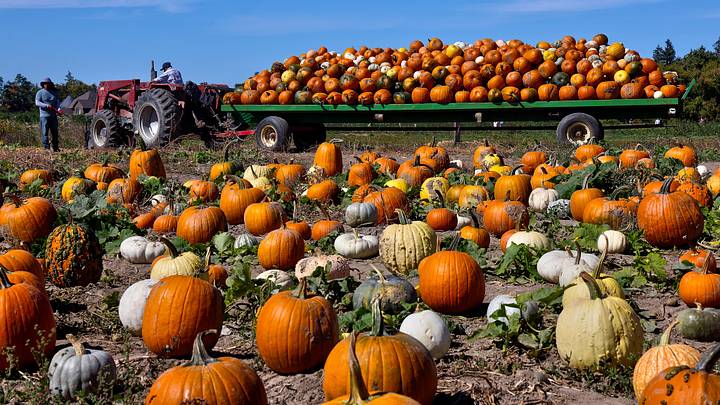
Pumpkin season is the perfect time of year to eat pumpkin bread, drink pumpkin lattes, and plan all the pumpkin pies you'll need to make. You wouldn't be alone, considering an estimated 50 million pumpkin pies will be baked for Thanksgiving each year.
You can pick a pumpkin for the holiday season in a wide variety of shapes and sizes, from the typical Autumn Gold or Gold Standard pumpkins that are typical for Halloween to decorative speckled pumpkins and even giant pumpkins.
But which state loves its pumpkins more than any other? After all, more than 1.35 billion pounds of pumpkins grown in the United States in 2025 have to come from somewhere. Despite such a high number of pounds of pumpkins grown, there is a clear winner among states—and you may be surprised by which one leads them all.
Illinois Has Plenty of Pumpkins

It might be surprising, but Illinois easily tops the list when it comes to the state that produces the most pumpkins. Pumpkins, which thrive on the dark, rich soil in the area, account for around $200 million in earnings in Illinois alone.
It helps that the state is home to Morton, the pumpkin capital of the world. The city is home to Libby's, which is the top canned pumpkin brand in the United States. The company produces around 95% of all canned pumpkin in the U.S. and 85% of canned pumpkin in the world. It helps that more than 90% of the pumpkins Libby's uses for its canned pumpkin come from a 45-mile radius of its canning facility.
The state produced 530 million pounds of pumpkins in 2025, easily giving it the top spot in the country. In fact, that weight of pumpkins accounts for almost 40% of the total pounds of pumpkins grown in the U.S.
Midwest and East Coast Dominate the Rest
Napa Valley in California may be well-known for its wineries, but it's also a great place to grow pumpkins due to its fertile soil and good climate. That has helped the state come in second place among pumpkin-producing states. California grows 160 million pounds of pumpkins, which is a big amount but still well behind first-place Illinois.
Midwest states also dominate the list, with Indiana adding 130 million pounds to the pumpkin industry while Michigan comes in fourth place with 110 million pounds of pumpkins grown.
Michigan is tied with Pennsylvania, which also produced 110 million pounds of pumpkins in 2025. Other East Coast states include fifth-place Virginia with 68 million pounds of pumpkins grown and sixth-place North Carolina with 57 million pounds of pumpkins in 2025.
Is a Pumpkin a Fruit or a Vegetable?

One note about pumpkins before you head to a local farm to pick one for the season is that it's not actually a vegetable.
Pumpkins are considered a fruit because they grow from the seed-producing part of a flowering plant rather than vegetables, which come from the edible parts of a plant like the leaves and/or stems.
But the confusion may come in because pumpkins can be tricky when it comes to how they are served. It's more savory than other foods you think of as fruits like apples or strawberries, which makes pumpkins good for things like soups. But, of course, there is always a good pumpkin pie for dessert that gives it more of a sweet profile like apple pies.
So while the scientific view is that it is, in fact, a fruit, that doesn't mean you have to limit how you enjoy it on your dinner or dessert table.