%20%20--%3E%0A%3Csvg%20version%3D%221.1%22%20id%3D%22Layer_1%22%20xmlns%3D%22http%3A%2F%2Fwww.w3.org%2F2000%2Fsvg%22%20xmlns%3Axlink%3D%22http%3A%2F%2Fwww.w3.org%2F1999%2Fxlink%22%20x%3D%220px%22%20y%3D%220px%22%0A%09%20viewBox%3D%220%200%20684.6%2068.1%22%20style%3D%22enable-background%3Anew%200%200%20684.6%2068.1%3B%22%20xml%3Aspace%3D%22preserve%22%3E%0A%3Cg%3E%0A%09%3Cpath%20d%3D%22M444.1%2C29.3h-17.4v14.5h17.4V29.3z%20M36.4%2C68.1l29.3-50.8V0H50.4L32.9%2C36.8L15.5%2C0H0v68.1h16.7V45.8l12.4%2C22.3H36.4z%0A%09%09%20M49.1%2C68.1h16.6V23.4L49.1%2C52.1V68.1z%20M76.6%2C68.1h45V53.8H93.3V41.6h21V27.1h-21V14.8h28.3V0.1h-45V68.1z%20M175.6%2C68.1h17.3v-68%0A%09%09h-16.5v40.3L150%2C0.1h-17.6v68h16.7V27.7L175.6%2C68.1z%20M235.8%2C14.8h15.4V0.1h-47.4v14.7H219v53.2h16.8V14.8z%20M290.3%2C45.9h-17.1%0A%09%09l7.5-15.6h2L290.3%2C45.9z%20M298.7%2C68.1h18l-32.2-68h-5.7l-32%2C68h18l3.3-7.1h27.1L298.7%2C68.1z%20M325.2%2C68.1h46.2V53.8h-29.6V0.1h-16.7%0A%09%09V68.1z%20M423.7%2C14.8h27.2V0.1H407v68h16.7V14.8z%20M462%2C68.1h46.2V53.8h-29.6V0.1H462V68.1z%20M564.8%2C34.1c0%2C10.7-7.2%2C19.2-18.5%2C19.2%0A%09%09c-11.4%2C0-18.5-8.5-18.5-19.2s7.1-19.2%2C18.5-19.2C557.6%2C14.9%2C564.8%2C23.4%2C564.8%2C34.1%20M580.6%2C34.1c0-19-14.2-34-34.3-34%0A%09%09c-20.2%2C0-34.3%2C15-34.3%2C34c0%2C19%2C14.1%2C34%2C34.3%2C34C566.4%2C68.1%2C580.6%2C53.1%2C580.6%2C34.1%20M604.8%2C20.5c0-4.1%2C3.3-6.2%2C6.7-6.2%0A%09%09c4.4%2C0%2C6.6%2C3%2C6.6%2C6.6h14.7C631.8%2C9.1%2C625.1%2C0.1%2C611%2C0.1c-12%2C0-21.7%2C9.3-21.7%2C20.6c0%2C10.9%2C5.9%2C15.9%2C16.7%2C19.8%0A%09%09c5.2%2C1.8%2C11.5%2C3.2%2C11.5%2C8c0%2C3.3-2.4%2C5.5-6.4%2C5.5c-3.6%2C0-6.6-3-6.6-6.7h-15.2c0%2C11.5%2C7.9%2C20.8%2C21.8%2C20.8c12%2C0%2C21.6-9.3%2C21.6-20.6%0A%09%09c0-10-5.3-16.4-16.7-19.8C610.6%2C26.1%2C604.8%2C25.3%2C604.8%2C20.5%20M670%2C20.9h14.7C683.8%2C9.1%2C677.1%2C0.1%2C663%2C0.1c-12%2C0-21.7%2C9.3-21.7%2C20.6%0A%09%09c0%2C10.9%2C5.9%2C15.9%2C16.7%2C19.8c5.2%2C1.8%2C11.5%2C3.2%2C11.5%2C8c0%2C3.3-2.4%2C5.5-6.4%2C5.5c-3.6%2C0-6.6-3-6.6-6.7h-15.2c0%2C11.5%2C7.9%2C20.8%2C21.8%2C20.8%0A%09%09c12%2C0%2C21.6-9.3%2C21.6-20.6c0-10-5.3-16.4-16.7-19.8c-5.4-1.6-11.3-2.4-11.3-7.2c0-4.1%2C3.3-6.2%2C6.7-6.2C667.7%2C14.4%2C670%2C17.3%2C670%2C20.9%0A%09%09%22%2F%3E%0A%3C%2Fg%3E%0A%3C%2Fsvg%3E%0A)

Though often regarded as symbols of royal wealth, power, and prestige, not every castle is the stuff of fairy tales. From architectural phenomenons to mysterious keeps with unexpected origins, these castles stand out for more than just their grandeur.
- Houska Castle
- Predjama Castle
- Mont Saint-Michel
- Gillette Castle
- Hochosterwitz Castle
- Neuschwanstein Castle
Houska Castle
Constructed in the latter half of the 13th century, Houska Castle is a peculiar property tucked away in the northern part of the Czech Republic. Located far from any major trade routes and lacking in any external fortifications, Houska Castle’s original purpose has proved elusive. Thought to be built on the orders of Ottokar II of Bohemia, the castle has garnered a macabre notoriety as a supposed “gate to Hell.”
Local legend says the strange castle was constructed not to keep others out, but to keep something sinister trapped inside—an eerie explanation for the castle’s peculiar lack of external armaments. Alongside this, the Nazis used Houska Castle as a military outpost during the Second World War. While some have speculated the Nazis took Houska Castle in an effort to experiment with its occult energy, its most likely use was for military storage or administration.
Following the Nazi defeat in WW2, the castle fell into disrepair, later coming back into possession of the Šimoneks, a Czech noble family that financed Houska’s restoration.
Predjama Castle

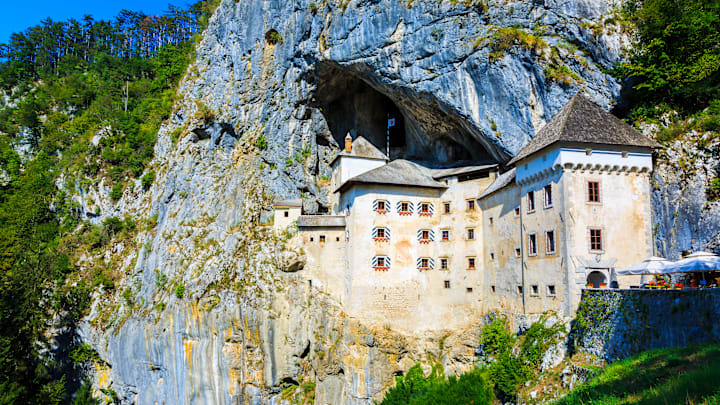
Located in the Slovenian village Predjama, Predjama Castle is a Gothic construction built into the craggy face of a cliff. Originally named Castle Lueg after its onetime lord, Erasmus of Lueg (a sort of Robin Hood figure of his time), the castle’s striking exterior and expansive network of tunnels has made it a popular tourist attraction in recent years.
After an argument at Venetian court, Erasmus allegedly killed an imperial marshal with connection to Holy Roman Emperor Frederick III. When the Habsburgs, the ruling dynasty of the time, caught wind of this, Erasmus found himself a wanted man and retreated to Predjama Castle for safety.
Given Predjama Castle was built directly into the face of a cliff, its natural defenses were able to keep the Habsburg forces at bay while they laid siege to the castle for weeks on end. Though the Habsburg forces seemingly had the castle surrounded, Erasmus was able to sneak supplies in and out of the castle through the network of tunnels that connected to the cliffside.
Though Erasmus was able to withstand the Habsburg siege for months, he was reportedly betrayed by one of his own men, ending his standoff against the Holy Roman Emperor.
Mont Saint-Michel

Perched on a rocky island off the coast of Normandy, Mont Saint-Michel is one of France’s most striking architectural feats. Now a UNESCO World Heritage Site, Mont Saint-Michel sits atop a natural tidal island, meaning a natural causeway connecting the island to the mainland appears at low tide, but at high tide, the waters of the English Channel cut the island off from mainland France.
Construction began on Mont Saint-Michel in the 8th century after Saint Aubert, bishop of Avranches, reported that the archangel Michael came to him in a dream and ordered he build a place of worship on the island. An oratory and later a monastery were constructed on the island, making it a popular pilgrimage destination.
During the Hundred Years’ War, the island became a key French stronghold, never managing to be overtaken by the English. Later serving as a prison until 1863, Mont Saint-Michel underwent major construction to restore its architectural grandeur in subsequent years.
Gillette Castle

While it might not technically be considered a castle in the traditional sense, Gillette Castle is a sprawling 20th century estate equalling in grandeur to many abodes of the European aristocracy. Designed and built by actor and playwright William Gillette, best known for his portrayals of Sherlock Holmes, Gillette went to painstaking lengths to meticulously design every facet of the home.
Featuring a network of secret passageways and even its own miniature railroad, Gillette was architecturally inspired by Gothic design, but deliberately used local stone and an asymmetrical design plan to give the property its unique feel.
After Gillette’s death in 1937, the State of Connecticut purchased the home and converted it to Gillette Castle State Park.
Hochosterwitz Castle

Sat atop a 525-foot dolomite rock, Hochosterwitz Castle is one of Austria’s most striking examples of architectural ingenuity. Equipped with a series of 14 defensive gates, the castle’s gates are equipped with defenses like spiked doors, hidden archery turrets, and tight passageways to fend off invaders.
A popular settlement since the Bronze Age, the castle’s main fortress was likely constructed by the Archbishops of Salzburg back in the 9th century. Serving as a strategic hilltop fortress and trade control, the castle’s iconic gates weren’t built until the mid 1500s on the order of Georg Khevenhüller, whose descendents still own the castle today.
While some of the property remains closed to the public, tourists are welcome to walk through all 14 of the castle’s impressive gates and explore the castle’s museum.
Neuschwanstein Castle

Commissioned by King Ludwig II of Bavaria in 1869, Neuschwanstein Castle is a stunning blend of Romantic, Gothic, and Byzantine architectural design located in the south of Germany. Originally envisioned as a lavish Bavarian Alps retreat for the king, Ludwig II opted to pay for the castle’s construction through his own personal fortune in lieu of using public funds.
Despite this, Ludwig would never see the castle completed, having died in 1886 after both he and his personal doctor mysteriously drowned together in the shallow waters of Lake Starnberg.
Shortly after Ludwig’s death, the castle was opened to visitors in an effort to pay off the late king’s huge debts. Later, the castle fell to the Nazis who used it as a place to house stolen art. Still a popular tourist attraction today, the castle was also famously the inspiration for the castle in Walt Disney’s Sleeping Beauty.