%20%20--%3E%0A%3Csvg%20version%3D%221.1%22%20id%3D%22Layer_1%22%20xmlns%3D%22http%3A%2F%2Fwww.w3.org%2F2000%2Fsvg%22%20xmlns%3Axlink%3D%22http%3A%2F%2Fwww.w3.org%2F1999%2Fxlink%22%20x%3D%220px%22%20y%3D%220px%22%0A%09%20viewBox%3D%220%200%20684.6%2068.1%22%20style%3D%22enable-background%3Anew%200%200%20684.6%2068.1%3B%22%20xml%3Aspace%3D%22preserve%22%3E%0A%3Cg%3E%0A%09%3Cpath%20d%3D%22M444.1%2C29.3h-17.4v14.5h17.4V29.3z%20M36.4%2C68.1l29.3-50.8V0H50.4L32.9%2C36.8L15.5%2C0H0v68.1h16.7V45.8l12.4%2C22.3H36.4z%0A%09%09%20M49.1%2C68.1h16.6V23.4L49.1%2C52.1V68.1z%20M76.6%2C68.1h45V53.8H93.3V41.6h21V27.1h-21V14.8h28.3V0.1h-45V68.1z%20M175.6%2C68.1h17.3v-68%0A%09%09h-16.5v40.3L150%2C0.1h-17.6v68h16.7V27.7L175.6%2C68.1z%20M235.8%2C14.8h15.4V0.1h-47.4v14.7H219v53.2h16.8V14.8z%20M290.3%2C45.9h-17.1%0A%09%09l7.5-15.6h2L290.3%2C45.9z%20M298.7%2C68.1h18l-32.2-68h-5.7l-32%2C68h18l3.3-7.1h27.1L298.7%2C68.1z%20M325.2%2C68.1h46.2V53.8h-29.6V0.1h-16.7%0A%09%09V68.1z%20M423.7%2C14.8h27.2V0.1H407v68h16.7V14.8z%20M462%2C68.1h46.2V53.8h-29.6V0.1H462V68.1z%20M564.8%2C34.1c0%2C10.7-7.2%2C19.2-18.5%2C19.2%0A%09%09c-11.4%2C0-18.5-8.5-18.5-19.2s7.1-19.2%2C18.5-19.2C557.6%2C14.9%2C564.8%2C23.4%2C564.8%2C34.1%20M580.6%2C34.1c0-19-14.2-34-34.3-34%0A%09%09c-20.2%2C0-34.3%2C15-34.3%2C34c0%2C19%2C14.1%2C34%2C34.3%2C34C566.4%2C68.1%2C580.6%2C53.1%2C580.6%2C34.1%20M604.8%2C20.5c0-4.1%2C3.3-6.2%2C6.7-6.2%0A%09%09c4.4%2C0%2C6.6%2C3%2C6.6%2C6.6h14.7C631.8%2C9.1%2C625.1%2C0.1%2C611%2C0.1c-12%2C0-21.7%2C9.3-21.7%2C20.6c0%2C10.9%2C5.9%2C15.9%2C16.7%2C19.8%0A%09%09c5.2%2C1.8%2C11.5%2C3.2%2C11.5%2C8c0%2C3.3-2.4%2C5.5-6.4%2C5.5c-3.6%2C0-6.6-3-6.6-6.7h-15.2c0%2C11.5%2C7.9%2C20.8%2C21.8%2C20.8c12%2C0%2C21.6-9.3%2C21.6-20.6%0A%09%09c0-10-5.3-16.4-16.7-19.8C610.6%2C26.1%2C604.8%2C25.3%2C604.8%2C20.5%20M670%2C20.9h14.7C683.8%2C9.1%2C677.1%2C0.1%2C663%2C0.1c-12%2C0-21.7%2C9.3-21.7%2C20.6%0A%09%09c0%2C10.9%2C5.9%2C15.9%2C16.7%2C19.8c5.2%2C1.8%2C11.5%2C3.2%2C11.5%2C8c0%2C3.3-2.4%2C5.5-6.4%2C5.5c-3.6%2C0-6.6-3-6.6-6.7h-15.2c0%2C11.5%2C7.9%2C20.8%2C21.8%2C20.8%0A%09%09c12%2C0%2C21.6-9.3%2C21.6-20.6c0-10-5.3-16.4-16.7-19.8c-5.4-1.6-11.3-2.4-11.3-7.2c0-4.1%2C3.3-6.2%2C6.7-6.2C667.7%2C14.4%2C670%2C17.3%2C670%2C20.9%0A%09%09%22%2F%3E%0A%3C%2Fg%3E%0A%3C%2Fsvg%3E%0A)

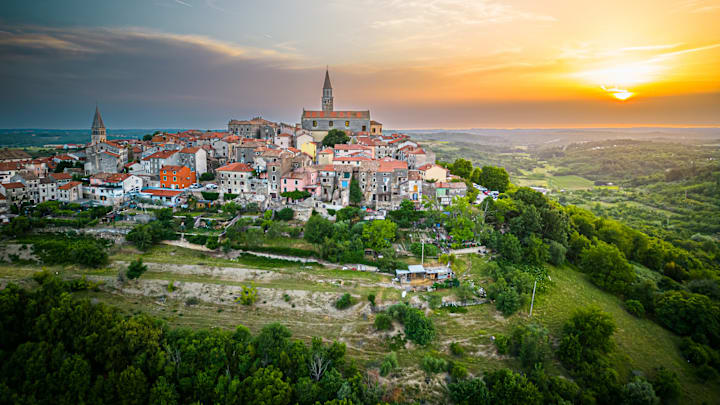
Humans crave authentic experiences and find respite in slow streets where no one is in a hurry to be anywhere at any given time.
The allure of Rome, Paris, and London is undeniable, but navigating these cities can be overwhelming. Seeking a leisurely tempo without losing the hallmarks of European charm means re-routing your journey beyond the cities and into the countryside. Here, you’ll find villages with only a handful of residents that embrace a time-honored pace, no rushing, no urgency, and not a single queue in sight.
In these charming little locales, you can explore on foot, easily capture the scenery without running into other tourists, and don’t have to worry about reserving a spot days in advance at a crowded cafe. In slowing down, perhaps you'll find (and leave) a bit of yourself in these enchanting European villages.
Let's explore seven tiny European towns with fewer than 500 people that you can visit today.
- Hum, Croatia
- Morterone, Italy
- Castelmoron-d'Albret, France
- Beilstein, Germany
- Mdina, Malta
- Frías, Spain
- Sortelha, Portugal
Hum, Croatia

With a population of only 20 to 30 residents spanning a distance of 0.02 square miles, Hum, Croatia, is often considered the smallest town in the world. This tiny locale was founded in the 1100s and has preserved much of its medieval charm. The enclave has eight picturesque monuments, including the Bell Tower, the Main City Gate, and the Gallery of Hum, and enjoys its finest weather during spring and early autumn. According to a local legend, Hum was built by giants using extra stones left over from nearby towns.
Visitors can fly into Pula and take the daily train to Hum. You can also take a taxi from a nearby city or rent a car.
Morterone, Italy

Morterone, Italy, is reportedly home to 30 to 33 residents, making it one of the smallest towns in all of Italy. With a total distance of about eight and a half miles (located 31 miles from Milan), this historic village was founded in the 1100s and offers tranquil streets and scenery. Visitors make the trip to see the stunning view of the mountains from Il Sentiero dei Grandi Alberi, and marvel at contemporary art at the Museo di Arte Contemporanea all'Aperto di Morterone.
Those visiting Lake Como can easily take a detour to Morterone, just under two hours away by public transport. In 2020, the town celebrated its first birth in over eight years, increasing its population to 29 residents at the time.
Castelmoron-d'Albret, France

Castelmoron-d'Albret, France, is a tiny, well-preserved commune with 50 known residents. This charming locale, perched on a steep hill, is 0.01 miles long and was founded around 732. Its name translates to "The Castle of the Moors," serving as a nod to its turbulent. A walk through Castelmoron-d'Albret is reminiscent of the Wars of Religion and the French Revolution of 1789. Only a single shop remains open part-time, with Bordeaux just 40 minutes away by car. Among the town’s historical anecdotes is the story of a king and a prince who, during a visit in the 1800s, misjudged the steepness of the hill to such an extent that they had to get out of their carriage and push it up the incline.
Beilstein, Germany

Beilstein's 147 residents live in a storybook, tucked away in the mountains, located on the Moselle River. This locale is so dreamy, it's literally referred to as "Sleeping Beauty of the Moselle." Beilstein is undeniably small and quaint, but just how small is it? The town measures only 0.65 miles across, and its streets are alive with medieval history and architecture. Reaching the town and its vineyard-draped hills is easy, with the Frankfurt Airport just 15 miles away. Beilstein Market Square is a highlight, offering local wines and cuisine amid picturesque scenery. The historic Zehnthauskeller wine cellar is another can’t-miss destination.
Mdina, Malta

There is a reason this medieval village of only 250 residents is called the "Silent City." Founded over 4,000 years ago, Mdina was actually the capital of Malta until the 15th century. Cars aren’t permitted on the town’s exceptionally narrow streets, and the whole city measures only 0.3 miles across. Baroque designs were introduced after an earthquake in 1693, giving it a beautifully preserved, ornate look. Visitors can enjoy the Natural History Museum, Carmelite Church and Priory, and Palazzo Falzon, which showcases a wide variety of antiques. It is believed that after St. Paul was shipwrecked on the island, he visited the palace and spread Christianity, leading to the dedication of St. Paul’s Cathedral.
Frías, Spain

Frías, the smallest city in Spain, is home to 270 to 280 residents and was founded in the second half of the 9th century. The area’s history is marked by power struggles and sieges, and it sits atop a massive rock known as “La Muela.” Today, you can stroll back in time with a visit to Petralata Castle (castle of Frías), as well as view the Casas Colgadas (hanging houses) from the Southern entrance of the town. There are also several historic churches and a striking Gothic bridge that immerses travelers in a medieval atmosphere. Located in Northern Spain, it takes just under four hours to reach Frías from Madrid by car.
Sortelha, Portugal

Built on a steep, rocky cliff, Sortelha stands as one of Portugal’s most well-preserved towns, with a population of just 320 residents. Like many towns on this list, this charming enclave traces its roots to the Middle Ages, with history revealed in every street and attraction. King Sancho II ordered the castle to be built in the 1200s, and it remains a towering fortress to this day. Sortelha spans 10 miles and is best reached by car, since public transportation can be unreliable. The Via Sacra Steps, Pedra do Beijo rock, medieval tombs, and the town's manor houses draw travelers eager to explore the captivating history and scenic treasures of central Portugal.