%20%20--%3E%0A%3Csvg%20version%3D%221.1%22%20id%3D%22Layer_1%22%20xmlns%3D%22http%3A%2F%2Fwww.w3.org%2F2000%2Fsvg%22%20xmlns%3Axlink%3D%22http%3A%2F%2Fwww.w3.org%2F1999%2Fxlink%22%20x%3D%220px%22%20y%3D%220px%22%0A%09%20viewBox%3D%220%200%20684.6%2068.1%22%20style%3D%22enable-background%3Anew%200%200%20684.6%2068.1%3B%22%20xml%3Aspace%3D%22preserve%22%3E%0A%3Cg%3E%0A%09%3Cpath%20d%3D%22M444.1%2C29.3h-17.4v14.5h17.4V29.3z%20M36.4%2C68.1l29.3-50.8V0H50.4L32.9%2C36.8L15.5%2C0H0v68.1h16.7V45.8l12.4%2C22.3H36.4z%0A%09%09%20M49.1%2C68.1h16.6V23.4L49.1%2C52.1V68.1z%20M76.6%2C68.1h45V53.8H93.3V41.6h21V27.1h-21V14.8h28.3V0.1h-45V68.1z%20M175.6%2C68.1h17.3v-68%0A%09%09h-16.5v40.3L150%2C0.1h-17.6v68h16.7V27.7L175.6%2C68.1z%20M235.8%2C14.8h15.4V0.1h-47.4v14.7H219v53.2h16.8V14.8z%20M290.3%2C45.9h-17.1%0A%09%09l7.5-15.6h2L290.3%2C45.9z%20M298.7%2C68.1h18l-32.2-68h-5.7l-32%2C68h18l3.3-7.1h27.1L298.7%2C68.1z%20M325.2%2C68.1h46.2V53.8h-29.6V0.1h-16.7%0A%09%09V68.1z%20M423.7%2C14.8h27.2V0.1H407v68h16.7V14.8z%20M462%2C68.1h46.2V53.8h-29.6V0.1H462V68.1z%20M564.8%2C34.1c0%2C10.7-7.2%2C19.2-18.5%2C19.2%0A%09%09c-11.4%2C0-18.5-8.5-18.5-19.2s7.1-19.2%2C18.5-19.2C557.6%2C14.9%2C564.8%2C23.4%2C564.8%2C34.1%20M580.6%2C34.1c0-19-14.2-34-34.3-34%0A%09%09c-20.2%2C0-34.3%2C15-34.3%2C34c0%2C19%2C14.1%2C34%2C34.3%2C34C566.4%2C68.1%2C580.6%2C53.1%2C580.6%2C34.1%20M604.8%2C20.5c0-4.1%2C3.3-6.2%2C6.7-6.2%0A%09%09c4.4%2C0%2C6.6%2C3%2C6.6%2C6.6h14.7C631.8%2C9.1%2C625.1%2C0.1%2C611%2C0.1c-12%2C0-21.7%2C9.3-21.7%2C20.6c0%2C10.9%2C5.9%2C15.9%2C16.7%2C19.8%0A%09%09c5.2%2C1.8%2C11.5%2C3.2%2C11.5%2C8c0%2C3.3-2.4%2C5.5-6.4%2C5.5c-3.6%2C0-6.6-3-6.6-6.7h-15.2c0%2C11.5%2C7.9%2C20.8%2C21.8%2C20.8c12%2C0%2C21.6-9.3%2C21.6-20.6%0A%09%09c0-10-5.3-16.4-16.7-19.8C610.6%2C26.1%2C604.8%2C25.3%2C604.8%2C20.5%20M670%2C20.9h14.7C683.8%2C9.1%2C677.1%2C0.1%2C663%2C0.1c-12%2C0-21.7%2C9.3-21.7%2C20.6%0A%09%09c0%2C10.9%2C5.9%2C15.9%2C16.7%2C19.8c5.2%2C1.8%2C11.5%2C3.2%2C11.5%2C8c0%2C3.3-2.4%2C5.5-6.4%2C5.5c-3.6%2C0-6.6-3-6.6-6.7h-15.2c0%2C11.5%2C7.9%2C20.8%2C21.8%2C20.8%0A%09%09c12%2C0%2C21.6-9.3%2C21.6-20.6c0-10-5.3-16.4-16.7-19.8c-5.4-1.6-11.3-2.4-11.3-7.2c0-4.1%2C3.3-6.2%2C6.7-6.2C667.7%2C14.4%2C670%2C17.3%2C670%2C20.9%0A%09%09%22%2F%3E%0A%3C%2Fg%3E%0A%3C%2Fsvg%3E%0A)

Have you ever daydreamed about visiting the Great Pyramid of Giza, partying in Italy, or relaxing on a Greek island? If so, you may have something in common with the ancient Romans.
Tourism was generally only available to the Roman upper classes, who had the means and time to fund it. Many were inspired to travel by the Roman idea of otium, a term that referred to contemplative time spent in the countryside. The opposite of negotium, which described the general bustle of city life, the word later evolved to refer to free time that could be used for spiritual, creative, and intellectual growth. According to architect Rem Koolhaas, otium was “a kind of intellectual state…an ambition to develop the whole person.”
Inspired by this ideal, many ancient Romans used travel as a means of personal development. Some travelers would make pilgrimages to visit certain teachers, healers, or religious sites. Others would visit historic destinations, just as many of us do today.
The wealthiest Romans would typically travel by horse-drawn vehicles called raedae, which were similar to stagecoaches. Transport was made easier and relatively safe in the first century CE thanks to the Pax Romana, a period of peace beginning with Emperor Augustus’s reign in roughly 27 BC.
By 300 CE, over 53,000 miles of road had been built throughout the empire, along with many maritime routes that made travel more accessible, though bandits and pirates were always a risk. Travelers would often stay in private inns or state-sanctioned roadside hostels designed for Roman officials before reaching their destinations.
- Troy
- The Temples of Asclepius
- The Oracle of Delphi
- The Pyramids of Giza
- The Greek Islands
- The Olympics
- Baiae
- The Baths of Aquae Sulis
Troy

Inspired by Homer’s depictions of the city of Troy in the Iliad, many tourists found themselves wanting to see the ruins of the place for themselves—just as many of us might have filming locations from Christopher Nolan’s Odyssey on our bucket lists today.
By the seventh century BCE, the Anatolian town of Ilium had become associated with Troy, and the site evolved into a popular destination. Visitors included Alexander the Great, who, according to historians, anointed himself with oil and raced naked around Achilles’ supposed burial site, which was a customary practice at the time.
Roman builders worked to make the site appealing to travelers, repairing ruined walls and setting up on-site attractions inspired by Homer’s works. The site became, according to archaeologists C. Brian Rose of the University of Pennsylvania, a kind of “Homeric Disneyland.”
The Temples of Asclepius

Some may think of wellness tourism as a modern phenomenon, but actually, the Romans and their forebears had a version of this on their itineraries thousands of years ago. Wealthy and prominent Romans would often visit places designed to heal both their bodies and their spirits, and one of the most popular sites for this kind of travel were the Temples of Asclepius.
In Greek mythology, Asclepius was a physician and surgeon who cared for soldiers during the Trojan War. His cult emerged between the 6th and 4th centuries BCE and led to the establishment of Asclepieia, sites that served as very early hospitals.
These centers were typically located in peaceful, natural areas, and their earliest forms of treatment mainly involved turning to the gods for healing. Visitors would often come to pay tribute to various deities, and would participate in cleansing rituals like fasting and exercise. This would be followed by nights spent in the temples, where they would receive purification rituals and await healing they hoped would happen in their dreams.
Asclepieia began using more science-based medical practices as time went on. By the 2nd century CE, the Roman Emperor Antoninus funded the refurbishment of various temples of Asclepius, including the Sanctuary of Asklepios at Epidaurus in the Peloponnese, Greece. Ancient Romans would often visit this place for cures for everything from blindness to prolonged pregnancies, relying on both science and faith for their cures. However, these sanctuaries were gradually shut down around the 4th century CE due to the rise of Christianity, which led to opposition to pagan worship.
The Oracle of Delphi

Located in the sloping hills of Mt. Parnassus near the Gulf of Corinth, the Delphic oracle was the most prominent oracle of the ancient world. According to legend, the oracle was originally created by Mother Earth, or Gaea, but was later either taken or gifted to the Greek god Apollo.
Leaders from all over the ancient world would travel to receive advice from the Delphic Pythia herself, who would have been a priestess over the age of 50 and who was said to have a direct line of communication with Apollo.
Delphi was conquered by the Aetolians in the 3rd century BCE and remained in their hands until it was taken by the Romans in 191 BCE. After that, numerous important Romans visited the site for advice, including Roman Emperor Hadrian, who visited the oracle twice during his reign and provided financial support to the site. Other famous Roman visitors include Cicero, who is said to have asked the oracle how he could achieve greatness; the oracle famously advised him to rely on his own nature and not others’ opinions.
The oracle’s prophecies were not only reserved for emperors, and many different ancient Romans made the journey to Delphi to receive insight and guidance. However, ancient Roman leaders would also often eschew the long trip and instead consult the Sibylline Books, a collection of prophetic texts kept in a temple and closely guarded by Romans.
The Pyramids of Giza

Egypt was considered an exotic and fascinating destination for the ancient Romans, and tourism to the region thrived after Augustus’s annexation of the area in 30 BCE. Many ancient Romans paid visits to Egyptian sites that are still popular today, including the Great Pyramid of Giza and the Nile River.
Apparently, some of these ancient tourists were quite disrespectful, as there is evidence of graffiti left by Roman visitors on some ancient monuments, including the Pyramid of Giza itself. Some left behind inscriptions that might look startlingly familiar, such as the predictable “Apollonius was here.” Travelers are also known to have brought home souvenirs and keepsakes from Egypt, such as vases carved with Egyptian symbols.
The Greek Islands

Today, Greek islands like Santorini and Mykonos are dreamy travel destinations that continue to attract waves of visitors. Apparently, they held a similar allure for ancient Romans, who often visited various islands for leisure and learning.
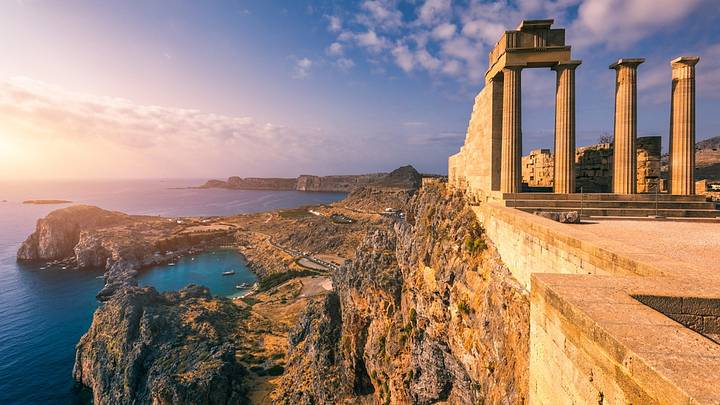
Rhodes was a popular choice for those wishing to enhance their minds, and Tiberius, Julius Caesar, and Cicero are known to have spent time there studying rhetoric and philosophy while enjoying ocean views. Samothrace, long known for its mystery cult based at its Sanctuary of the Great Gods, became a free city under Roman rule and was visited by Roman consuls and elites looking to partake in secret rites there.
The Olympics

Today, anyone can attend the Olympics—provided they have a lot of money, connections, or luck. Originally, though, the Olympics were open only to male Greek citizens of Greek city-states. Later on, the Olympics opened to Roman citizens, who began to frequent the games as both attendees and competitors.
During the Roman Empire, the Romans began bankrolling the games. They also implemented some changes, sponsoring improved bathing facilities and, reportedly, the games’ first-ever supply of fresh drinking water. The Olympics drew huge crowds, and by Roman times, training facilities at Olympia had become tourist attractions that saw visitors all year round.
Baiae

Going on vacation didn’t always mean going too far for the ancient Romans. One popular destination was the resort town of Baiae, located on the Gulf of Naples. Built atop thermal springs, the town was visited by the likes of Nero, Cicero, and Caesar, and some Roman elites even built vacation homes there. Ancient sources described this as a place where the rich would party for days on end while indulging in various whims and vices, making it into a kind of ancient Las Vegas.
“We have traces of these huge luxurious rooms which must have hosted continuous parties,” archaeologist Enrico Gallochio told The Guardian. “You can imagine that, during the summer holidays, this was a place of self-indulgence, where Roman nobility could go crazy.”
The Baths of Aquae Sulis

The ancient Romans loved a hot spring. Most Roman towns had their own bathhouses, but the ancient Romans were also willing to travel for them, and many made their ways all the way to the modern-day town of Bath, England for a soak.
Founded in the first century CE, Aquae Sulis was one of the first bathhouses established outside of Rome. It was named after Sulis, a Celtic goddess associated with healing springs who the Romans linked to the Roman goddess Minerva. They would often make pilgrimages there to give offerings to the goddess, with some believing that the waters provided a direct link to the world of the gods. Some used the facilities for more quotidian reasons as well, with many choosing to spend some time in the gymnasium located in the bathhouse before resting their sore muscles in the steaming waters.