%20%20--%3E%0A%3Csvg%20version%3D%221.1%22%20id%3D%22Layer_1%22%20xmlns%3D%22http%3A%2F%2Fwww.w3.org%2F2000%2Fsvg%22%20xmlns%3Axlink%3D%22http%3A%2F%2Fwww.w3.org%2F1999%2Fxlink%22%20x%3D%220px%22%20y%3D%220px%22%0A%09%20viewBox%3D%220%200%20684.6%2068.1%22%20style%3D%22enable-background%3Anew%200%200%20684.6%2068.1%3B%22%20xml%3Aspace%3D%22preserve%22%3E%0A%3Cg%3E%0A%09%3Cpath%20d%3D%22M444.1%2C29.3h-17.4v14.5h17.4V29.3z%20M36.4%2C68.1l29.3-50.8V0H50.4L32.9%2C36.8L15.5%2C0H0v68.1h16.7V45.8l12.4%2C22.3H36.4z%0A%09%09%20M49.1%2C68.1h16.6V23.4L49.1%2C52.1V68.1z%20M76.6%2C68.1h45V53.8H93.3V41.6h21V27.1h-21V14.8h28.3V0.1h-45V68.1z%20M175.6%2C68.1h17.3v-68%0A%09%09h-16.5v40.3L150%2C0.1h-17.6v68h16.7V27.7L175.6%2C68.1z%20M235.8%2C14.8h15.4V0.1h-47.4v14.7H219v53.2h16.8V14.8z%20M290.3%2C45.9h-17.1%0A%09%09l7.5-15.6h2L290.3%2C45.9z%20M298.7%2C68.1h18l-32.2-68h-5.7l-32%2C68h18l3.3-7.1h27.1L298.7%2C68.1z%20M325.2%2C68.1h46.2V53.8h-29.6V0.1h-16.7%0A%09%09V68.1z%20M423.7%2C14.8h27.2V0.1H407v68h16.7V14.8z%20M462%2C68.1h46.2V53.8h-29.6V0.1H462V68.1z%20M564.8%2C34.1c0%2C10.7-7.2%2C19.2-18.5%2C19.2%0A%09%09c-11.4%2C0-18.5-8.5-18.5-19.2s7.1-19.2%2C18.5-19.2C557.6%2C14.9%2C564.8%2C23.4%2C564.8%2C34.1%20M580.6%2C34.1c0-19-14.2-34-34.3-34%0A%09%09c-20.2%2C0-34.3%2C15-34.3%2C34c0%2C19%2C14.1%2C34%2C34.3%2C34C566.4%2C68.1%2C580.6%2C53.1%2C580.6%2C34.1%20M604.8%2C20.5c0-4.1%2C3.3-6.2%2C6.7-6.2%0A%09%09c4.4%2C0%2C6.6%2C3%2C6.6%2C6.6h14.7C631.8%2C9.1%2C625.1%2C0.1%2C611%2C0.1c-12%2C0-21.7%2C9.3-21.7%2C20.6c0%2C10.9%2C5.9%2C15.9%2C16.7%2C19.8%0A%09%09c5.2%2C1.8%2C11.5%2C3.2%2C11.5%2C8c0%2C3.3-2.4%2C5.5-6.4%2C5.5c-3.6%2C0-6.6-3-6.6-6.7h-15.2c0%2C11.5%2C7.9%2C20.8%2C21.8%2C20.8c12%2C0%2C21.6-9.3%2C21.6-20.6%0A%09%09c0-10-5.3-16.4-16.7-19.8C610.6%2C26.1%2C604.8%2C25.3%2C604.8%2C20.5%20M670%2C20.9h14.7C683.8%2C9.1%2C677.1%2C0.1%2C663%2C0.1c-12%2C0-21.7%2C9.3-21.7%2C20.6%0A%09%09c0%2C10.9%2C5.9%2C15.9%2C16.7%2C19.8c5.2%2C1.8%2C11.5%2C3.2%2C11.5%2C8c0%2C3.3-2.4%2C5.5-6.4%2C5.5c-3.6%2C0-6.6-3-6.6-6.7h-15.2c0%2C11.5%2C7.9%2C20.8%2C21.8%2C20.8%0A%09%09c12%2C0%2C21.6-9.3%2C21.6-20.6c0-10-5.3-16.4-16.7-19.8c-5.4-1.6-11.3-2.4-11.3-7.2c0-4.1%2C3.3-6.2%2C6.7-6.2C667.7%2C14.4%2C670%2C17.3%2C670%2C20.9%0A%09%09%22%2F%3E%0A%3C%2Fg%3E%0A%3C%2Fsvg%3E%0A)

Like many aspects of our culture, board games often outlive their original purpose. What often start out as tools for instruction or moral persuasion gradually devolve into apparatus for entertainment, their sharper edges smoothed away for mass appeal.
Whether it be the result of endless hours locked inside by WW2 air raids, or ancient Indian games adjusted for a more modern audience, some of our most beloved board games have arisen from the most unexpected of places.
Candy Land
If you’re a fan of the beloved children’s board game Candy Land, you just might have polio to thank for its creation.
Created in 1948, retired primary school teacher Eleanor Abbott came up with the idea for Candy Land while she was convalescing in a San Diego hospital’s polio ward. Originally conceived as a way to entertain the children she was sharing the ward with, Abbott’s game incorporated no strategy or reading requirements to participate, making it possible for children of all ages to play.
Combining a short playing time with vivid, bright imagery of the titular Candy Land peppering the board, Abbott’s game was an immediate hit. In 1949, Abbott sold the rights to the game to Milton Bradley (then primarily a school supplies distributor), where it quickly became Bradley’s flagship product as a rising children’s board game manufacturer.
Since its creation nearly 80 years ago, Candy Land has expanded into numerous modernized versions, an animated feature film, and even a reality television cooking competition.
Monopoly
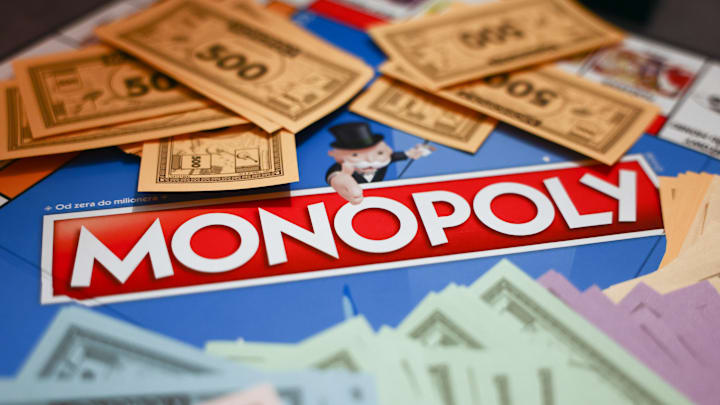
Based on The Landlord’s Game, created by American game designer and activist Lizzie Magie, Monopoly has gone through quite the image overhaul since its publication nearly a century ago.
While Monopoly as we know it today focuses on the accumulation of personal wealth, The Landlord’s Game was created as a tool with which to critique the very kind of monopolies the modern iteration of the game celebrates.
Magie began self-publishing The Landlord’s Game in the early 20th century, but the Monopoly most of us are familiar with today was created by game designer Charles Darrow. While attending a friend’s dinner party, Darrow was introduced to The Landlord’s Game, later making small tweaks to the rules and design before publishing the game as his own with the name Monopoly.
Darrow later sold the rights to the game to Parker Brothers, who, upon learning that Darrow was not the actual sole inventor of the game, purchased the rights to The Landlord’s Game from Magie for a mere $500.
Clue
To help pass the long hours stuck indoors during air-raid blackouts throughout the Second World War, English pianist Anthony Pratt and his wife, Elva, began designing a murder mystery board game inspired by Pratt’s love of crime fiction.
Originally called Murder!, Pratt sold the rights to Clue’s predecessor to games manufacturer Waddingtons in 1944, but the game would not become widely available for another five years on account of postwar supplies shortages. Hitting shelves as Cluedo in 1949, the game piggybacked on the success of fictional detective novels like the Sherlock Holmes series to solidify its popularity.
Distributed in the United States by Parker Brothers as just Clue, Pratt’s beloved murder mystery game would go through several varying iterations throughout the years, later spawning a delightfully campy film in 1985 and innumerable franchise-tailored iterations.
Despite the continued worldwide success of Pratt’s game, Pratt and his family did not hugely benefit from the game’s financial success after having sold the international distribution rights for just £5,000 early in the game’s life.
Chess
One of the oldest board games still widely played today, chess can trace its origins all the way back to the Gupta Empire in 6th-century India. Originally called “Chataranga,” meaning the four divisions of the army, chess was first developed as a tool with which one could teach military strategy.
Later expanding to Persia, where the phrase “checkmate” would originate from the Persian phrase “shah mat,” translating roughly to “the king is helpless,” chess quickly spread across the continent to become a beloved pastime across cultures.
By the end of the 14th-century, chess had made its way across Medieval Europe, making only some slight variations from its progenitor like giving the queen piece significantly more power.
In 1924, the International Chess Federation was founded in Paris with the express purpose of establishing international standards for the game as well as organizing a ranking system, titles, and worldwide competitions.
Snakes and Ladders
Traditionally sold as Chutes and Ladders across the United States, snakes and ladders is another classic board game brought to us by ancient India.
Known as Moksha Patam across India, snakes and ladders first came into existence sometime around the 2nd century CE, but would not be popularized in the West until it was brought to the United Kingdom in the late 20th century in tandem with Great Britain’s occupation of India.
Basing a player’s ascent through the game on their adherence to morals like humility and patience, much of the “moral” aspect of the game was abandoned by the time it made its way to the United States under Milton Bradley in the 1940s. Though much of the spiritual and moral teaching associated with snakes and ladders was removed from the American iteration of the game, the basic mechanics were kept the same.
The Game of Life
While still working as a lithographer, famed games designer Milton Bradley created The Checkered Game of Life in 1860 as the very first board game for his namesake company.
Similar to the game snakes and ladders, The Checkered Game of Life originally had a very significant moral component, rewarding players for landing on “good” spaces. Though the original iteration of the game was certainly popular, the modernized version of the game that players today are familiar with brought the game to much wider audiences.
Easing the moral rectitude of the gameplay and instead focusing more on the stage progressions of life, The Checkered Game of Life was reissued in the mid-21st century as the Game of Life with many of the accouterments (plastic automobile player pieces, career paths, money, etc) players today are familiar with.
Since the game’s reissue in 1960, much of the gameplay of Life has remained the same (save for a few additional features like investments being introduced).
The Ouija board
Though the Ouija board has earned something of a spooky reputation, its original purpose was merely for entertainment purposes.
Published by Hasbro during the height of the Spiritualist Movement, the Ouija board was first advertised as a way for groups of players to communicate with the dead through the game’s now iconic planchette and alphabet board. Originally marketed as a fun game for ages 8 and up, the Ouija board’s reputation became more closely tied with the occult as the Spiritualist Movement faded from the public consciousness.
Though the Ouija board appeared for years in toy stores across the country, its association with communing with the dead has largely been dubbed too creepy for kids, and the “game” has been sequestered to the occult and seasonal Halloween displays.