%20%20--%3E%0A%3Csvg%20version%3D%221.1%22%20id%3D%22Layer_1%22%20xmlns%3D%22http%3A%2F%2Fwww.w3.org%2F2000%2Fsvg%22%20xmlns%3Axlink%3D%22http%3A%2F%2Fwww.w3.org%2F1999%2Fxlink%22%20x%3D%220px%22%20y%3D%220px%22%0A%09%20viewBox%3D%220%200%20684.6%2068.1%22%20style%3D%22enable-background%3Anew%200%200%20684.6%2068.1%3B%22%20xml%3Aspace%3D%22preserve%22%3E%0A%3Cg%3E%0A%09%3Cpath%20d%3D%22M444.1%2C29.3h-17.4v14.5h17.4V29.3z%20M36.4%2C68.1l29.3-50.8V0H50.4L32.9%2C36.8L15.5%2C0H0v68.1h16.7V45.8l12.4%2C22.3H36.4z%0A%09%09%20M49.1%2C68.1h16.6V23.4L49.1%2C52.1V68.1z%20M76.6%2C68.1h45V53.8H93.3V41.6h21V27.1h-21V14.8h28.3V0.1h-45V68.1z%20M175.6%2C68.1h17.3v-68%0A%09%09h-16.5v40.3L150%2C0.1h-17.6v68h16.7V27.7L175.6%2C68.1z%20M235.8%2C14.8h15.4V0.1h-47.4v14.7H219v53.2h16.8V14.8z%20M290.3%2C45.9h-17.1%0A%09%09l7.5-15.6h2L290.3%2C45.9z%20M298.7%2C68.1h18l-32.2-68h-5.7l-32%2C68h18l3.3-7.1h27.1L298.7%2C68.1z%20M325.2%2C68.1h46.2V53.8h-29.6V0.1h-16.7%0A%09%09V68.1z%20M423.7%2C14.8h27.2V0.1H407v68h16.7V14.8z%20M462%2C68.1h46.2V53.8h-29.6V0.1H462V68.1z%20M564.8%2C34.1c0%2C10.7-7.2%2C19.2-18.5%2C19.2%0A%09%09c-11.4%2C0-18.5-8.5-18.5-19.2s7.1-19.2%2C18.5-19.2C557.6%2C14.9%2C564.8%2C23.4%2C564.8%2C34.1%20M580.6%2C34.1c0-19-14.2-34-34.3-34%0A%09%09c-20.2%2C0-34.3%2C15-34.3%2C34c0%2C19%2C14.1%2C34%2C34.3%2C34C566.4%2C68.1%2C580.6%2C53.1%2C580.6%2C34.1%20M604.8%2C20.5c0-4.1%2C3.3-6.2%2C6.7-6.2%0A%09%09c4.4%2C0%2C6.6%2C3%2C6.6%2C6.6h14.7C631.8%2C9.1%2C625.1%2C0.1%2C611%2C0.1c-12%2C0-21.7%2C9.3-21.7%2C20.6c0%2C10.9%2C5.9%2C15.9%2C16.7%2C19.8%0A%09%09c5.2%2C1.8%2C11.5%2C3.2%2C11.5%2C8c0%2C3.3-2.4%2C5.5-6.4%2C5.5c-3.6%2C0-6.6-3-6.6-6.7h-15.2c0%2C11.5%2C7.9%2C20.8%2C21.8%2C20.8c12%2C0%2C21.6-9.3%2C21.6-20.6%0A%09%09c0-10-5.3-16.4-16.7-19.8C610.6%2C26.1%2C604.8%2C25.3%2C604.8%2C20.5%20M670%2C20.9h14.7C683.8%2C9.1%2C677.1%2C0.1%2C663%2C0.1c-12%2C0-21.7%2C9.3-21.7%2C20.6%0A%09%09c0%2C10.9%2C5.9%2C15.9%2C16.7%2C19.8c5.2%2C1.8%2C11.5%2C3.2%2C11.5%2C8c0%2C3.3-2.4%2C5.5-6.4%2C5.5c-3.6%2C0-6.6-3-6.6-6.7h-15.2c0%2C11.5%2C7.9%2C20.8%2C21.8%2C20.8%0A%09%09c12%2C0%2C21.6-9.3%2C21.6-20.6c0-10-5.3-16.4-16.7-19.8c-5.4-1.6-11.3-2.4-11.3-7.2c0-4.1%2C3.3-6.2%2C6.7-6.2C667.7%2C14.4%2C670%2C17.3%2C670%2C20.9%0A%09%09%22%2F%3E%0A%3C%2Fg%3E%0A%3C%2Fsvg%3E%0A)

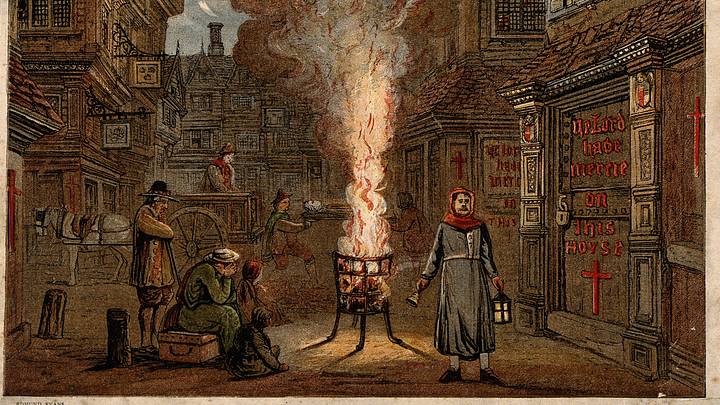
The Black Death afflicted Asia, Europe, and North Africa from 1346 to 1353, claiming an estimated 75 to 200 million lives worldwide. Europe alone lost up to half its population during the plague, which spread along trade routes and was carried by infected fleas and rats.
Symptoms began much like the flu, with fever, chills, and headaches, but rapidly worsened: lymph nodes swelled to the size of eggs or apples, vomiting set in, tissue on fingers, toes, and noses blackened, and delirium came before death.
Desperate for a cure, victims tried everything from odd animal remedies to strange potions and, at times, even their own waste.
However, not all attempted cures were unsettling. Some drank holistic mixtures of vinegar and spices or applied root-and herb-based pastes. Many sniffed the scent of flowers, keeping them in their pockets in hopes the fragrance would clear their lungs of disease. This supposed cure is what inspired the nursery rhyme, “Ring Around the Rosy,” referencing their “pockets full of posies.”
Slightly less disturbing but still questionable, some people crushed up emeralds to mix into their food and water, believing the stones could ward off the plague.
While several of these so-called “remedies” make us wonder, "What were they thinking?" it's almost impossible to comprehend how, without vaccines or modern medicine, people confronted a disease that was wiping out their loved ones and communities. In the face of fear, you too might have considered an unusual cure, especially because, at the time, many of these methods and ingredients were less controversial than they are now.
With that in mind, here are five of the most disturbing Black Death cures that people desperately believed could save them.
LIVE CHICKEN SKIN

Perhaps the most unsettling of these was the Vicary Method.
This involved plucking the feathers from a live chicken's back and rear, then strapping the bird to the swollen lymph nodes of an individual suffering from the plague. Believe it or not, this was one of the most popular cures of the time, introduced by a medical professional, Dr. Thomas Vicary.
Once the chicken became ill, it was believed the animal had drawn the disease from the patient. The chicken would then be removed, and the process would be repeated, more often than not until either the chicken or the patient perished.
BLOODLETTING

Bloodletting was a "well-established" treatment that predated the Black Death, thought to rid the body of infected or "bad" blood.
The bloodletting method administered to you was entirely dependent on your social class. The wealthy could afford professionals who covered their bodies in leeches to extract the bad blood. Peasants would have a small incision made somewhere on their bodies and then bleed into a cup. Both methods were thought to help eliminate infection.
Another method, cupping, involved heating a cup and pressing it onto the patient’s skin (sound familiar?) to draw blood and supposedly pull infection toward the surface. The premise was that removing all the bad blood would allow the good blood to reset the body.
HUMAN WASTE PASTE

Some plague pastes were simply unpleasant, but the most disturbing were made with human urine and feces. As if the symptoms of the Black Death weren't grueling enough, victims coated themselves with human waste, risking further infection.
Some sufferers also bathed in and drank their urine, believing it would cleanse their systems. Collectors of "clean" urine were paid well by doctors for their services, meaning bathing and drinking someone else’s urine was not out of the question.
THERIAC

Theriac was, and is, a mysterious remedy. Sometimes a liquid, sometimes a paste, this concoction contained up to 80 ingredients, including, according to World History, significant amounts of opium.
To make the mixture easier to swallow, syrup was added. In liquid form, it was called treacle, but it could also be applied as a paste to the skin. Theriac and treacle were typically reserved for the wealthy, as their costly ingredients made them too expensive for peasants.
MERCURY AND ARSENIC

If you lacked the means to escape regions stricken with the plague, you were left with these desperate cures that, though far from ideal, your life depended on. As mentioned, the wealthy had access to bizarre and expensive remedies, from drinking ground-up emeralds to mixing up theriac, while the poor often resorted to chemicals just as deadly, if not more deadly, than the plague itself.
Arsenic and mercury, both extremely toxic to the human body, were sometimes consumed in hopes of a cure. Instead, they destroyed organs and left the infected even weaker than before.