%20%20--%3E%0A%3Csvg%20version%3D%221.1%22%20id%3D%22Layer_1%22%20xmlns%3D%22http%3A%2F%2Fwww.w3.org%2F2000%2Fsvg%22%20xmlns%3Axlink%3D%22http%3A%2F%2Fwww.w3.org%2F1999%2Fxlink%22%20x%3D%220px%22%20y%3D%220px%22%0A%09%20viewBox%3D%220%200%20684.6%2068.1%22%20style%3D%22enable-background%3Anew%200%200%20684.6%2068.1%3B%22%20xml%3Aspace%3D%22preserve%22%3E%0A%3Cg%3E%0A%09%3Cpath%20d%3D%22M444.1%2C29.3h-17.4v14.5h17.4V29.3z%20M36.4%2C68.1l29.3-50.8V0H50.4L32.9%2C36.8L15.5%2C0H0v68.1h16.7V45.8l12.4%2C22.3H36.4z%0A%09%09%20M49.1%2C68.1h16.6V23.4L49.1%2C52.1V68.1z%20M76.6%2C68.1h45V53.8H93.3V41.6h21V27.1h-21V14.8h28.3V0.1h-45V68.1z%20M175.6%2C68.1h17.3v-68%0A%09%09h-16.5v40.3L150%2C0.1h-17.6v68h16.7V27.7L175.6%2C68.1z%20M235.8%2C14.8h15.4V0.1h-47.4v14.7H219v53.2h16.8V14.8z%20M290.3%2C45.9h-17.1%0A%09%09l7.5-15.6h2L290.3%2C45.9z%20M298.7%2C68.1h18l-32.2-68h-5.7l-32%2C68h18l3.3-7.1h27.1L298.7%2C68.1z%20M325.2%2C68.1h46.2V53.8h-29.6V0.1h-16.7%0A%09%09V68.1z%20M423.7%2C14.8h27.2V0.1H407v68h16.7V14.8z%20M462%2C68.1h46.2V53.8h-29.6V0.1H462V68.1z%20M564.8%2C34.1c0%2C10.7-7.2%2C19.2-18.5%2C19.2%0A%09%09c-11.4%2C0-18.5-8.5-18.5-19.2s7.1-19.2%2C18.5-19.2C557.6%2C14.9%2C564.8%2C23.4%2C564.8%2C34.1%20M580.6%2C34.1c0-19-14.2-34-34.3-34%0A%09%09c-20.2%2C0-34.3%2C15-34.3%2C34c0%2C19%2C14.1%2C34%2C34.3%2C34C566.4%2C68.1%2C580.6%2C53.1%2C580.6%2C34.1%20M604.8%2C20.5c0-4.1%2C3.3-6.2%2C6.7-6.2%0A%09%09c4.4%2C0%2C6.6%2C3%2C6.6%2C6.6h14.7C631.8%2C9.1%2C625.1%2C0.1%2C611%2C0.1c-12%2C0-21.7%2C9.3-21.7%2C20.6c0%2C10.9%2C5.9%2C15.9%2C16.7%2C19.8%0A%09%09c5.2%2C1.8%2C11.5%2C3.2%2C11.5%2C8c0%2C3.3-2.4%2C5.5-6.4%2C5.5c-3.6%2C0-6.6-3-6.6-6.7h-15.2c0%2C11.5%2C7.9%2C20.8%2C21.8%2C20.8c12%2C0%2C21.6-9.3%2C21.6-20.6%0A%09%09c0-10-5.3-16.4-16.7-19.8C610.6%2C26.1%2C604.8%2C25.3%2C604.8%2C20.5%20M670%2C20.9h14.7C683.8%2C9.1%2C677.1%2C0.1%2C663%2C0.1c-12%2C0-21.7%2C9.3-21.7%2C20.6%0A%09%09c0%2C10.9%2C5.9%2C15.9%2C16.7%2C19.8c5.2%2C1.8%2C11.5%2C3.2%2C11.5%2C8c0%2C3.3-2.4%2C5.5-6.4%2C5.5c-3.6%2C0-6.6-3-6.6-6.7h-15.2c0%2C11.5%2C7.9%2C20.8%2C21.8%2C20.8%0A%09%09c12%2C0%2C21.6-9.3%2C21.6-20.6c0-10-5.3-16.4-16.7-19.8c-5.4-1.6-11.3-2.4-11.3-7.2c0-4.1%2C3.3-6.2%2C6.7-6.2C667.7%2C14.4%2C670%2C17.3%2C670%2C20.9%0A%09%09%22%2F%3E%0A%3C%2Fg%3E%0A%3C%2Fsvg%3E%0A)

It all started with the Declaration of Sentiments at the Seneca Falls Convention in 1848.
According to the American Bar Association, this document outlined the need for legal equality between men and women, as well as women's right to vote, and "set the agenda" for the women's rights movement, which would continue well into the next century.
To understand how the fate of the 19th Amendment ultimately came down to one man, Harry T. Burn’s vote, and a letter he carried in his pocket, let's retrace the history of the movement leading up to the amendment's ratification in 1919 and its official signing into law in 1920.
THE WOMEN'S SUFFRAGE TIMELINE

A year after the Seneca Falls Convention, 1,000 men and women gathered for the first National Women's Rights Convention in Massachusetts. Among them was Sojourner Truth, a former slave who would go on to deliver her iconic "Ain't I a Woman?" speech at the Ohio Women's Rights Convention in 1851, a powerful advocacy for both women's rights and the rights of Black Americans.
Following the end of the Civil War in 1866, suffragists Elizabeth Cady Stanton and Susan B. Anthony formed the American Equal Rights Association, pushing for equal rights of both white and Black American women. A year later, a Federal Women's Suffrage Amendment was brought to Congress and rejected.
The ratification of the 14th Amendment followed, declaring that "All persons born or naturalized in the United States, and subject to the jurisdiction thereof, are citizens of the United States and of the State wherein they reside," per the Library of Congress. Section one of the amendment further outlined that no law was to be made that “deprived any person of life, liberty, or property, without due process of law.” Suffragist Victoria Woodhull argued that this amendment indirectly gave women the right to vote; an argument the U.S. House of Representatives ultimately rejected.
In 1870, the 15th Amendment was ratified, prohibiting states from denying American citizens the right to vote based on their "race, color, or previous condition of servitude."
In 1871, the anti-suffragist party (composed of both men and women) was founded, opposing the fight for women's right to vote. A year later, Susan B. Anthony was arrested for casting a ballot for President Ulysses S. Grant. She argued that it was her right under the 14th Amendment but was convicted; a year before the Supreme Court ruled that citizenship did not, in fact, grant women the right to vote.
In 1877, the Woman Suffrage Amendment was introduced to Congress. By 1890, the National Woman Suffrage Association and the American Woman Suffrage Association came together as the National American Woman Suffrage Association, traveling from state to state campaigning for women’s rights.
Toward the end of the century, the National Association of Colored Women was established to fight for the same rights for women of color.
Though yet another organization was founded in opposition to women's suffrage, in 1912, President Theodore Roosevelt's Bull Moose Party became the first to support women's rights.
In 1913, the Woman Suffrage Procession took place in Washington, D.C., and that same year, the Congressional Union for Women's Suffrage was formed. By 1915, suffragettes Mabel Vernon and Sara Bard Field compiled 500,000 signatures in support of women's rights and presented them to Congress.
A major stride was made a year later when Jeannette Rankin became the first woman elected to the House of Representatives, with President Woodrow Wilson's Democratic Party also supporting women's rights.
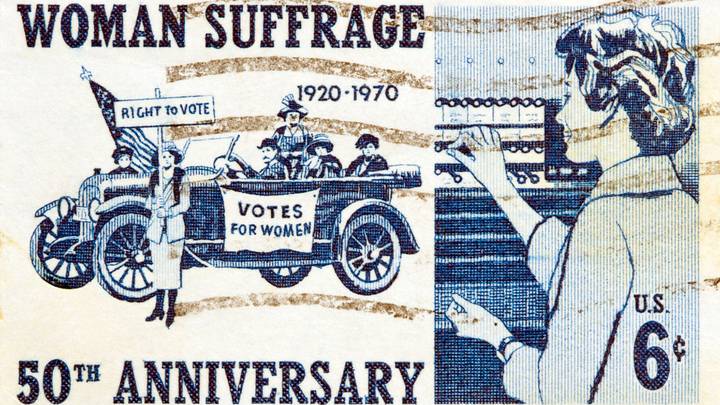
Before WWI ended in November 1918, Wilson declared that women's suffrage was a vital "war measure." The Woman Suffrage Amendment, originally written by Susan B. Anthony in 1878, was passed by the House of Representatives and the Senate in 1919. From there, it was up to the states to ratify, with Wisconsin and Illinois taking the lead.
And that brings us to 1920.
A MAN, A ROSE, A LETTER, AND A LAW

It's a new decade.
The League of Women Voters is officially formed, and 35 states have ratified the 19th Amendment. But what about the other 13? (Alaska and Hawaii had yet to be admitted into the Union.) To formally certify the amendment as national law, America needed 36 states to ratify, per Article V of the U.S. Constitution, which requires approval from three-fourths of all states to move forward in the ratification process.
Several remaining states declined because they felt the amendment was too risky, except Tennessee. Suffragists and anti-suffragists gathered in Nashville, where they began the "War of the Roses," a lobbying effort in which supporters of ratification wore yellow roses, and opponents wore red.
Twenty-four-year-old legislator Harry T. Burn, the "youngest member of the statehouse," according to the Constitution Center, was lobbied by suffragists. Then, on August 18, during the legislative session that would decide the amendment's fate, Burn arrived wearing a red rose, signaling his opposition and desire to delay ratification.
It seemed the fate of women's rights was all but determined, at least until Representative Banks Turner switched sides at the last minute, announcing his support for the movement. To move forward, the suffragists needed just one more vote, a vote that would round out more than 70 years of activism.
And who would be the one to decide but Burn, who, though wearing a red rose in opposition to the suffrage movement, also carried a seven-page letter from his mother, Febb, in his pocket, urging him to be a "good boy." When it came time for Burn to cast his vote, he chose to support the ratification.
Eight days later, the Secretary of State signed the documents into law, stating, "the right of citizens of the United States to vote shall not be denied or abridged by the United States or by any State on account of sex."
Burn later explained why he changed his mind that day:
"I knew that a mother’s advice is always safest for a boy to follow, and my mother wanted me to vote for ratification. I appreciated the fact that an opportunity such as seldom comes to a mortal man to free 17 million women from political slavery was mine."
SUFFRAGE FOR WHOM?

White women across the United States were now legally able to vote, but the fight was far from over for Asian American, Latin American, African American, and Native American suffragists. According to PBS, Native Americans weren’t even considered U.S. citizens in 1920. It wasn’t until the Snyder Act was passed four years later that American-born Native women gained citizenship. It would take until 1962 for the majority of states to guarantee this right, and only then were women living on reservations finally able to cast their votes.
Read about suffragist Zitkála-Šá.
Asian American women born in the U.S. had citizenship by 1920, but first-generation Asian Americans were not granted the right to vote until the passage of the Immigration and Nationality Act of 1952. For three decades following the ratification of the 19th amendment, many Asian American women were unable to legally cast a ballot.
Read about suffragist Dr. Mabel Ping-Hua Lee.
Literate women living in Puerto Rico were not legally allowed to vote until 1929, and the rest of the female population could not vote until 1935. At the time, literacy tests were required, preventing many Spanish-speaking women from voting until a 1975 extension of the Voting Rights Act banned these tests.
Read about suffragist Luisa Capetillo.
African American suffragists living in northern states in 1920 were able to vote, but Black women (and men, for that matter) living in the South still faced discrimination at the polls. Poll taxes, ID requirements, and literacy tests all played a role in voter suppression. Many were also threatened and faced violence. It wasn’t until 1965, with the passage of the Voting Rights Act, that Black women could lawfully vote in every state.
Read more about suffragists Fannie Lou Hamer and Diane Nash.