%20%20--%3E%0A%3Csvg%20version%3D%221.1%22%20id%3D%22Layer_1%22%20xmlns%3D%22http%3A%2F%2Fwww.w3.org%2F2000%2Fsvg%22%20xmlns%3Axlink%3D%22http%3A%2F%2Fwww.w3.org%2F1999%2Fxlink%22%20x%3D%220px%22%20y%3D%220px%22%0A%09%20viewBox%3D%220%200%20684.6%2068.1%22%20style%3D%22enable-background%3Anew%200%200%20684.6%2068.1%3B%22%20xml%3Aspace%3D%22preserve%22%3E%0A%3Cg%3E%0A%09%3Cpath%20d%3D%22M444.1%2C29.3h-17.4v14.5h17.4V29.3z%20M36.4%2C68.1l29.3-50.8V0H50.4L32.9%2C36.8L15.5%2C0H0v68.1h16.7V45.8l12.4%2C22.3H36.4z%0A%09%09%20M49.1%2C68.1h16.6V23.4L49.1%2C52.1V68.1z%20M76.6%2C68.1h45V53.8H93.3V41.6h21V27.1h-21V14.8h28.3V0.1h-45V68.1z%20M175.6%2C68.1h17.3v-68%0A%09%09h-16.5v40.3L150%2C0.1h-17.6v68h16.7V27.7L175.6%2C68.1z%20M235.8%2C14.8h15.4V0.1h-47.4v14.7H219v53.2h16.8V14.8z%20M290.3%2C45.9h-17.1%0A%09%09l7.5-15.6h2L290.3%2C45.9z%20M298.7%2C68.1h18l-32.2-68h-5.7l-32%2C68h18l3.3-7.1h27.1L298.7%2C68.1z%20M325.2%2C68.1h46.2V53.8h-29.6V0.1h-16.7%0A%09%09V68.1z%20M423.7%2C14.8h27.2V0.1H407v68h16.7V14.8z%20M462%2C68.1h46.2V53.8h-29.6V0.1H462V68.1z%20M564.8%2C34.1c0%2C10.7-7.2%2C19.2-18.5%2C19.2%0A%09%09c-11.4%2C0-18.5-8.5-18.5-19.2s7.1-19.2%2C18.5-19.2C557.6%2C14.9%2C564.8%2C23.4%2C564.8%2C34.1%20M580.6%2C34.1c0-19-14.2-34-34.3-34%0A%09%09c-20.2%2C0-34.3%2C15-34.3%2C34c0%2C19%2C14.1%2C34%2C34.3%2C34C566.4%2C68.1%2C580.6%2C53.1%2C580.6%2C34.1%20M604.8%2C20.5c0-4.1%2C3.3-6.2%2C6.7-6.2%0A%09%09c4.4%2C0%2C6.6%2C3%2C6.6%2C6.6h14.7C631.8%2C9.1%2C625.1%2C0.1%2C611%2C0.1c-12%2C0-21.7%2C9.3-21.7%2C20.6c0%2C10.9%2C5.9%2C15.9%2C16.7%2C19.8%0A%09%09c5.2%2C1.8%2C11.5%2C3.2%2C11.5%2C8c0%2C3.3-2.4%2C5.5-6.4%2C5.5c-3.6%2C0-6.6-3-6.6-6.7h-15.2c0%2C11.5%2C7.9%2C20.8%2C21.8%2C20.8c12%2C0%2C21.6-9.3%2C21.6-20.6%0A%09%09c0-10-5.3-16.4-16.7-19.8C610.6%2C26.1%2C604.8%2C25.3%2C604.8%2C20.5%20M670%2C20.9h14.7C683.8%2C9.1%2C677.1%2C0.1%2C663%2C0.1c-12%2C0-21.7%2C9.3-21.7%2C20.6%0A%09%09c0%2C10.9%2C5.9%2C15.9%2C16.7%2C19.8c5.2%2C1.8%2C11.5%2C3.2%2C11.5%2C8c0%2C3.3-2.4%2C5.5-6.4%2C5.5c-3.6%2C0-6.6-3-6.6-6.7h-15.2c0%2C11.5%2C7.9%2C20.8%2C21.8%2C20.8%0A%09%09c12%2C0%2C21.6-9.3%2C21.6-20.6c0-10-5.3-16.4-16.7-19.8c-5.4-1.6-11.3-2.4-11.3-7.2c0-4.1%2C3.3-6.2%2C6.7-6.2C667.7%2C14.4%2C670%2C17.3%2C670%2C20.9%0A%09%09%22%2F%3E%0A%3C%2Fg%3E%0A%3C%2Fsvg%3E%0A)

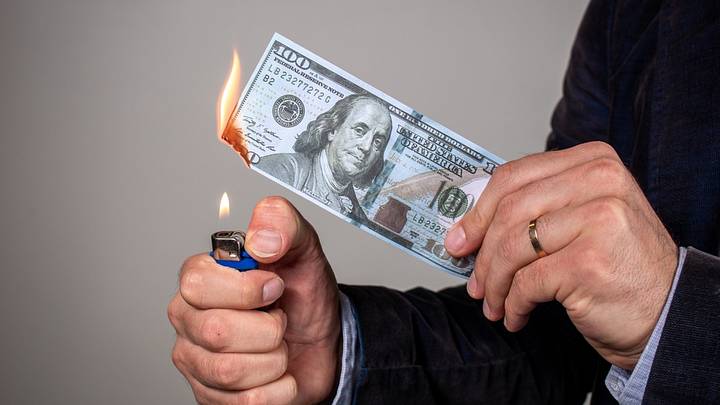
Most of us would probably much rather spend our hard-earned cash on groceries, gas, or a little treat these days rather than burn it. But if you ever find yourself tempted to set fire to your stack of Benjamins, maybe just donate them to a good cause instead, because yes: burning money is illegal in the United States.
Why is burning money illegal?

Money, it turns out, is pretty well-protected by federal law. Intentionally damaging any kind of bank-issued bill, note, or draft is illegal under Title 18, Section 333, a law that was passed in 1948 and that is, apparently, enforced by the Secret Service.
“Whoever mutilates, cuts, defaces, disfigures, or perforates, or unites or cements together, or does any other thing to any bank bill, draft, note, or other evidence of debt issued by any national banking association, or Federal Reserve bank, or the Federal Reserve System, with intent to render such bank bill, draft, note, or other evidence of debt unfit to be reissued, shall be fined under this title or imprisoned not more than six months, or both,” this law reads.
And while you may not give your pennies and dimes a second thought anymore, fraudulently damaging coins is also a federal crime. “Whoever fraudulently alters, defaces, mutilates, impairs, diminishes, falsifies, scales, or lightens any of the coins coined at the mints of the United States, or any foreign coins which are by law made current or are in actual use or circulation as money within the United States; or whoever fraudulently possesses, passes, utters, publishes, or sells, or attempts to pass, utter, publish, or sell, or brings into the United States, any such coin, knowing the same to be altered, defaced, mutilated, impaired, diminished, falsified, scaled, or lightened shall be fined under this title or imprisoned not more than five years, or both,” reads Title 18, Section 331.
Why is burning money illegal—and what happens if you do?

The reasoning behind these laws is that the Federal Reserve must pay to replace any money removed from circulation. It costs them around 5.5 cents to make a $1 bill, and 14 cents for a $100 bill, which is why they can’t have a bunch of citizens running around taking torches to their cash or sledgehammers to their quarters.
New cash is always in demand. The U.S. Bureau of Engraving and Printing makes up to 37 million notes each day that have a value of about $696 million, a figure that makes more sense when you learn that the typical dollar bill lasts just seven years.
Of course, the Secret Service isn’t likely to break down your door if you accidentally tear apart a $1 or if your $20 somehow gets tossed in your fireplace along with the kindling. It’s hard to trace money, after all. But just be careful, because if you do get caught, you could wind up with a fine or you could even spend up to six months behind bars. You’ll also, naturally, have even less money in your pocket to spend on legal fees.
More cold, hard facts about cash

It is also illegal to place any kind of advertisement on money and to cover any essential seals or stamps. But simply drawing on a bill actually is not illegal—though the Alexander Hamilton your toddler accidentally turned into an art project could be refused by banks. In general, damaged or altered bills that remain in circulation are usually eventually shredded by the Federal Reserve,.
If you do accidentally damage a bill, all is not lost. After all, the aforementioned laws only prosecute intentionally burning or destroying money. You can take potentially salvageable accidents to your local bank, where you might be able to get a replacement. For severely damaged bills, you'll want to contact the U.S. Bureau of Engraving and Printing directly for help with obtaining some fresh dough.