%20%20--%3E%0A%3Csvg%20version%3D%221.1%22%20id%3D%22Layer_1%22%20xmlns%3D%22http%3A%2F%2Fwww.w3.org%2F2000%2Fsvg%22%20xmlns%3Axlink%3D%22http%3A%2F%2Fwww.w3.org%2F1999%2Fxlink%22%20x%3D%220px%22%20y%3D%220px%22%0A%09%20viewBox%3D%220%200%20684.6%2068.1%22%20style%3D%22enable-background%3Anew%200%200%20684.6%2068.1%3B%22%20xml%3Aspace%3D%22preserve%22%3E%0A%3Cg%3E%0A%09%3Cpath%20d%3D%22M444.1%2C29.3h-17.4v14.5h17.4V29.3z%20M36.4%2C68.1l29.3-50.8V0H50.4L32.9%2C36.8L15.5%2C0H0v68.1h16.7V45.8l12.4%2C22.3H36.4z%0A%09%09%20M49.1%2C68.1h16.6V23.4L49.1%2C52.1V68.1z%20M76.6%2C68.1h45V53.8H93.3V41.6h21V27.1h-21V14.8h28.3V0.1h-45V68.1z%20M175.6%2C68.1h17.3v-68%0A%09%09h-16.5v40.3L150%2C0.1h-17.6v68h16.7V27.7L175.6%2C68.1z%20M235.8%2C14.8h15.4V0.1h-47.4v14.7H219v53.2h16.8V14.8z%20M290.3%2C45.9h-17.1%0A%09%09l7.5-15.6h2L290.3%2C45.9z%20M298.7%2C68.1h18l-32.2-68h-5.7l-32%2C68h18l3.3-7.1h27.1L298.7%2C68.1z%20M325.2%2C68.1h46.2V53.8h-29.6V0.1h-16.7%0A%09%09V68.1z%20M423.7%2C14.8h27.2V0.1H407v68h16.7V14.8z%20M462%2C68.1h46.2V53.8h-29.6V0.1H462V68.1z%20M564.8%2C34.1c0%2C10.7-7.2%2C19.2-18.5%2C19.2%0A%09%09c-11.4%2C0-18.5-8.5-18.5-19.2s7.1-19.2%2C18.5-19.2C557.6%2C14.9%2C564.8%2C23.4%2C564.8%2C34.1%20M580.6%2C34.1c0-19-14.2-34-34.3-34%0A%09%09c-20.2%2C0-34.3%2C15-34.3%2C34c0%2C19%2C14.1%2C34%2C34.3%2C34C566.4%2C68.1%2C580.6%2C53.1%2C580.6%2C34.1%20M604.8%2C20.5c0-4.1%2C3.3-6.2%2C6.7-6.2%0A%09%09c4.4%2C0%2C6.6%2C3%2C6.6%2C6.6h14.7C631.8%2C9.1%2C625.1%2C0.1%2C611%2C0.1c-12%2C0-21.7%2C9.3-21.7%2C20.6c0%2C10.9%2C5.9%2C15.9%2C16.7%2C19.8%0A%09%09c5.2%2C1.8%2C11.5%2C3.2%2C11.5%2C8c0%2C3.3-2.4%2C5.5-6.4%2C5.5c-3.6%2C0-6.6-3-6.6-6.7h-15.2c0%2C11.5%2C7.9%2C20.8%2C21.8%2C20.8c12%2C0%2C21.6-9.3%2C21.6-20.6%0A%09%09c0-10-5.3-16.4-16.7-19.8C610.6%2C26.1%2C604.8%2C25.3%2C604.8%2C20.5%20M670%2C20.9h14.7C683.8%2C9.1%2C677.1%2C0.1%2C663%2C0.1c-12%2C0-21.7%2C9.3-21.7%2C20.6%0A%09%09c0%2C10.9%2C5.9%2C15.9%2C16.7%2C19.8c5.2%2C1.8%2C11.5%2C3.2%2C11.5%2C8c0%2C3.3-2.4%2C5.5-6.4%2C5.5c-3.6%2C0-6.6-3-6.6-6.7h-15.2c0%2C11.5%2C7.9%2C20.8%2C21.8%2C20.8%0A%09%09c12%2C0%2C21.6-9.3%2C21.6-20.6c0-10-5.3-16.4-16.7-19.8c-5.4-1.6-11.3-2.4-11.3-7.2c0-4.1%2C3.3-6.2%2C6.7-6.2C667.7%2C14.4%2C670%2C17.3%2C670%2C20.9%0A%09%09%22%2F%3E%0A%3C%2Fg%3E%0A%3C%2Fsvg%3E%0A)

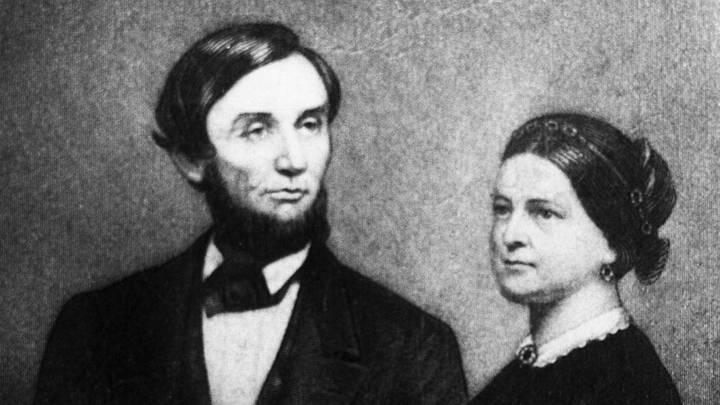
Mary Todd Lincoln experienced a great deal of grief in her life. She was not alone in that grief; the American Civil War resulted in the deaths of some 620,000 to 750,000 men by the end of the war, amounting to roughly 2% of the American population.
The extensive death that occurred during this time coincided with a rise in belief in spiritualism, a religious and philosophical movement based on the idea that the souls of the dead remain capable of making contact with the living.
Mary Todd Lincoln’s grief leads her to seances

Mary was among those who found comfort in spiritualism. Abraham Lincoln and his wife lost their young son Eddie in 1850, and their son Willie’s death from typhoid fever at age 11 in 1862 plunged both the Lincolns into deep grief. Following his death, Mary spent weeks isolated in her rooms. “He was his mother’s favorite child,” her seamstress wrote. “Mrs. Lincoln’s grief is inconsolable.”
Former First Lady Jane Pierce, who had lost children of her own, recommended that Mary consult with spiritualists who could help her reach Willie in the afterlife. Mary took her advice, and is believed to have hosted up to eight séances in the White House.
They seemed to be effective balms, at least for a time. “Willie Lives. He comes to me every night and stands at the foot of the bed with the same sweet adorable smile that he has always had. He does not always come alone,” Mary told her half-sister. “Little Eddie [her son who perished at the age of four] is sometimes with him.”
During these séances, which were held in the White House’s Red Room, Mary would sit in a circle with a spiritualist and some friends. All would clasp hands, and someone would play music designed to summon the ghosts. Usually, spiritualists employed various tricks and technologies to create tapping sounds and other noises in different parts of the room, and then claimed these were evidence of spirit activity.
After her husband’s death, Mary remained interested in spiritualism. She often hosted séances at her Chicago home and sought the services of William Mumler, a “spirit photographer” who created an image that appeared to show Lincoln’s spirit hovering above Mary.
Though widely regarded as fake, the former First Lady appeared to find it authentic and somewhat comforting. “A very slight veil separates us from the loved and lost,” she wrote in a letter concerning the image, “though unseen by us, they are very near.”
Mary’s son Robert, however, was not so accepting of his mother’s interests. He later used her employment of mediums as part of his evidence that she was insane, and was ultimately able to have her committed to an asylum, though she was released within a year. She went on to spend time in Europe and later returned to live with her sister, and never forgave Robert for his actions.
Abraham Lincoln and spiritualism

There is little evidence that Abraham Lincoln shared his wife’s beliefs in spiritualism. “He was no dabbler in divination, astrology, horoscopy, prophecy, ghostly lore, or witcheries of any sort,” a friend wrote of the president. However, in another letter to his friend Joshua Speed, Lincoln confessed, “I always did have a strong tendency to mysticism.”
He did deeply grieve his son, visiting his grave in Oak Hill Cemetery regularly. He may also have attended some of his wife’s séances, though he is said to have been more interested in the mechanisms the spiritualists used to conjure their illusions than in actual spirit activity.
Some spiritualists did warn Lincoln that he could potentially be assassinated, which was easy enough to intuit given the state of the nation at the time. When a friend warned the president of that danger, he is known to have replied, “Colchester has been telling me that.” Charles Colchester was a spiritualist who often visited Mary at the White House, and, eerily, he was also a friend of John Wilkes Booth, who did go on to assassinate Lincoln. Booth himself was also interested in spiritualism and attended numerous séances hosted by Colchester.
Interestingly, Abraham Lincoln remains perhaps the most commonly spotted ghost at the White House to this day, with numerous visitors claiming to have seen his spirit floating around its halls.
Meanwhile, interest in spiritualism began declining towards the end of the 19th century as prominent mediums were caught red-handed faking spirit activity, and some pioneers of the movement confessed to being charlatans. Still, it’s not hard to understand why, during a time plagued with so much death, so many people clung to hope that their loved ones might be waiting just beyond the veil.