%20%20--%3E%0A%3Csvg%20version%3D%221.1%22%20id%3D%22Layer_1%22%20xmlns%3D%22http%3A%2F%2Fwww.w3.org%2F2000%2Fsvg%22%20xmlns%3Axlink%3D%22http%3A%2F%2Fwww.w3.org%2F1999%2Fxlink%22%20x%3D%220px%22%20y%3D%220px%22%0A%09%20viewBox%3D%220%200%20684.6%2068.1%22%20style%3D%22enable-background%3Anew%200%200%20684.6%2068.1%3B%22%20xml%3Aspace%3D%22preserve%22%3E%0A%3Cg%3E%0A%09%3Cpath%20d%3D%22M444.1%2C29.3h-17.4v14.5h17.4V29.3z%20M36.4%2C68.1l29.3-50.8V0H50.4L32.9%2C36.8L15.5%2C0H0v68.1h16.7V45.8l12.4%2C22.3H36.4z%0A%09%09%20M49.1%2C68.1h16.6V23.4L49.1%2C52.1V68.1z%20M76.6%2C68.1h45V53.8H93.3V41.6h21V27.1h-21V14.8h28.3V0.1h-45V68.1z%20M175.6%2C68.1h17.3v-68%0A%09%09h-16.5v40.3L150%2C0.1h-17.6v68h16.7V27.7L175.6%2C68.1z%20M235.8%2C14.8h15.4V0.1h-47.4v14.7H219v53.2h16.8V14.8z%20M290.3%2C45.9h-17.1%0A%09%09l7.5-15.6h2L290.3%2C45.9z%20M298.7%2C68.1h18l-32.2-68h-5.7l-32%2C68h18l3.3-7.1h27.1L298.7%2C68.1z%20M325.2%2C68.1h46.2V53.8h-29.6V0.1h-16.7%0A%09%09V68.1z%20M423.7%2C14.8h27.2V0.1H407v68h16.7V14.8z%20M462%2C68.1h46.2V53.8h-29.6V0.1H462V68.1z%20M564.8%2C34.1c0%2C10.7-7.2%2C19.2-18.5%2C19.2%0A%09%09c-11.4%2C0-18.5-8.5-18.5-19.2s7.1-19.2%2C18.5-19.2C557.6%2C14.9%2C564.8%2C23.4%2C564.8%2C34.1%20M580.6%2C34.1c0-19-14.2-34-34.3-34%0A%09%09c-20.2%2C0-34.3%2C15-34.3%2C34c0%2C19%2C14.1%2C34%2C34.3%2C34C566.4%2C68.1%2C580.6%2C53.1%2C580.6%2C34.1%20M604.8%2C20.5c0-4.1%2C3.3-6.2%2C6.7-6.2%0A%09%09c4.4%2C0%2C6.6%2C3%2C6.6%2C6.6h14.7C631.8%2C9.1%2C625.1%2C0.1%2C611%2C0.1c-12%2C0-21.7%2C9.3-21.7%2C20.6c0%2C10.9%2C5.9%2C15.9%2C16.7%2C19.8%0A%09%09c5.2%2C1.8%2C11.5%2C3.2%2C11.5%2C8c0%2C3.3-2.4%2C5.5-6.4%2C5.5c-3.6%2C0-6.6-3-6.6-6.7h-15.2c0%2C11.5%2C7.9%2C20.8%2C21.8%2C20.8c12%2C0%2C21.6-9.3%2C21.6-20.6%0A%09%09c0-10-5.3-16.4-16.7-19.8C610.6%2C26.1%2C604.8%2C25.3%2C604.8%2C20.5%20M670%2C20.9h14.7C683.8%2C9.1%2C677.1%2C0.1%2C663%2C0.1c-12%2C0-21.7%2C9.3-21.7%2C20.6%0A%09%09c0%2C10.9%2C5.9%2C15.9%2C16.7%2C19.8c5.2%2C1.8%2C11.5%2C3.2%2C11.5%2C8c0%2C3.3-2.4%2C5.5-6.4%2C5.5c-3.6%2C0-6.6-3-6.6-6.7h-15.2c0%2C11.5%2C7.9%2C20.8%2C21.8%2C20.8%0A%09%09c12%2C0%2C21.6-9.3%2C21.6-20.6c0-10-5.3-16.4-16.7-19.8c-5.4-1.6-11.3-2.4-11.3-7.2c0-4.1%2C3.3-6.2%2C6.7-6.2C667.7%2C14.4%2C670%2C17.3%2C670%2C20.9%0A%09%09%22%2F%3E%0A%3C%2Fg%3E%0A%3C%2Fsvg%3E%0A)

In 2008, a bear in North Macedonia was convicted for stealing honey from a beekeeper, who in turn received financial compensation from the state.
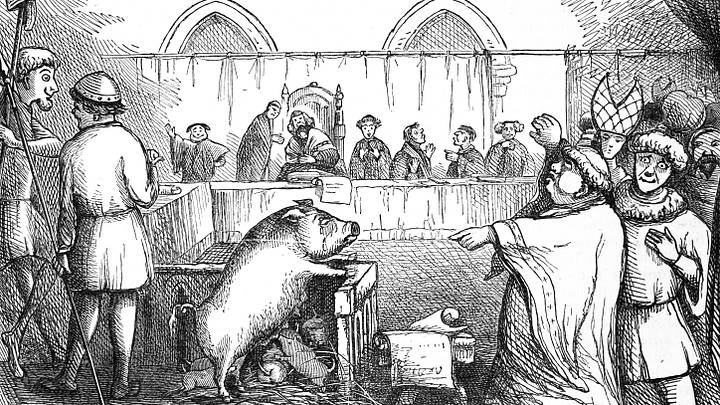
Once upon a time, such court cases were not uncommon. Legal records show that between the late Middle Ages and early Enlightenment, various European countries prosecuted and punished animals just as they would human culprits. But why?
The most comprehensive overview of this topic, E.P. Evans’ Chronological List of the Prosecution of Animals from the Ninth to the Twentieth Century, mentions close to 200 cases. The menagerie of species that has stood before a judge includes dogs, horses, roosters, and pigs.
Pigs Got Into the Most Legal Trouble

Being indiscriminate omnivores, pigs seem to have gotten into legal trouble more often than other animals. In 1386, the French city of Falaise sentenced a pig who “had indulged in the evil propensity of eating infants.” And nearly a century later, a pig in Savigny was accused killing a 5-year-old boy.
Compared to these pigs, the Macedonian bear —which fled the crime scene before it could be apprehended —got off easy. Brought to court wearing a jacket and gloves, the Falaise pig was mutilated in its face and legs, mirroring the injuries found on the infant, and hanged. As was common in Burgundy, the Savigny pig was hung by its hind legs.
For decades, historians have wondered what purpose these animal trials served. The popular notion that this practice arose from medieval superstition is questionable since, as mentioned, it continued well into the Enlightenment. The fact that these trials occurred across different cultures and belief systems also suggests a different explanation.
Different Explanations By Culture

The Austrian historian Peter Dinzelbacher has argued that animal trials strengthened Europe’s justice system during “an epoch of crisis, when extreme measures to ensure law and order were held to be necessary.” According to this argument, trials were held because they “created the impression that the authorities were assiduously maintaining law and order in a cooperative and decided manner, even if the delinquents were not human beings.”
The same, American economist Peter T. Leeson has suggested, could be true of ecclesiastical animal trials in which church officials prosecuted pests like mice and locusts. As with secular animal trials, these proceedings were official and orderly: the animals were granted legal representation and three opportunities to show up in court to plead their case, with their inevitable failure to do so resulting in excommunication.
Echoing Dinzelbacher, Leeson argues these trials were less about neutralizing a threat or delivering justice than “bolstering citizens’ belief in the validity of Church punishments.” The trials, he continues, reminded people “the Church’s imprecations were real, which allowed ecclesiastics to reclaim jeopardized tithe revenue.”
Though at a glance absurd and archaic, animal trials may have served a rather rational purpose, explaining why they continued long after the Middle Ages had come to a close.