%20%20--%3E%0A%3Csvg%20version%3D%221.1%22%20id%3D%22Layer_1%22%20xmlns%3D%22http%3A%2F%2Fwww.w3.org%2F2000%2Fsvg%22%20xmlns%3Axlink%3D%22http%3A%2F%2Fwww.w3.org%2F1999%2Fxlink%22%20x%3D%220px%22%20y%3D%220px%22%0A%09%20viewBox%3D%220%200%20684.6%2068.1%22%20style%3D%22enable-background%3Anew%200%200%20684.6%2068.1%3B%22%20xml%3Aspace%3D%22preserve%22%3E%0A%3Cg%3E%0A%09%3Cpath%20d%3D%22M444.1%2C29.3h-17.4v14.5h17.4V29.3z%20M36.4%2C68.1l29.3-50.8V0H50.4L32.9%2C36.8L15.5%2C0H0v68.1h16.7V45.8l12.4%2C22.3H36.4z%0A%09%09%20M49.1%2C68.1h16.6V23.4L49.1%2C52.1V68.1z%20M76.6%2C68.1h45V53.8H93.3V41.6h21V27.1h-21V14.8h28.3V0.1h-45V68.1z%20M175.6%2C68.1h17.3v-68%0A%09%09h-16.5v40.3L150%2C0.1h-17.6v68h16.7V27.7L175.6%2C68.1z%20M235.8%2C14.8h15.4V0.1h-47.4v14.7H219v53.2h16.8V14.8z%20M290.3%2C45.9h-17.1%0A%09%09l7.5-15.6h2L290.3%2C45.9z%20M298.7%2C68.1h18l-32.2-68h-5.7l-32%2C68h18l3.3-7.1h27.1L298.7%2C68.1z%20M325.2%2C68.1h46.2V53.8h-29.6V0.1h-16.7%0A%09%09V68.1z%20M423.7%2C14.8h27.2V0.1H407v68h16.7V14.8z%20M462%2C68.1h46.2V53.8h-29.6V0.1H462V68.1z%20M564.8%2C34.1c0%2C10.7-7.2%2C19.2-18.5%2C19.2%0A%09%09c-11.4%2C0-18.5-8.5-18.5-19.2s7.1-19.2%2C18.5-19.2C557.6%2C14.9%2C564.8%2C23.4%2C564.8%2C34.1%20M580.6%2C34.1c0-19-14.2-34-34.3-34%0A%09%09c-20.2%2C0-34.3%2C15-34.3%2C34c0%2C19%2C14.1%2C34%2C34.3%2C34C566.4%2C68.1%2C580.6%2C53.1%2C580.6%2C34.1%20M604.8%2C20.5c0-4.1%2C3.3-6.2%2C6.7-6.2%0A%09%09c4.4%2C0%2C6.6%2C3%2C6.6%2C6.6h14.7C631.8%2C9.1%2C625.1%2C0.1%2C611%2C0.1c-12%2C0-21.7%2C9.3-21.7%2C20.6c0%2C10.9%2C5.9%2C15.9%2C16.7%2C19.8%0A%09%09c5.2%2C1.8%2C11.5%2C3.2%2C11.5%2C8c0%2C3.3-2.4%2C5.5-6.4%2C5.5c-3.6%2C0-6.6-3-6.6-6.7h-15.2c0%2C11.5%2C7.9%2C20.8%2C21.8%2C20.8c12%2C0%2C21.6-9.3%2C21.6-20.6%0A%09%09c0-10-5.3-16.4-16.7-19.8C610.6%2C26.1%2C604.8%2C25.3%2C604.8%2C20.5%20M670%2C20.9h14.7C683.8%2C9.1%2C677.1%2C0.1%2C663%2C0.1c-12%2C0-21.7%2C9.3-21.7%2C20.6%0A%09%09c0%2C10.9%2C5.9%2C15.9%2C16.7%2C19.8c5.2%2C1.8%2C11.5%2C3.2%2C11.5%2C8c0%2C3.3-2.4%2C5.5-6.4%2C5.5c-3.6%2C0-6.6-3-6.6-6.7h-15.2c0%2C11.5%2C7.9%2C20.8%2C21.8%2C20.8%0A%09%09c12%2C0%2C21.6-9.3%2C21.6-20.6c0-10-5.3-16.4-16.7-19.8c-5.4-1.6-11.3-2.4-11.3-7.2c0-4.1%2C3.3-6.2%2C6.7-6.2C667.7%2C14.4%2C670%2C17.3%2C670%2C20.9%0A%09%09%22%2F%3E%0A%3C%2Fg%3E%0A%3C%2Fsvg%3E%0A)

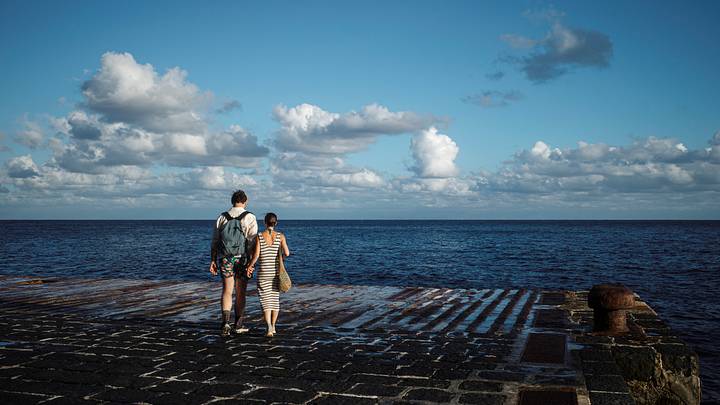
Weddings are incredibly stressful, no matter how much you love your future spouse. So, it's nice to have a getaway for just the two of you afterwards. Taking a vacation after becoming an officially wed couple has been a tradition that's lasted for centuries, though the idea of it being romantic is a more modern invention. But why do we call that trip a honeymoon?
There are a few different explanations for why 'honeymoon' is used to describe a newlywed holiday, or just the time in which a couple is completely wrapped up in each other. One reason ties into the ancient practice of bride kidnapping, and the other relates to a Pagan wedding ritual. Either way, the word 'honeymoon' has existed since the fifth century.

Honeymoon Hideaway
The first use of the word 'honeymoon' in English was in the mid-1500s, but the term came from the ancient Norse word “hjunottsmanathr,” which has two meanings: "honey month" and "in hiding." The hiding definition described the act of bride kidnapping, where a man captured a woman to take her as a wife. They would hide long enough for the bride's family to give up searching, or until she was pregnant.
Some scholars, like Samuel Johnson in his Dictionary, have suggested that the "honey month" definition describes the sweetness of the first month of marriage. Others, such as Richard Huloet, believed that "hjunottsmanathr" was better translated as "honeymoon," and that it meant that, like the moon, love wanes after a month or so.

Honey Mead Tradition
Whether "honeymoon" or "honey month" was related to the tenderness of new love or waning love by the 1500s, the tradition of the honeymoon is much older. In the fifth century, honey mead was given as a wedding gift for the bride and groom. There would be enough for one lunar cycle, or one month, and the couple was to drink the mead each day for the entire month.
Drinking honey mead for a month was said to bless the new couple and increase fertility. It was an ancient Pagan ritual, but some modern Pagans still pay homage to their forebears by having a toast of honey mead at weddings. In any case, this meaning aligns with the timeline of the Norse "hjunottsmanathr" and could have been used in the hope that a kidnapped bride would become pregnant sooner. So, both "honey month" and "in hiding" can be tied to the sweet alcohol.

From a Phase to a Trip
When first celebrated, a honeymoon just meant the first month of marriage. Over time, the meaning changed to be an indeterminate amount of time when the couple is still enamored with each other. That's why we describe that time as the "honeymoon phase." It wasn't until the 1800s that 'honeymoon' began to be associated with a trip or vacation.
After a wedding in the Victorian era, the bride and groom would go on a "bridal tour" to visit family and friends who couldn't attend the nuptials. These tours coincided with the honeymoon phase, so the word began to refer to a couple's trip. Then, with the invention of cars, trains, and planes, couples were able to travel farther, and the meaning of honeymoon circled back to "in hiding." Now, newlyweds take a honeymoon trip to hide away from the stressors of life and spend intimate time together.