%20%20--%3E%0A%3Csvg%20version%3D%221.1%22%20id%3D%22Layer_1%22%20xmlns%3D%22http%3A%2F%2Fwww.w3.org%2F2000%2Fsvg%22%20xmlns%3Axlink%3D%22http%3A%2F%2Fwww.w3.org%2F1999%2Fxlink%22%20x%3D%220px%22%20y%3D%220px%22%0A%09%20viewBox%3D%220%200%20684.6%2068.1%22%20style%3D%22enable-background%3Anew%200%200%20684.6%2068.1%3B%22%20xml%3Aspace%3D%22preserve%22%3E%0A%3Cg%3E%0A%09%3Cpath%20d%3D%22M444.1%2C29.3h-17.4v14.5h17.4V29.3z%20M36.4%2C68.1l29.3-50.8V0H50.4L32.9%2C36.8L15.5%2C0H0v68.1h16.7V45.8l12.4%2C22.3H36.4z%0A%09%09%20M49.1%2C68.1h16.6V23.4L49.1%2C52.1V68.1z%20M76.6%2C68.1h45V53.8H93.3V41.6h21V27.1h-21V14.8h28.3V0.1h-45V68.1z%20M175.6%2C68.1h17.3v-68%0A%09%09h-16.5v40.3L150%2C0.1h-17.6v68h16.7V27.7L175.6%2C68.1z%20M235.8%2C14.8h15.4V0.1h-47.4v14.7H219v53.2h16.8V14.8z%20M290.3%2C45.9h-17.1%0A%09%09l7.5-15.6h2L290.3%2C45.9z%20M298.7%2C68.1h18l-32.2-68h-5.7l-32%2C68h18l3.3-7.1h27.1L298.7%2C68.1z%20M325.2%2C68.1h46.2V53.8h-29.6V0.1h-16.7%0A%09%09V68.1z%20M423.7%2C14.8h27.2V0.1H407v68h16.7V14.8z%20M462%2C68.1h46.2V53.8h-29.6V0.1H462V68.1z%20M564.8%2C34.1c0%2C10.7-7.2%2C19.2-18.5%2C19.2%0A%09%09c-11.4%2C0-18.5-8.5-18.5-19.2s7.1-19.2%2C18.5-19.2C557.6%2C14.9%2C564.8%2C23.4%2C564.8%2C34.1%20M580.6%2C34.1c0-19-14.2-34-34.3-34%0A%09%09c-20.2%2C0-34.3%2C15-34.3%2C34c0%2C19%2C14.1%2C34%2C34.3%2C34C566.4%2C68.1%2C580.6%2C53.1%2C580.6%2C34.1%20M604.8%2C20.5c0-4.1%2C3.3-6.2%2C6.7-6.2%0A%09%09c4.4%2C0%2C6.6%2C3%2C6.6%2C6.6h14.7C631.8%2C9.1%2C625.1%2C0.1%2C611%2C0.1c-12%2C0-21.7%2C9.3-21.7%2C20.6c0%2C10.9%2C5.9%2C15.9%2C16.7%2C19.8%0A%09%09c5.2%2C1.8%2C11.5%2C3.2%2C11.5%2C8c0%2C3.3-2.4%2C5.5-6.4%2C5.5c-3.6%2C0-6.6-3-6.6-6.7h-15.2c0%2C11.5%2C7.9%2C20.8%2C21.8%2C20.8c12%2C0%2C21.6-9.3%2C21.6-20.6%0A%09%09c0-10-5.3-16.4-16.7-19.8C610.6%2C26.1%2C604.8%2C25.3%2C604.8%2C20.5%20M670%2C20.9h14.7C683.8%2C9.1%2C677.1%2C0.1%2C663%2C0.1c-12%2C0-21.7%2C9.3-21.7%2C20.6%0A%09%09c0%2C10.9%2C5.9%2C15.9%2C16.7%2C19.8c5.2%2C1.8%2C11.5%2C3.2%2C11.5%2C8c0%2C3.3-2.4%2C5.5-6.4%2C5.5c-3.6%2C0-6.6-3-6.6-6.7h-15.2c0%2C11.5%2C7.9%2C20.8%2C21.8%2C20.8%0A%09%09c12%2C0%2C21.6-9.3%2C21.6-20.6c0-10-5.3-16.4-16.7-19.8c-5.4-1.6-11.3-2.4-11.3-7.2c0-4.1%2C3.3-6.2%2C6.7-6.2C667.7%2C14.4%2C670%2C17.3%2C670%2C20.9%0A%09%09%22%2F%3E%0A%3C%2Fg%3E%0A%3C%2Fsvg%3E%0A)

Though many tall tales have been written over the years, John Chapman was an ordinary man before he covered the country in apple trees.
Miles and miles of bountiful nurseries once blanketed the Midwest and Mid-Atlantic, all thanks to one “Johnny Appleseed.” But we're getting ahead of ourselves.
Let’s walk the great frontier alongside John Chapman to discover the (literal) fruits of his labor, learn how he earned the nickname Johnny Appleseed, and separate fact from legend.
JOHNNY'S JOURNEY

Born in Leominster, Massachusetts, in 1774, Chapman was the son of a farmer, carpenter, and Revolutionary War soldier who fought at the Battle of Bunker Hill. His father, a man of many trades, was widowed when Chapman was just two years old, later remarrying and adding a stepmother and a slew of half-siblings to the family.
At 18, Johnny headed west with his stepbrother Nathaniel. The country was expanding, and many Americans packed up their wagons in search of land and prosperity, setting their sights on territories inhabited by Native Americans. The siblings settled in Western Pennsylvania, where Chapman tended his first orchard. After a few years, Nathaniel left to help their father farm the family’s new homestead in Ohio, while Johnny set off again, this time with a bag of apple seeds.
JOHNNY APPLESEED
He continued west on his own, walking through unfamiliar land that would one day become settlements, intentionally planting apple seeds and thus earning the nickname Johnny Appleseed. Thousands of apple trees sprouted across the country, providing settlers with food as they endured harsh and sometimes unrelenting conditions. His humanitarian efforts didn’t stop there: he even warned settlers of Native American attacks during the War of 1812.
Chapman pushed further west, tilling, planting seeds, tending the soil, and eventually selling the land, proving a successful business model that made him very wealthy. Rather than leaving tracks, he left nurseries full of apple trees (their produce later fermented into cider). As word spread, settlers welcomed Chapman into their homes, though it’s said he often refused, preferring to sleep among the trees.
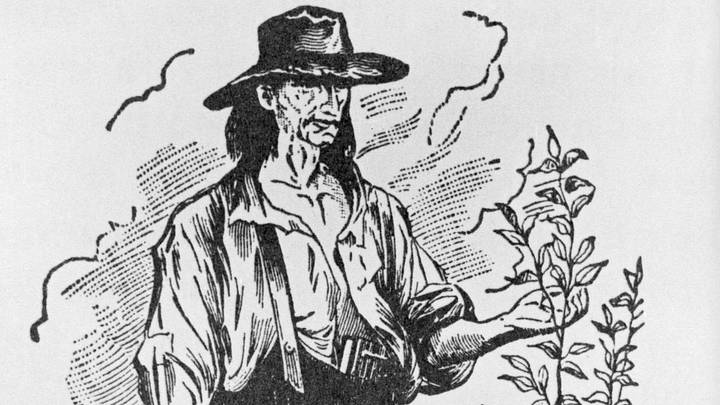
During his visits to these settlements, he preached from the Bible, adding missionary to his list of vocations. Over time, settlers who encountered Chapman recalled interesting details about his physical appearance, though none have been confirmed. Some claimed he wore garments fashioned from coffee sacks, a pan hat, and no shoes. This is how he is depicted in Disney's American Legends.
In 1842, the frontiersman returned to Ohio and moved in with his old companion, Nathaniel. He passed away three years later while visiting a friend in Indiana. Today, a memorial stone with his name sits in Fort Wayne.
Whether filling stomachs with his apple trees or warning families of danger, Johnny Appleseed remains an American legend. He devoted over 50 years of his life (passing at age 71) to living off the land, preaching the word of God, and helping others.