%20%20--%3E%0A%3Csvg%20version%3D%221.1%22%20id%3D%22Layer_1%22%20xmlns%3D%22http%3A%2F%2Fwww.w3.org%2F2000%2Fsvg%22%20xmlns%3Axlink%3D%22http%3A%2F%2Fwww.w3.org%2F1999%2Fxlink%22%20x%3D%220px%22%20y%3D%220px%22%0A%09%20viewBox%3D%220%200%20684.6%2068.1%22%20style%3D%22enable-background%3Anew%200%200%20684.6%2068.1%3B%22%20xml%3Aspace%3D%22preserve%22%3E%0A%3Cg%3E%0A%09%3Cpath%20d%3D%22M444.1%2C29.3h-17.4v14.5h17.4V29.3z%20M36.4%2C68.1l29.3-50.8V0H50.4L32.9%2C36.8L15.5%2C0H0v68.1h16.7V45.8l12.4%2C22.3H36.4z%0A%09%09%20M49.1%2C68.1h16.6V23.4L49.1%2C52.1V68.1z%20M76.6%2C68.1h45V53.8H93.3V41.6h21V27.1h-21V14.8h28.3V0.1h-45V68.1z%20M175.6%2C68.1h17.3v-68%0A%09%09h-16.5v40.3L150%2C0.1h-17.6v68h16.7V27.7L175.6%2C68.1z%20M235.8%2C14.8h15.4V0.1h-47.4v14.7H219v53.2h16.8V14.8z%20M290.3%2C45.9h-17.1%0A%09%09l7.5-15.6h2L290.3%2C45.9z%20M298.7%2C68.1h18l-32.2-68h-5.7l-32%2C68h18l3.3-7.1h27.1L298.7%2C68.1z%20M325.2%2C68.1h46.2V53.8h-29.6V0.1h-16.7%0A%09%09V68.1z%20M423.7%2C14.8h27.2V0.1H407v68h16.7V14.8z%20M462%2C68.1h46.2V53.8h-29.6V0.1H462V68.1z%20M564.8%2C34.1c0%2C10.7-7.2%2C19.2-18.5%2C19.2%0A%09%09c-11.4%2C0-18.5-8.5-18.5-19.2s7.1-19.2%2C18.5-19.2C557.6%2C14.9%2C564.8%2C23.4%2C564.8%2C34.1%20M580.6%2C34.1c0-19-14.2-34-34.3-34%0A%09%09c-20.2%2C0-34.3%2C15-34.3%2C34c0%2C19%2C14.1%2C34%2C34.3%2C34C566.4%2C68.1%2C580.6%2C53.1%2C580.6%2C34.1%20M604.8%2C20.5c0-4.1%2C3.3-6.2%2C6.7-6.2%0A%09%09c4.4%2C0%2C6.6%2C3%2C6.6%2C6.6h14.7C631.8%2C9.1%2C625.1%2C0.1%2C611%2C0.1c-12%2C0-21.7%2C9.3-21.7%2C20.6c0%2C10.9%2C5.9%2C15.9%2C16.7%2C19.8%0A%09%09c5.2%2C1.8%2C11.5%2C3.2%2C11.5%2C8c0%2C3.3-2.4%2C5.5-6.4%2C5.5c-3.6%2C0-6.6-3-6.6-6.7h-15.2c0%2C11.5%2C7.9%2C20.8%2C21.8%2C20.8c12%2C0%2C21.6-9.3%2C21.6-20.6%0A%09%09c0-10-5.3-16.4-16.7-19.8C610.6%2C26.1%2C604.8%2C25.3%2C604.8%2C20.5%20M670%2C20.9h14.7C683.8%2C9.1%2C677.1%2C0.1%2C663%2C0.1c-12%2C0-21.7%2C9.3-21.7%2C20.6%0A%09%09c0%2C10.9%2C5.9%2C15.9%2C16.7%2C19.8c5.2%2C1.8%2C11.5%2C3.2%2C11.5%2C8c0%2C3.3-2.4%2C5.5-6.4%2C5.5c-3.6%2C0-6.6-3-6.6-6.7h-15.2c0%2C11.5%2C7.9%2C20.8%2C21.8%2C20.8%0A%09%09c12%2C0%2C21.6-9.3%2C21.6-20.6c0-10-5.3-16.4-16.7-19.8c-5.4-1.6-11.3-2.4-11.3-7.2c0-4.1%2C3.3-6.2%2C6.7-6.2C667.7%2C14.4%2C670%2C17.3%2C670%2C20.9%0A%09%09%22%2F%3E%0A%3C%2Fg%3E%0A%3C%2Fsvg%3E%0A)

Although Greek mythology is teeming with otherworldly gods and monsters, some are almost too mindbogglingly weird to even begin to imagine. From shapeshifting she-devils to birdlike beings armed with the power of irresistible song, these are some of the strangest, most outlandish creatures that make appearances in Greek myth.
The Graeae

Also known as the Grey Sisters, the Graeae are a trio of wizened sisters who share a single tooth and eye between the three of them. Daughters of Ceto and Phorcys, a pair of primordial sea deities, the Graeae are sisters of the Gorgons, another trio of daimonic creatures that appear in Hesiod’s Theogony.
Named Enyo, Deino, and Pemphredo, the Graeae were born old, described as appearing aged and gray-haired from the moment they came into being. Often depicted as having oracle-like powers, the hero Perseus once stole the Graeae’s shared eye to blackmail them into revealing the location of and means to kill their Gorgon sister, Medusa.
The Graeae are also considered to be a source of inspiration for William Shakespeare’s Weird Sisters, a prophetic trio of witches that appear at the beginning of Macbeth.
Empusae
Servants of Hecate, the mysterious Greek goddess of witchcraft, the Empusae are shape-shifting demons described by playwright Aristophanes as having the torso of a woman joined by a mismatched set of legs: one belonging to a donkey, and the other made entirely of bronze.
Often described as assuming the mixed characteristics of a dog, a woman, a donkey, and a bull, the empusa’s constantly shifting appearance makes her difficult to imagine. Sometimes described as having hair of flames, the empusae make appearances in ancient Greek works like Aristophanes’s The Frogs and Philostratus’s Life of Apollonius.
Often associated with lamiai, essentially the ancient Greek equivalent of a vampire, the empusae are widely considered to be the progenitors of a plethora of other “daimons” (evil, otherworldly spirits) in Greek myth.
More From Greek Mythology:
Sphinx

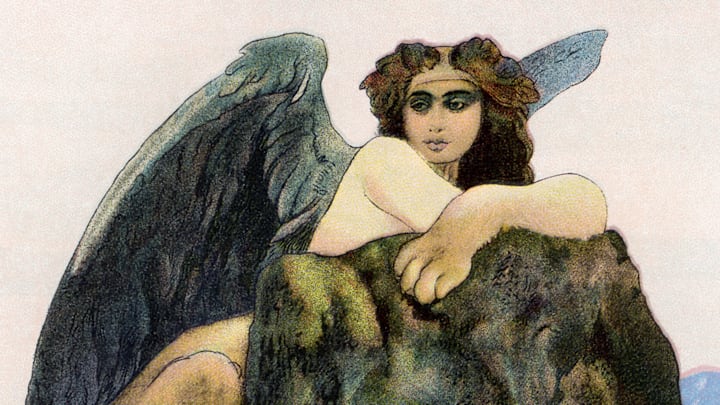
Though many of us are accustomed to seeing the Egyptian depiction of the sphinx, the Greek iteration of the beast varies slightly from its Egyptian counterpart.
Whereas the Egyptian depiction of the beast typically utilizes a man’s head fused to a feline body, the Greek interpretation customarily used a woman’s head attached to the haunches of a lion, complete with avian wings. While the Egyptian sphinx was often seen as a royal symbol of strength and wisdom, the Greek sphinx is described as cunning, manipulative, and punishing.
Featured most prominently in Sophocles’s Oedipus Rex, the Greek sphinx was sent by Hera as a punishment for the city of Thebes, devouring anyone who attempted to enter the city without correctly guessing her cryptic riddle. In Sophocles’s play, the sphinx commits suicide after the work’s titular protagonist is able to solve her riddle.
Stymphalian Birds

The focus of the sixth of Hercules’s twelve labors, the Stymphalian birds were a gaggle of man-eating, bronze-beaked birds said to plague a swamp near Stymphalus in ancient Arcadia.
Complete with bronze feathers that shot from their bodies like arrows, Hercules enlisted the help of Athena, the Greek goddess of wisdom, to overcome the birds. Using a specially crafted rattle given to him by the goddess, Hercules was able to scare the birds from their nests and shoot them out of the sky using a bow and arrow.
Though Hercules was able to kill many of the Stymphalian birds, several were able to escape the famed Greek hero and settled on an island in the Black Sea, where they later clashed with Jason and the Argonauts in Apollonius Rhodius’s Argonautica.
Scylla

Born a naiad (water spirit), Scylla was transformed into a ferocious six-headed sea monster by the goddess Circe, an enchantress, in a fit of jealousy.
After Scylla found herself the object of affection of another sea god, Glaucus, Circe grew jealous of Scylla and decided to poison her waters to transform her into a beast described as having multiple dog-like heads, rows of razor-sharp teeth, and 12 misshapen feet.
Following her monstrous transformation, Scylla retreated to a cave in the Strait of Messina, where she grew notorious for destroying passing ships, devouring their passengers. On the other side of the strait lay Charybdis, another sea monster known to devour sailors, rendering the Strait of Messina one of the most treacherous in the region.
In Homer’s Odyssey, the naiad turned sea monster faces off with the hero Odysseus, picking off a few of his men while he sails through her waters. Though Odysseus loses half a dozen men sailing by Scylla, he passes by her cave on the advice of Circe, who said Odysseus had no chance of escaping Charybdis’s whirlpool.
The Sirens

Inhabiting a series of small islands called the Sirenum Scopuli, the sirens are a flock of bird-like creatures featuring the head of a woman fused to an avian body. From their craggy shores, the sirens were notorious for their beautiful singing voices, using them to lure unsuspecting sailors to their shores, where they’d invariably wreck and meet their demise.
Said to sing of forbidden knowledge, the sirens made an appearance in Homer’s Odyssey when Odysseus, eager to learn their secrets, sailed past them on his journey home to Ithaca. After securely tying himself to the mast of his ship, Odysseus ordered his crew to plug their ears with beeswax before sailing past the sirens so he could hear their song and live to tell the tale.
The sirens make another appearance in the Argonautica when Jason and his crew pass by them on their journey to recover the Golden Fleece. Unlike Odysseus’s crew, Jason’s men did not need to plug their ears while passing the island, instead relying on their comrade Orpheus’s loud lyre playing to drown out their alluring song.
You May Also Like:
Add Mental Floss as a preferred news source!