%20%20--%3E%0A%3Csvg%20version%3D%221.1%22%20id%3D%22Layer_1%22%20xmlns%3D%22http%3A%2F%2Fwww.w3.org%2F2000%2Fsvg%22%20xmlns%3Axlink%3D%22http%3A%2F%2Fwww.w3.org%2F1999%2Fxlink%22%20x%3D%220px%22%20y%3D%220px%22%0A%09%20viewBox%3D%220%200%20684.6%2068.1%22%20style%3D%22enable-background%3Anew%200%200%20684.6%2068.1%3B%22%20xml%3Aspace%3D%22preserve%22%3E%0A%3Cg%3E%0A%09%3Cpath%20d%3D%22M444.1%2C29.3h-17.4v14.5h17.4V29.3z%20M36.4%2C68.1l29.3-50.8V0H50.4L32.9%2C36.8L15.5%2C0H0v68.1h16.7V45.8l12.4%2C22.3H36.4z%0A%09%09%20M49.1%2C68.1h16.6V23.4L49.1%2C52.1V68.1z%20M76.6%2C68.1h45V53.8H93.3V41.6h21V27.1h-21V14.8h28.3V0.1h-45V68.1z%20M175.6%2C68.1h17.3v-68%0A%09%09h-16.5v40.3L150%2C0.1h-17.6v68h16.7V27.7L175.6%2C68.1z%20M235.8%2C14.8h15.4V0.1h-47.4v14.7H219v53.2h16.8V14.8z%20M290.3%2C45.9h-17.1%0A%09%09l7.5-15.6h2L290.3%2C45.9z%20M298.7%2C68.1h18l-32.2-68h-5.7l-32%2C68h18l3.3-7.1h27.1L298.7%2C68.1z%20M325.2%2C68.1h46.2V53.8h-29.6V0.1h-16.7%0A%09%09V68.1z%20M423.7%2C14.8h27.2V0.1H407v68h16.7V14.8z%20M462%2C68.1h46.2V53.8h-29.6V0.1H462V68.1z%20M564.8%2C34.1c0%2C10.7-7.2%2C19.2-18.5%2C19.2%0A%09%09c-11.4%2C0-18.5-8.5-18.5-19.2s7.1-19.2%2C18.5-19.2C557.6%2C14.9%2C564.8%2C23.4%2C564.8%2C34.1%20M580.6%2C34.1c0-19-14.2-34-34.3-34%0A%09%09c-20.2%2C0-34.3%2C15-34.3%2C34c0%2C19%2C14.1%2C34%2C34.3%2C34C566.4%2C68.1%2C580.6%2C53.1%2C580.6%2C34.1%20M604.8%2C20.5c0-4.1%2C3.3-6.2%2C6.7-6.2%0A%09%09c4.4%2C0%2C6.6%2C3%2C6.6%2C6.6h14.7C631.8%2C9.1%2C625.1%2C0.1%2C611%2C0.1c-12%2C0-21.7%2C9.3-21.7%2C20.6c0%2C10.9%2C5.9%2C15.9%2C16.7%2C19.8%0A%09%09c5.2%2C1.8%2C11.5%2C3.2%2C11.5%2C8c0%2C3.3-2.4%2C5.5-6.4%2C5.5c-3.6%2C0-6.6-3-6.6-6.7h-15.2c0%2C11.5%2C7.9%2C20.8%2C21.8%2C20.8c12%2C0%2C21.6-9.3%2C21.6-20.6%0A%09%09c0-10-5.3-16.4-16.7-19.8C610.6%2C26.1%2C604.8%2C25.3%2C604.8%2C20.5%20M670%2C20.9h14.7C683.8%2C9.1%2C677.1%2C0.1%2C663%2C0.1c-12%2C0-21.7%2C9.3-21.7%2C20.6%0A%09%09c0%2C10.9%2C5.9%2C15.9%2C16.7%2C19.8c5.2%2C1.8%2C11.5%2C3.2%2C11.5%2C8c0%2C3.3-2.4%2C5.5-6.4%2C5.5c-3.6%2C0-6.6-3-6.6-6.7h-15.2c0%2C11.5%2C7.9%2C20.8%2C21.8%2C20.8%0A%09%09c12%2C0%2C21.6-9.3%2C21.6-20.6c0-10-5.3-16.4-16.7-19.8c-5.4-1.6-11.3-2.4-11.3-7.2c0-4.1%2C3.3-6.2%2C6.7-6.2C667.7%2C14.4%2C670%2C17.3%2C670%2C20.9%0A%09%09%22%2F%3E%0A%3C%2Fg%3E%0A%3C%2Fsvg%3E%0A)

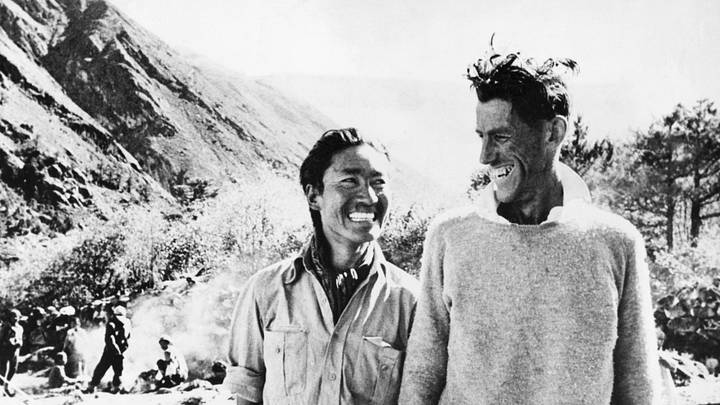
On May 29, 1953, Sherpa mountaineer Tenzing Norgay and New Zealander Edmund Hillary climbed a sheer 40-foot rock face and reached the summit of Mount Everest.
They were the first to successfully make the journey, which required passing through the mountain’s so-called “death zone,” where oxygen is so low that climbers’ cells literally start to die. Everest, at 29,032 feet, is the world's tallest mountain above sea level, and before the duo’s ascent, no one had reached the summit and survived.
What Tenzing Norgay and Edmund Hillary did at the top of Everest

“The last few moments, we were going along the ridge and we couldn't see the summit of the ridge,” Hillary recalled to the BBC in 1953 of the moments just before their successful ascent. “It kept running away to the right from us and we came round the last bump, and we found the ridge dropping away to the north which was quite a relief, so we looked up and there was the summit just 30, 40 feet above us. So, we cut up on the summit and stepped on it.”
The moment the pair reached the top of the mountain, they turned and looked at one another. “In spite of the balaclava, goggles and oxygen mask all encrusted with long icicles that concealed his face, there was no disguising his infectious grin of pure delight,” Hillary wrote of Tenzing’s reaction to the moment. They then shared an embrace. Afterward, Tenzing took out an ice ax that had the British, Indian, Nepalese, and United Nations flags strung from it, and Hillary snapped photos as Tenzing waved it through the air.
Tenzing then knelt and dug a hole in the snow, placing biscuits and sweets in it—a Buddhist offering to the gods of the land. For the Sherpas, Everest is believed to be a living entity. In Tibetan, the mountain is known as Chomolungma, which means “Goddess Mother of the World” or “Holy Mother.”
Tenzing also left a ballpoint pen that his daughter Nima had asked him to put there. “It was quite an ordinary pen, but one of my daughter's dearest things,” he told his son years later.
Hillary left a crucifix at the summit. The pair also spent some time searching for the remains of George Mallory and Andrew “Sandy” Irvine, two climbers who had gone missing on the mountain in 1924, though they found no sign of them. Just 15 minutes after they had arrived, with their oxygen stores running low, the two began their descent back down the mountain.
Life after the summit

The pair’s achievement that day made them world-famous. They both went on to pursue separate climbing endeavors, but never attempted to summit Everest again. Both also became involved in extensive activism in support of Sherpa and Himalayan communities.
Hillary founded the Himalayan Trust, a nonprofit devoted to Sherpa people that built a total of 27 schools and 13 health clinics, and considered his philanthropic work more significant than his mountaineering efforts. Tenzing also devoted the rest of his life to elevating and supporting the Sherpa people and fought for labor rights, economic equality, Indigenous cultural preservation, and more.
Today, up to 800 people attempt to summit Everest each year. Over 300 people have died since attempts to climb the mountain began in 1922.
While Hillary received more worldwide recognition overall in the years since, Tenzing and his story are the focus of a new film, Tenzing, which arrives on Apple TV on October 16, 2026.