%20%20--%3E%0A%3Csvg%20version%3D%221.1%22%20id%3D%22Layer_1%22%20xmlns%3D%22http%3A%2F%2Fwww.w3.org%2F2000%2Fsvg%22%20xmlns%3Axlink%3D%22http%3A%2F%2Fwww.w3.org%2F1999%2Fxlink%22%20x%3D%220px%22%20y%3D%220px%22%0A%09%20viewBox%3D%220%200%20684.6%2068.1%22%20style%3D%22enable-background%3Anew%200%200%20684.6%2068.1%3B%22%20xml%3Aspace%3D%22preserve%22%3E%0A%3Cg%3E%0A%09%3Cpath%20d%3D%22M444.1%2C29.3h-17.4v14.5h17.4V29.3z%20M36.4%2C68.1l29.3-50.8V0H50.4L32.9%2C36.8L15.5%2C0H0v68.1h16.7V45.8l12.4%2C22.3H36.4z%0A%09%09%20M49.1%2C68.1h16.6V23.4L49.1%2C52.1V68.1z%20M76.6%2C68.1h45V53.8H93.3V41.6h21V27.1h-21V14.8h28.3V0.1h-45V68.1z%20M175.6%2C68.1h17.3v-68%0A%09%09h-16.5v40.3L150%2C0.1h-17.6v68h16.7V27.7L175.6%2C68.1z%20M235.8%2C14.8h15.4V0.1h-47.4v14.7H219v53.2h16.8V14.8z%20M290.3%2C45.9h-17.1%0A%09%09l7.5-15.6h2L290.3%2C45.9z%20M298.7%2C68.1h18l-32.2-68h-5.7l-32%2C68h18l3.3-7.1h27.1L298.7%2C68.1z%20M325.2%2C68.1h46.2V53.8h-29.6V0.1h-16.7%0A%09%09V68.1z%20M423.7%2C14.8h27.2V0.1H407v68h16.7V14.8z%20M462%2C68.1h46.2V53.8h-29.6V0.1H462V68.1z%20M564.8%2C34.1c0%2C10.7-7.2%2C19.2-18.5%2C19.2%0A%09%09c-11.4%2C0-18.5-8.5-18.5-19.2s7.1-19.2%2C18.5-19.2C557.6%2C14.9%2C564.8%2C23.4%2C564.8%2C34.1%20M580.6%2C34.1c0-19-14.2-34-34.3-34%0A%09%09c-20.2%2C0-34.3%2C15-34.3%2C34c0%2C19%2C14.1%2C34%2C34.3%2C34C566.4%2C68.1%2C580.6%2C53.1%2C580.6%2C34.1%20M604.8%2C20.5c0-4.1%2C3.3-6.2%2C6.7-6.2%0A%09%09c4.4%2C0%2C6.6%2C3%2C6.6%2C6.6h14.7C631.8%2C9.1%2C625.1%2C0.1%2C611%2C0.1c-12%2C0-21.7%2C9.3-21.7%2C20.6c0%2C10.9%2C5.9%2C15.9%2C16.7%2C19.8%0A%09%09c5.2%2C1.8%2C11.5%2C3.2%2C11.5%2C8c0%2C3.3-2.4%2C5.5-6.4%2C5.5c-3.6%2C0-6.6-3-6.6-6.7h-15.2c0%2C11.5%2C7.9%2C20.8%2C21.8%2C20.8c12%2C0%2C21.6-9.3%2C21.6-20.6%0A%09%09c0-10-5.3-16.4-16.7-19.8C610.6%2C26.1%2C604.8%2C25.3%2C604.8%2C20.5%20M670%2C20.9h14.7C683.8%2C9.1%2C677.1%2C0.1%2C663%2C0.1c-12%2C0-21.7%2C9.3-21.7%2C20.6%0A%09%09c0%2C10.9%2C5.9%2C15.9%2C16.7%2C19.8c5.2%2C1.8%2C11.5%2C3.2%2C11.5%2C8c0%2C3.3-2.4%2C5.5-6.4%2C5.5c-3.6%2C0-6.6-3-6.6-6.7h-15.2c0%2C11.5%2C7.9%2C20.8%2C21.8%2C20.8%0A%09%09c12%2C0%2C21.6-9.3%2C21.6-20.6c0-10-5.3-16.4-16.7-19.8c-5.4-1.6-11.3-2.4-11.3-7.2c0-4.1%2C3.3-6.2%2C6.7-6.2C667.7%2C14.4%2C670%2C17.3%2C670%2C20.9%0A%09%09%22%2F%3E%0A%3C%2Fg%3E%0A%3C%2Fsvg%3E%0A)

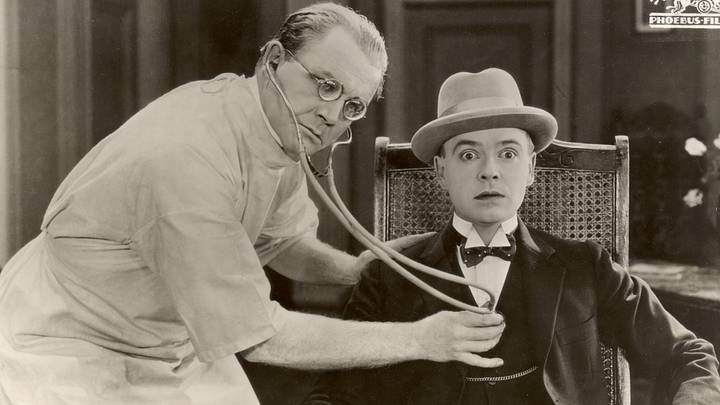
A doctor’s visit before modern medicine, advanced imaging, comprehensive lab work, and the modern healthcare system looked very different from what it does today.
You didn’t drive to a hospital, urgent care, or outpatient facility, sign in on an iPad, and wait in a crowded lobby before a physician assessed you at an appointment you'd scheduled weeks or months prior, and telehealth visits were decades away.
So what was a doctor's visit like in 1926?
HOUSE CALLS AND HOME OFFICES

100 years ago, a doctor would visit your home to treat you. These professionals (what we now call primary care physicians) were known as “generalists.” Specialty doctors were rare compared to today, with most physicians practicing general care.
During a house call, a doctor would arrive at your home with a bag full of instruments like a stethoscope, blood pressure cuff, and thermometer, according to Kevin M.D. While they didn’t have the wide array of medicines we have today, they did have morphine for pain relief and a small selection of “cathartics and purgatives” (to relieve constipation) depending on your ailments.
Generalists could make incisions to treat infections but did not perform surgeries at home. Many were tasked with delivering babies, attending to fractures, chronic illnesses, and sicknesses like the flu. Generalists in cities had access to more medical tests than their rural neighbors, such as urine analysis (dipsticks and cultures) and basic blood counts, like CBC.
As automobiles became more common, patients also traveled to a doctor’s home, which doubled as their office, on a first-come, first-served basis.
As you can imagine, doctors, both generalists and surgeons, were male (more often than not), while receptionists and nurses were female.
HOSPITALS AND SURGERIES

With specialists rare and no antibiotics, IV fluids, CT scans, MRIs, ultrasounds, or X-ray equipment, the hospital was less a place for treatment and more a place people went when they were on their deathbed.
Reaching the point of hospitalization meant you were severely ill. With less medicine, equipment, and procedure options, a doctor’s role extended beyond treatment to updating families on their loved ones’ health.
Close to 1% of mothers died during childbirth in 1926 ( roughly one out of every 100), due to a lack of medication to cure sepsis and limited tools for assisting with organ failure or hemorrhaging. The infant mortality rate was declining at the time, largely because of milk contamination and sanitation.
The only vaccine available was for smallpox, so adults and children with diphtheria, measles, whooping cough, and tuberculosis had to battle illness naturally, leading to higher death rates than today.
Surgery was scarce, and survival rates were concerning by modern standards. Someone undergoing abdominal surgery in 1926 had a 75% chance of survival, and brain and heart operations were “nearly unheard of.” Instruments could be sterilized, and anesthesia (chloroform) was available, but tubes to support breathing were not in use.
There was no transitional space like the ICU, and no tools to cut tissue or control bleeding effectively, so patients often died from blood loss or infection after surgery.
SCHEDULING AN APPOINTMENT

Partly because of a shortage of physicians after World War II, those seeking medical care typically didn’t schedule appointments in advance. Doctors made house calls when needed, and patients who traveled to a doctor’s office were seen as they arrived.
People didn’t leave the doctor’s office with a reminder for their next annual appointment or a one-month follow-up like we do today. If you were sick, you called a doctor to come to you, or got in the car to visit one.