%20%20--%3E%0A%3Csvg%20version%3D%221.1%22%20id%3D%22Layer_1%22%20xmlns%3D%22http%3A%2F%2Fwww.w3.org%2F2000%2Fsvg%22%20xmlns%3Axlink%3D%22http%3A%2F%2Fwww.w3.org%2F1999%2Fxlink%22%20x%3D%220px%22%20y%3D%220px%22%0A%09%20viewBox%3D%220%200%20684.6%2068.1%22%20style%3D%22enable-background%3Anew%200%200%20684.6%2068.1%3B%22%20xml%3Aspace%3D%22preserve%22%3E%0A%3Cg%3E%0A%09%3Cpath%20d%3D%22M444.1%2C29.3h-17.4v14.5h17.4V29.3z%20M36.4%2C68.1l29.3-50.8V0H50.4L32.9%2C36.8L15.5%2C0H0v68.1h16.7V45.8l12.4%2C22.3H36.4z%0A%09%09%20M49.1%2C68.1h16.6V23.4L49.1%2C52.1V68.1z%20M76.6%2C68.1h45V53.8H93.3V41.6h21V27.1h-21V14.8h28.3V0.1h-45V68.1z%20M175.6%2C68.1h17.3v-68%0A%09%09h-16.5v40.3L150%2C0.1h-17.6v68h16.7V27.7L175.6%2C68.1z%20M235.8%2C14.8h15.4V0.1h-47.4v14.7H219v53.2h16.8V14.8z%20M290.3%2C45.9h-17.1%0A%09%09l7.5-15.6h2L290.3%2C45.9z%20M298.7%2C68.1h18l-32.2-68h-5.7l-32%2C68h18l3.3-7.1h27.1L298.7%2C68.1z%20M325.2%2C68.1h46.2V53.8h-29.6V0.1h-16.7%0A%09%09V68.1z%20M423.7%2C14.8h27.2V0.1H407v68h16.7V14.8z%20M462%2C68.1h46.2V53.8h-29.6V0.1H462V68.1z%20M564.8%2C34.1c0%2C10.7-7.2%2C19.2-18.5%2C19.2%0A%09%09c-11.4%2C0-18.5-8.5-18.5-19.2s7.1-19.2%2C18.5-19.2C557.6%2C14.9%2C564.8%2C23.4%2C564.8%2C34.1%20M580.6%2C34.1c0-19-14.2-34-34.3-34%0A%09%09c-20.2%2C0-34.3%2C15-34.3%2C34c0%2C19%2C14.1%2C34%2C34.3%2C34C566.4%2C68.1%2C580.6%2C53.1%2C580.6%2C34.1%20M604.8%2C20.5c0-4.1%2C3.3-6.2%2C6.7-6.2%0A%09%09c4.4%2C0%2C6.6%2C3%2C6.6%2C6.6h14.7C631.8%2C9.1%2C625.1%2C0.1%2C611%2C0.1c-12%2C0-21.7%2C9.3-21.7%2C20.6c0%2C10.9%2C5.9%2C15.9%2C16.7%2C19.8%0A%09%09c5.2%2C1.8%2C11.5%2C3.2%2C11.5%2C8c0%2C3.3-2.4%2C5.5-6.4%2C5.5c-3.6%2C0-6.6-3-6.6-6.7h-15.2c0%2C11.5%2C7.9%2C20.8%2C21.8%2C20.8c12%2C0%2C21.6-9.3%2C21.6-20.6%0A%09%09c0-10-5.3-16.4-16.7-19.8C610.6%2C26.1%2C604.8%2C25.3%2C604.8%2C20.5%20M670%2C20.9h14.7C683.8%2C9.1%2C677.1%2C0.1%2C663%2C0.1c-12%2C0-21.7%2C9.3-21.7%2C20.6%0A%09%09c0%2C10.9%2C5.9%2C15.9%2C16.7%2C19.8c5.2%2C1.8%2C11.5%2C3.2%2C11.5%2C8c0%2C3.3-2.4%2C5.5-6.4%2C5.5c-3.6%2C0-6.6-3-6.6-6.7h-15.2c0%2C11.5%2C7.9%2C20.8%2C21.8%2C20.8%0A%09%09c12%2C0%2C21.6-9.3%2C21.6-20.6c0-10-5.3-16.4-16.7-19.8c-5.4-1.6-11.3-2.4-11.3-7.2c0-4.1%2C3.3-6.2%2C6.7-6.2C667.7%2C14.4%2C670%2C17.3%2C670%2C20.9%0A%09%09%22%2F%3E%0A%3C%2Fg%3E%0A%3C%2Fsvg%3E%0A)

As odd as it might sound, the third line of Act 2, Scene 3 of Shakespeare’s Macbeth includes the words "knock, knock" and "who's there?" In fact, this scene—which opens with a drunken porter answering the gate at Macbeth’s castle—uses those words multiple times, as the porter mutters to himself about who might have arrived at the castle so late at night.
Unfortunately, Shakespeare didn’t follow up his “knock, knock, who’s there” in Macbeth with a punningly silly joke, but it has nevertheless been popularly claimed that the repetition of these four words in Shakespeare’s play helped to establish them as the stock setup for a specific kind of joke. And nor are knock-knock jokes alone.
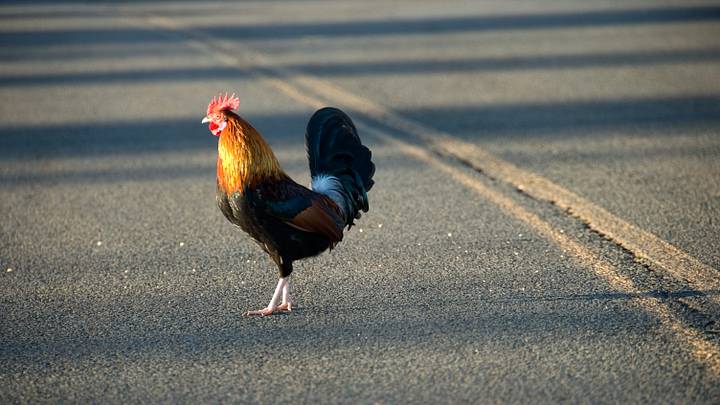
Our language has several stock jokes and joke forms—from “Doctor! Doctor!” dialogues to “A man walks into a bar” one-liners—that, like words and phrases, have traceable, explainable histories and origins. And perhaps most famous of all of them is the classic question, “Why did the chicken cross the road?”
The First Chicken Crosses the Road
So, where did this particular old chestnut come from? Well, the earliest known record of “Why did the chicken cross the road?” comes from an 1847 edition of the famous 19th-century New York periodical, The Knickerbocker (perhaps best known for publishing much of Washington Irving’s literary output). In a discussion of “conundrums,” the magazine also touched upon “quips and quillets” (that is, quibbling, nitpicking verbal distinctions), which it explained are jokes and riddles “which seem conundrums, but yet are not.” And by means of an example, it asked, “Why does a chicken cross the street?” giving the answer, “Because it wants to get on the other side!”

For the joke to have appeared in print in 1847, we can presume that it was already in popular circulation some time before then. It has even been suggested that “Why did the chicken cross the road?” may have originally been the work of a 19th-century blackface troupe known as Christy’s Minstrels, who were well known for using rapid-fire humor and wordplay conundrums as part of their act, and appear to have used this joke on stage as far back as the 1840s. Unfortunately, whether the actors involved in Christy’s show wrote the joke themselves, or else heard it elsewhere before incorporating it into their act, is impossible to say without further textual evidence.
Given that Christy’s Minstrels appear to have had a flair for wordplay—and given that The Knickerbocker version of this joke makes it clear that its effectiveness relies on its riddle-like presentation—it’s fair to say that this joke works as an example of so-called anti-humor. The setup does indeed sound like a riddle, or one of The Knickerbocker’s “conundrums,” yet the humor comes not from some genius play on words, which the listener or audience might be expecting, but rather from a complete subversion of that: the punchline is, in fact, just about the most mundane explanation imaginable. Or at least, that’s one interpretation of it.
The Chicken's Second Life Online

Recently, this nearly 200-year-old joke went somewhat viral online when social media users began to realize that the punchline “To get to the other side” could be interpreted more spiritually, rather than literally. Rather than an example of subversive anti-humor, ultimately, this joke suddenly becomes a little more poignant: the chicken didn’t make it across the road, but instead sacrificed itself into oncoming traffic because it wanted to get to the heavenly “other side.”
Is that reading too much into things? Perhaps. But given that we’re still using and discussing this joke almost two centuries after its apparent invention proves that even the oldest quips and one-liners might still have some life in them.